

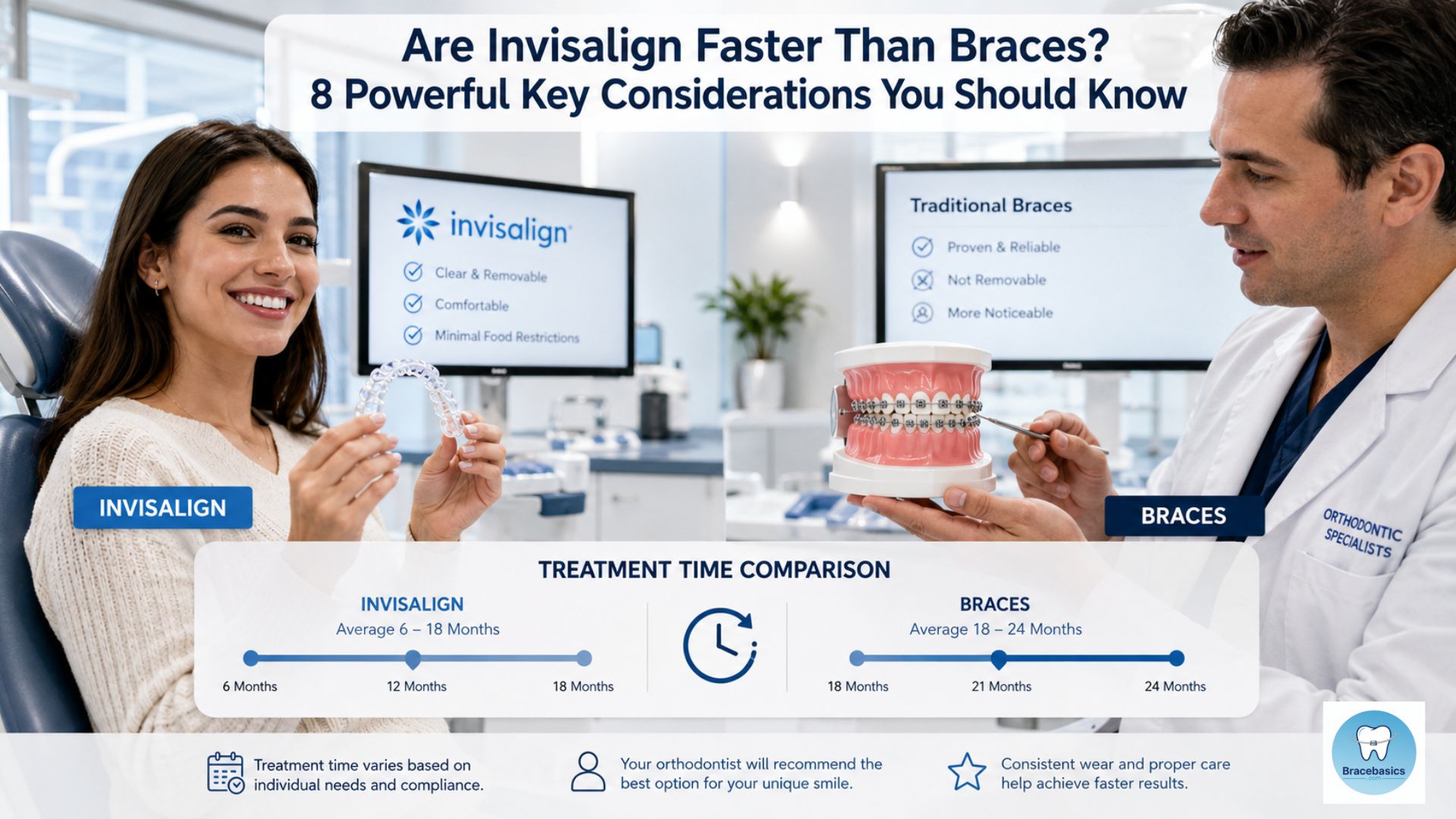
Choosing between treatments often starts with one big question: Are Invisalign faster than braces when you want a confident smile quickly. Many patients today compare Invisalign vs braces treatment time because appearance, comfort, and convenience all matter in daily American life.
However, speed alone doesn’t tell the full story. When looking at clear aligners vs braces, you must think about lifestyle, discipline, and dental condition. Some patients want faster orthodontic treatment, while others need reliability. So, which works better depends on your personal case and goals.
What Is Invisalign and How Does It Work?
Modern dentistry has changed how smiles improve, and Invisalign leads that shift. These Invisalign aligner trays gently move teeth step by step using digital planning. The Invisalign treatment process explained shows how custom trays guide your teeth with precision and comfort over time.
Still, success depends on discipline. You must follow strict Invisalign wear time requirements and keep trays in for most of the day. Many patients ask how long does Invisalign take, and the answer varies. On average, the average Invisalign time ranges from 6 to 18 months.
What Are Traditional Braces and How Do They Work?
Traditional braces remain a powerful solution for complex cases. The braces treatment timeline relies on brackets and wires that apply steady pressure. Whether you choose metal braces vs Invisalign or ceramic braces vs Invisalign, braces work continuously without needing removal.
Unlike aligners, braces don’t depend on patient memory. They are ideal for braces for severe misalignment and complicated bite problems. Many patients wonder how long do braces stay on teeth, and the average braces treatment time often ranges between 18 and 24 months.
Are Invisalign Faster Than Braces?
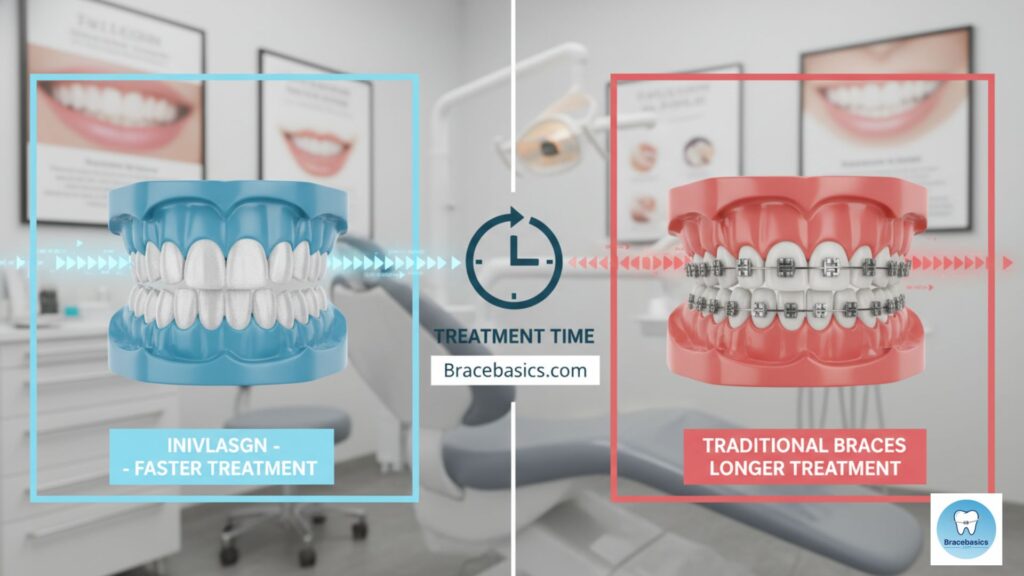
In many mild to moderate cases, Invisalign can be faster than traditional braces because the aligners are customized and planned digitally. Some people finish Invisalign treatment in 6–18 months, while braces often take 18–24 months. However, treatment speed depends on your dental condition, age, and how consistently you wear the aligners.
Braces may actually work faster for severe problems like major crowding, large gaps, rotated teeth, or complex bite issues because they apply constant pressure and do not rely on patient compliance. Invisalign requires wearing the trays for 20–22 hours daily. If you remove them too often, treatment can take longer than braces.
The best option depends on your orthodontic needs. Invisalign is usually preferred for comfort, appearance, and convenience, while braces are often more effective for complicated corrections.
| Treatment Type | Average Time | Best For |
| Invisalign | 6–18 months | Mild to moderate cases |
| Braces | 18–24 months | Severe or complex cases |
Key Consideration #1: Complexity of Your Dental Case
Your dental condition plays the biggest role in deciding speed. Patients with Invisalign for mild crowding often finish faster because the movement required is small. Simple spacing issues respond quickly to aligners.
On the other hand, braces for complex dental issues work better for rotations, vertical shifts, and bite correction. For example, crowded teeth treatment or jaw misalignment often needs stronger force. That’s why are braces quicker than Invisalign in severe cases is often true.
Key Consideration #2: Patient Discipline and Compliance
Consistency decides results more than technology. If you remove aligners too often, progress slows. Many patients underestimate Invisalign maintenance, which includes cleaning and wearing trays daily without skipping hours.
In contrast, braces don’t rely on habits. They work even if you forget. That’s why patients asking braces or Invisalign for faster results should consider lifestyle. If discipline is weak, braces may deliver quicker outcomes.
Key Consideration #3: Technology and Treatment Planning
Advanced technology gives Invisalign a major advantage. Digital scans map your teeth alignment process in detail. This improves predictability and helps plan each stage carefully using modern orthodontic tools.
Still, success depends on expertise. An experienced dentist offering orthodontic consultation for Invisalign ensures better results. When comparing aligners vs brackets effectiveness, both systems work well if planned correctly.
Key Consideration #4: Adjustment Frequency and Monitoring
Regular monitoring keeps treatment on track. Braces require in-office visits for braces adjustment appointments where wires tighten and guide teeth slowly. These visits ensure steady movement.
Meanwhile, Invisalign uses tray changes every few weeks. Some clinics offer remote monitoring, improving convenience. However, skipping checkups delays results. Both systems rely on consistent follow-up care for success.
Key Consideration #5: Type of Dental Issues Being Treated
Different problems require different tools. Invisalign works well for bite correction with Invisalign and mild alignment. Patients seeking teeth straightening without metal braces often prefer this option for comfort and appearance.
However, braces remain superior for serious issues like overbite correction braces and vertical movement. For these cases, traditional braces results are more predictable and stable.
Key Consideration #6: Age and Oral Health
Age affects how quickly teeth move. Younger patients often respond faster due to softer bone structure. That’s why teen Invisalign treatment may show quicker changes compared to adults.
Adults still achieve great results with Invisalign for adults, but treatment may take longer. Healthy gums and strong bone structure also influence speed. Good oral health supports faster and safer movement.
Key Consideration #7: Comfort and Lifestyle Preferences
Lifestyle plays a hidden role in treatment speed. Invisalign offers flexibility with eating and cleaning. The removable aligners benefits make daily life easier for working professionals and students.
Still, freedom can slow progress if misused. Social habits, travel, and irregular wear can delay results. Patients choosing invisible braces treatment must stay committed to see faster outcomes.
Key Consideration #8: Risk of Delays and Complications
Unexpected delays can affect both treatments. Losing trays or skipping replacements slows Invisalign progress. Many patients also need refinements after initial stages, extending treatment slightly.
Braces face different issues. Broken brackets or missed braces tightening appointments can delay progress. So, whether you choose aligners or braces, consistency remains the key to avoiding setbacks.
Pros and Cons of Invisalign vs Braces
Understanding trade-offs helps you decide better. The pros and cons of Invisalign include comfort, flexibility, and faster results in mild cases. Many patients also like the discreet look and easy cleaning.
Meanwhile, the pros and cons of braces include strength and reliability. Braces handle complex movements better and don’t depend on patient discipline. This makes them ideal for long-term stability.
Which Option Is Faster for You?
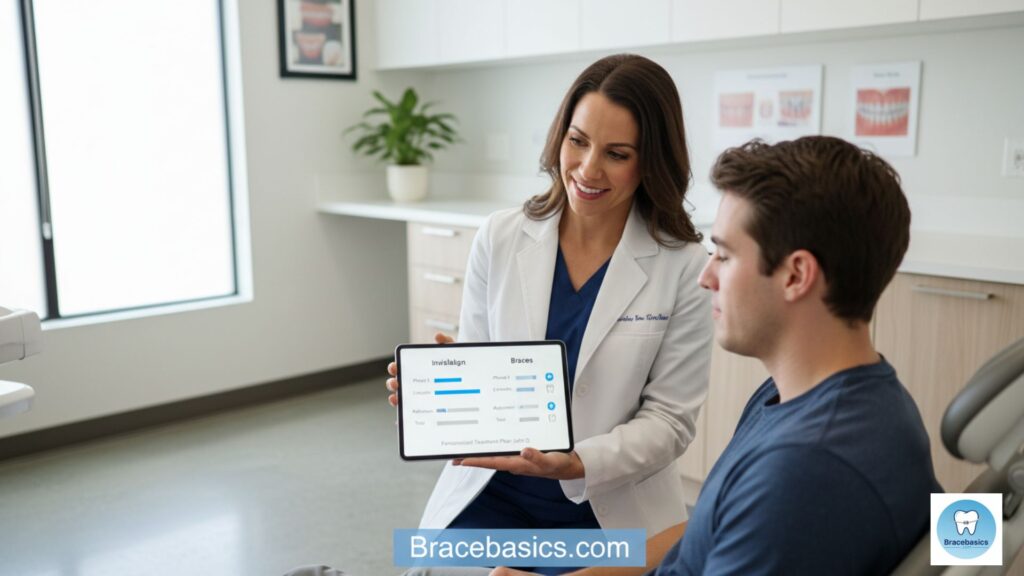
Every smile is unique, so there is no universal answer. Your dentist evaluates your teeth, bite, and goals before suggesting the best orthodontic treatment option for you.
During consultation, experts analyze how orthodontists choose treatment options based on complexity and lifestyle. A personalized plan ensures the fastest and safest results for your case.
Tips to Speed Up Your Orthodontic Treatment
Speeding up orthodontic treatment depends less on luck and more on daily habits that support consistent tooth movement. Whether someone uses clear aligners or fixed braces, the body responds better when instructions are followed with discipline. Small mistakes like missed wear time or poor cleaning can quietly slow progress and extend the braces treatment timeline or Invisalign treatment duration. The good news is that patients can actively influence their results with simple but powerful habits that keep treatment on track and sometimes even shorten it.
To get faster orthodontic treatment and improve overall results, these practical habits make a real difference:
- Wear aligners exactly as prescribed, especially during Invisalign wear time requirements, since skipping hours can delay tooth movement significantly.
- Keep teeth extremely clean because plaque buildup slows movement and increases risks during both clear aligners vs braces treatment.
- Never skip orthodontic appointments since regular checks and braces adjustment appointments ensure steady progress without setbacks.
- Follow food rules carefully to avoid broken brackets or lost aligners that interrupt the teeth alignment process.
- Use recommended tools like chewies or interdental brushes to support proper fit and improve Invisalign effectiveness.
- Avoid constantly removing aligners for unnecessary reasons because frequent removal reduces clear aligner treatment speed.
- Report any discomfort, loose wires, or cracked trays early so small issues do not turn into longer delays.
Cost vs Time: Is Faster Treatment Worth It?
Cost often influences decisions. Invisalign may cost more, but many patients value shorter treatment and comfort. The balance between time and cost depends on personal priorities.
Insurance coverage varies across the U.S. Some plans support both treatments equally. So, choosing between speed and affordability requires careful planning and consultation.
Conclusion: Invisalign or Braces – Which One Wins on Speed?
So, does Invisalign take less time than braces? Sometimes yes, sometimes no. It depends on your dental condition, discipline, and treatment plan.
If you want quick results for mild issues, Invisalign may work faster. For complex cases, braces remain more reliable. Always consult a professional to choose the right path for your smile.
FAQs
Is Invisalign always faster than braces?
This is one of the most common questions in orthodontics, but the answer is not always yes. In many mild cases, clear aligners vs braces can show quicker early movement because aligners target small, controlled shifts. However, braces often outperform aligners in complex bite issues where stronger continuous force is needed.
For example, Invisalign for mild crowding or small spacing issues may show visible changes within a few months. On the other hand, braces for severe misalignment often achieve more predictable full correction even if the timeline is slightly longer. So, speed depends on case type, not just the system.
Can Invisalign take longer?
Yes, Invisalign can take longer in certain situations. This often happens when patients do not follow the Invisalign wear time requirements, which demand 20 to 22 hours of daily use. If aligners are not worn consistently, tooth movement slows down and delays build up over time.
Complex cases like deep bite correction or significant rotation may also extend Invisalign treatment duration. In some cases, additional refinement trays are needed, which increases overall time. So, while Invisalign is efficient, discipline and case complexity play a major role in final speed.
How long does each treatment usually take?
On average, how long does Invisalign take ranges from 6 to 18 months depending on severity. Mild spacing or minor alignment cases may finish even sooner. This makes it popular among adults seeking discreet and flexible treatment options.
In comparison, average braces treatment time usually falls between 18 and 24 months. Complex corrections, especially jaw alignment or severe crowding, may extend beyond two years. While braces often take longer overall, they handle difficult movements more reliably and consistently.
What happens if I don’t wear aligners enough?
If aligners are not worn properly, treatment slows down significantly. Teeth begin to shift back toward their original position, which interrupts progress in Invisalign treatment process explained. This can lead to discomfort and require repeating previous trays.
In severe cases, orthodontists may need to redesign the treatment plan entirely. This increases both time and cost. Simply put, poor compliance reduces the clear aligner treatment speed and may make braces a faster alternative in the long run.
Related Posts You May Find Helpful (Quick Links)
How Long to Wear Retainer After Braces
https://bracebasics.com/how-long-to-wear-retainer-after-braces/
Learn how retainers protect your results after orthodontic treatment.
Can Braces Cause Gum Recession
https://bracebasics.com/can-braces-cause-gum-recession/
Understand how braces may affect gum health and prevention tips.
Best Dentist for Braces in Texas
https://bracebasics.com/best-dentist-for-braces-in-texas/
Find guidance on choosing the right orthodontist for better results.
How to Take Care of Braces
https://bracebasics.com/how-to-take-care-of-braces/
Simple care tips to keep braces clean and effective.
What Colors Braces Make Your Teeth Look Whiter
https://bracebasics.com/what-colors-braces-make-your-teeth-look-whiter/
Discover color choices that improve your smile appearance.
Hi, I’m Dr. Martin, the founder of BraceBasics.com. With years of experience in orthodontics, I’ve made it my mission to simplify braces care for patients of all ages. Here, you’ll find easy-to-understand advice, practical tips, and reliable resources to make your braces journey smoother, healthier, and stress-free. My goal is to help you smile with confidence every step of the way.