
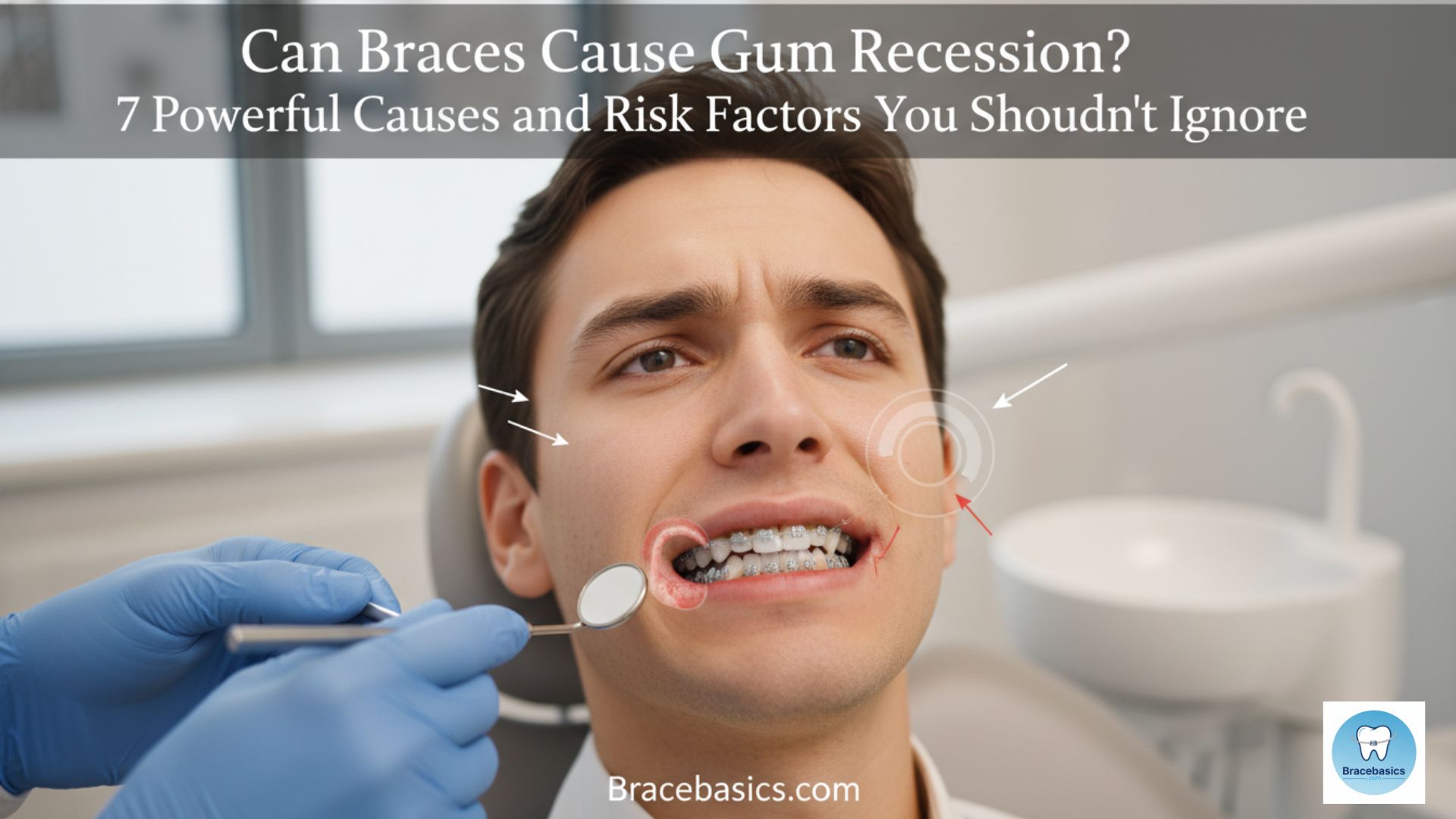
Many people in the USA worry about can braces cause gum recession once orthodontic treatment begins. This concern grows when they notice soreness, swelling, or slight gum changes after getting braces. Understanding braces and gum recession helps you avoid fear and focus on prevention instead of panic.
Braces move teeth slowly, but this process can sometimes stress the gums and bone. When combined with hygiene challenges, it may lead to gum irritation from braces or even early gum loss from braces. However, proper care almost always prevents serious damage and protects long-term dental health.
What Is Gum Recession? (And Why It Happens)
Gum recession means the gum tissue slowly pulls away from the teeth. This exposes the root surface and makes teeth look longer than normal. Many patients with braces ask about how braces affect gums because they notice sensitivity or bleeding during treatment.
Healthy gums sit tightly around teeth and protect the roots. When recession begins, it often signals early receding gum line causes linked to inflammation or pressure changes in the mouth.
How healthy gums should look
Healthy gums appear pink, firm, and stable. They do not bleed during brushing or flossing. Strong gums support teeth and protect against dental plaque and tartar buildup, which is essential for gum health with braces.
What gum recession means for your teeth
Gum recession exposes the root surface, making teeth sensitive to cold and heat. It may also increase risk of decay. This condition is closely linked with bone support and gum recession and can affect long-term oral stability if ignored.
Common symptoms
Patients often notice gum sensitivity braces, mild pain during brushing, or visible tooth lengthening. Some also experience bleeding gums braces or early swollen gums with braces, which signal irritation or inflammation.
Can Braces Cause Gum Recession?
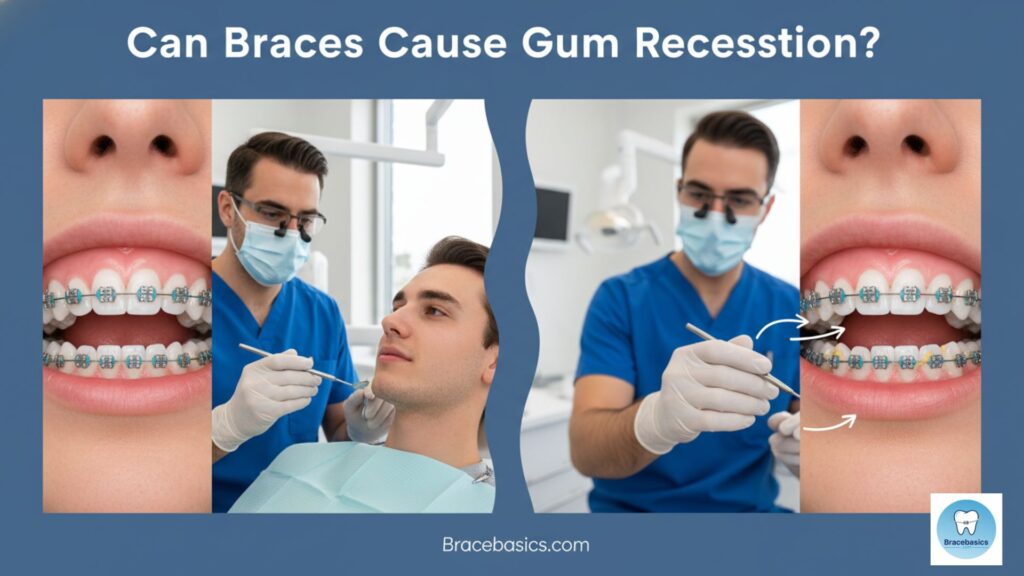
Yes, braces can contribute to gum recession, but they are usually not the direct cause. The risk mainly comes from poor oral hygiene, existing gum disease, or teeth being moved outside the natural bone limits during orthodontic treatment.
When plaque builds up around brackets, it can lead to inflammation of the gums (gingivitis), which may weaken gum tissue over time. In some cases, this can progress into receding gums during orthodontic treatment if not properly managed.
However, with good brushing habits, regular dental cleanings, and proper orthodontic supervision, the risk remains low. Most patients complete braces treatment without any significant gum loss from braces or long-term damage.
How orthodontic treatment affects gums and bone
Tooth movement changes pressure on bone and gums. This process affects tooth movement and gum health as bone reshapes around new positions. If balance is lost, orthodontic gum recession risk increases.
When braces are NOT the real cause
In many cases, braces are not responsible. Instead, poor oral hygiene and gum recession or untreated gum disease causes the issue. Conditions like periodontal disease and braces often combine to worsen symptoms.
7 Powerful Causes and Risk Factors You Shouldn’t Ignore
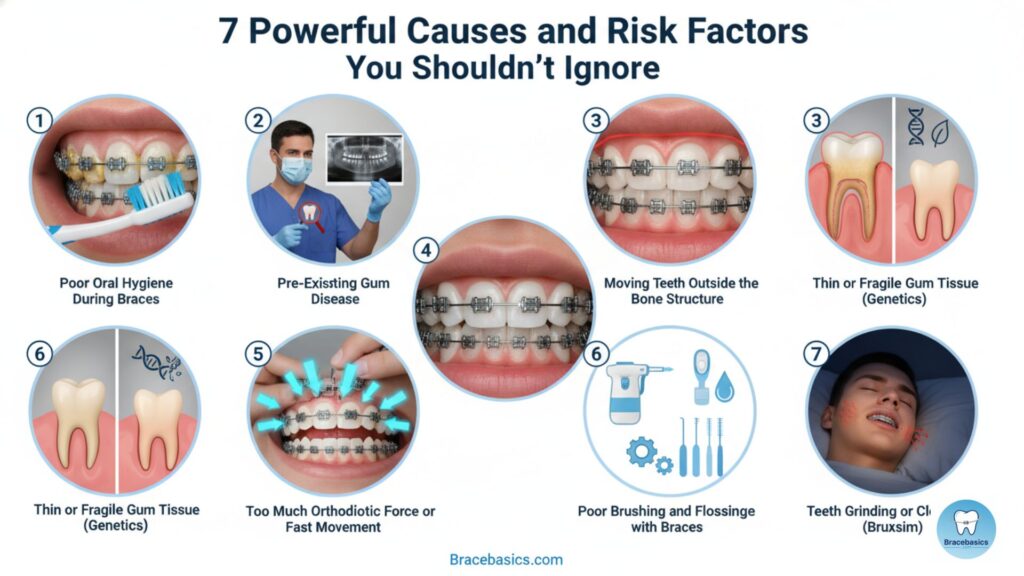
Understanding risk factors helps prevent can braces damage gums concerns. These causes explain why some patients develop issues while others do not.
1. Poor Oral Hygiene During Braces
Braces make cleaning harder. This leads to plaque buildup around brackets and increases risk of inflammation of gums (gingivitis). If untreated, this can progress into gum recession.
2. Pre-Existing Gum Disease
Hidden gum problems often worsen during treatment. Patients with advanced gum disease (periodontitis) face higher risks of gum recession prevention braces failure if not treated early.
3. Moving Teeth Outside the Bone Structure
Teeth must stay within bone limits. When movement exceeds boundaries, bone support and gum recession problems occur. This is a key factor in receding gums during orthodontic treatment.
4. Thin or Fragile Gum Tissue (Genetics)
Some people naturally have thin gum tissue risk. This makes gums more sensitive to movement and increases chance of braces and gum tissue damage.
5. Too Much Orthodontic Force or Fast Movement
If teeth move too quickly, gums cannot adapt. This affects tightening adjustments and gum response, leading to irritation or recession.
6. Poor Brushing and Flossing Technique with Braces
Incorrect cleaning causes plaque buildup and inflammation. Strong brushing can also cause aggressive brushing with braces, which damages gum tissue instead of protecting it.
7. Teeth Grinding or Clenching (Bruxism)
Grinding adds pressure on teeth and gums. Over time, this increases gum irritation from braces and weakens support structures.
Early Warning Signs of Gum Recession During Braces
Early detection prevents serious damage. Patients often notice gum sensitivity braces or mild discomfort first. These signals should never be ignored.
Symptoms may include increased tooth sensitivity, shrinking gum lines, or visible gaps between teeth. In many cases, bleeding gums braces also appear during brushing or flossing.
How Orthodontists Prevent Gum Recession
Orthodontists carefully manage treatment to avoid complications. They monitor orthodontist monitoring gum health closely throughout the process. This reduces risk of gum loss from braces.
They also adjust force levels to maintain safe movement. This ensures proper best oral care routine for braces and prevents unnecessary gum stress.
How to Prevent Gum Recession While Wearing Braces
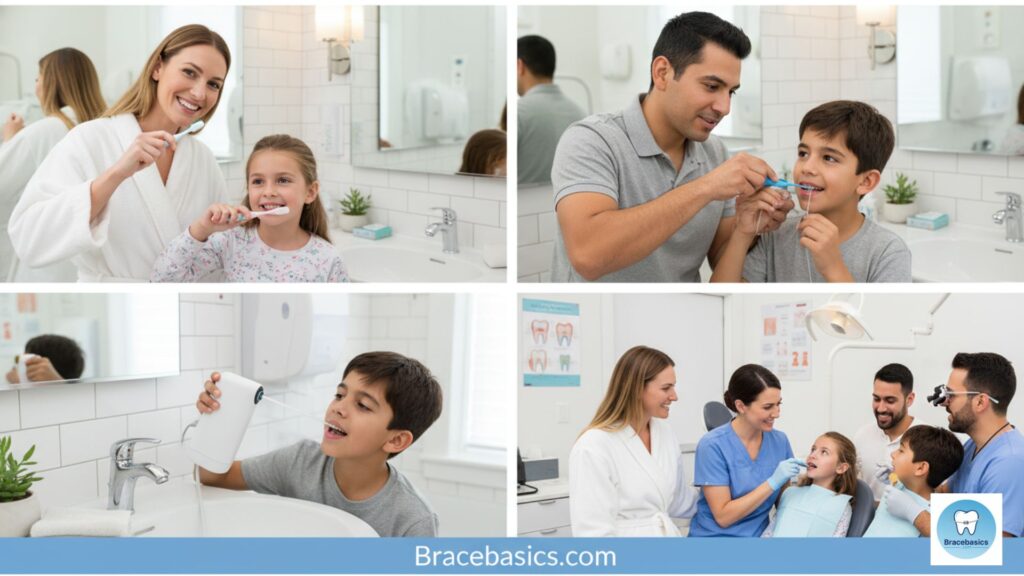
Prevention depends mostly on daily care. Following proper brushing techniques with braces is essential for avoiding gum damage and maintaining healthy gums.
Using soft brushes, cleaning between brackets, and regular dental visits help control dental plaque and tartar buildup. Professional cleanings are important for professional dental cleaning during braces.
A simple comparison shows prevention clearly:
| Habit | Result |
| Poor brushing | Gum inflammation and recession |
| Proper care | Healthy gums and stable teeth |
Can Gum Recession Be Reversed After Braces?
Mild gum recession may improve slightly after treatment ends. However, severe cases often require medical intervention. This depends on long-term dental health with braces conditions.
Natural healing is limited when bone support and gum recession is advanced. In some cases, surgical gum repair may be needed to restore structure.
When You Should See a Dentist Immediately
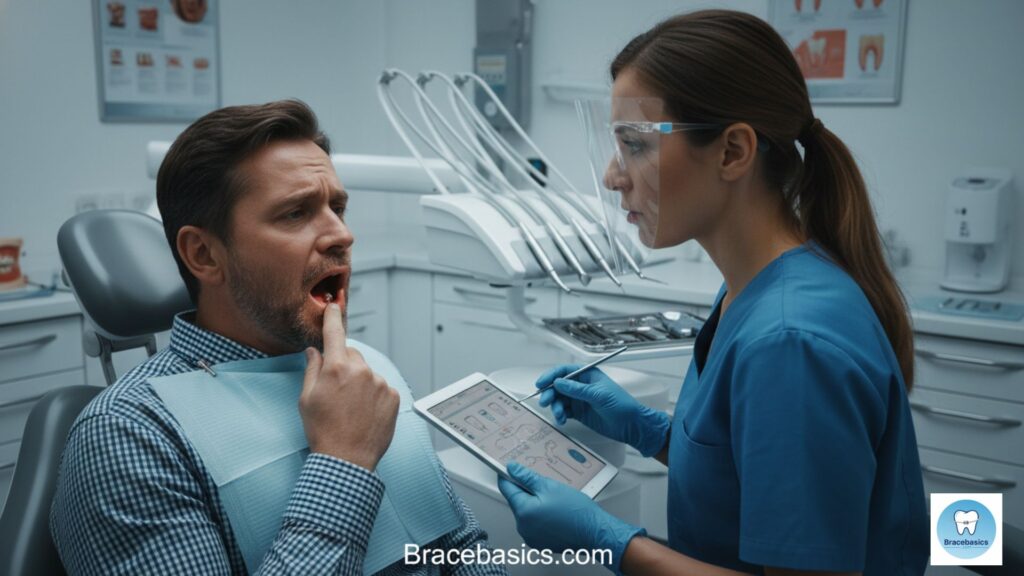
Some symptoms require urgent care. Rapid gum changes, severe sensitivity, or visible root exposure are serious signs. These often relate to gum recession with braces.
Persistent bleeding or swelling may also indicate worsening gum irritation from braces. Early action prevents long-term damage.
Final Verdict – Should You Be Worried About Braces and Gum Recession?
The concern can braces cause gum recession is valid, but not alarming when care is correct. Most issues come from hygiene problems, not braces themselves.
With proper gum health with braces routines and regular checkups, risks stay low. Braces remain one of the safest ways to improve alignment and long-term oral health when managed properly.
Frequently Asked Questions (FAQs)
Can braces really cause gum recession?
Yes, braces can contribute to gum recession, but they are not usually the direct cause. The main issue comes from poor oral hygiene with braces, which allows plaque to build up around brackets and wires. This can lead to inflammation of gums (gingivitis), and over time, weakened gum tissue may start to recede if the condition is ignored. In most cases, proper cleaning and regular dental visits keep gums healthy throughout treatment.
Why do gums become sensitive or swollen with braces?
Gums often become sensitive or swollen because braces create extra areas where food and plaque can get trapped. This increases the risk of irritation and mild infection in the gum tissue. During tightening appointments, teeth also move under pressure, which can temporarily cause discomfort. This is a normal reaction, but if swelling continues, it may indicate early gum problems that need attention.
How can I prevent gum recession while wearing braces?
Preventing gum recession during orthodontic treatment depends mostly on daily care habits. Brushing properly after every meal helps remove plaque before it causes damage. Using tools like interdental brushes or a water flosser can improve cleaning around brackets. Regular professional cleanings also help control dental plaque and tartar buildup, reducing the risk of gum inflammation and long-term recession.
Is gum recession from braces permanent?
Mild gum recession may sometimes stabilize or slightly improve once braces are removed and inflammation is controlled. However, moderate to severe gum loss is often permanent because gum tissue does not fully regenerate on its own. In advanced cases, dental procedures like gum grafting may be needed to restore coverage and protect exposed tooth roots.
When should I worry about my gums during braces?
It is important to pay attention if you notice persistent bleeding, increasing sensitivity, or gums pulling away from teeth. These signs may indicate worsening gum health rather than normal orthodontic discomfort. Early action is key because untreated issues can progress into more serious gum disease. Regular checkups help catch problems early and protect your long-term oral health.
Related Posts
👉 https://bracebasics.com/how-to-take-care-of-braces/
👉 https://bracebasics.com/how-to-brush-teeth-with-braces/
👉 https://bracebasics.com/best-toothpaste-for-braces/
👉 https://bracebasics.com/foods-you-can-not-eat-with-braces/
👉 https://bracebasics.com/braces-friendly-foods/
These guides help you understand daily care, cleaning techniques, and diet choices that protect gum health with braces and reduce risks linked to can braces cause gum recession during orthodontic treatment.
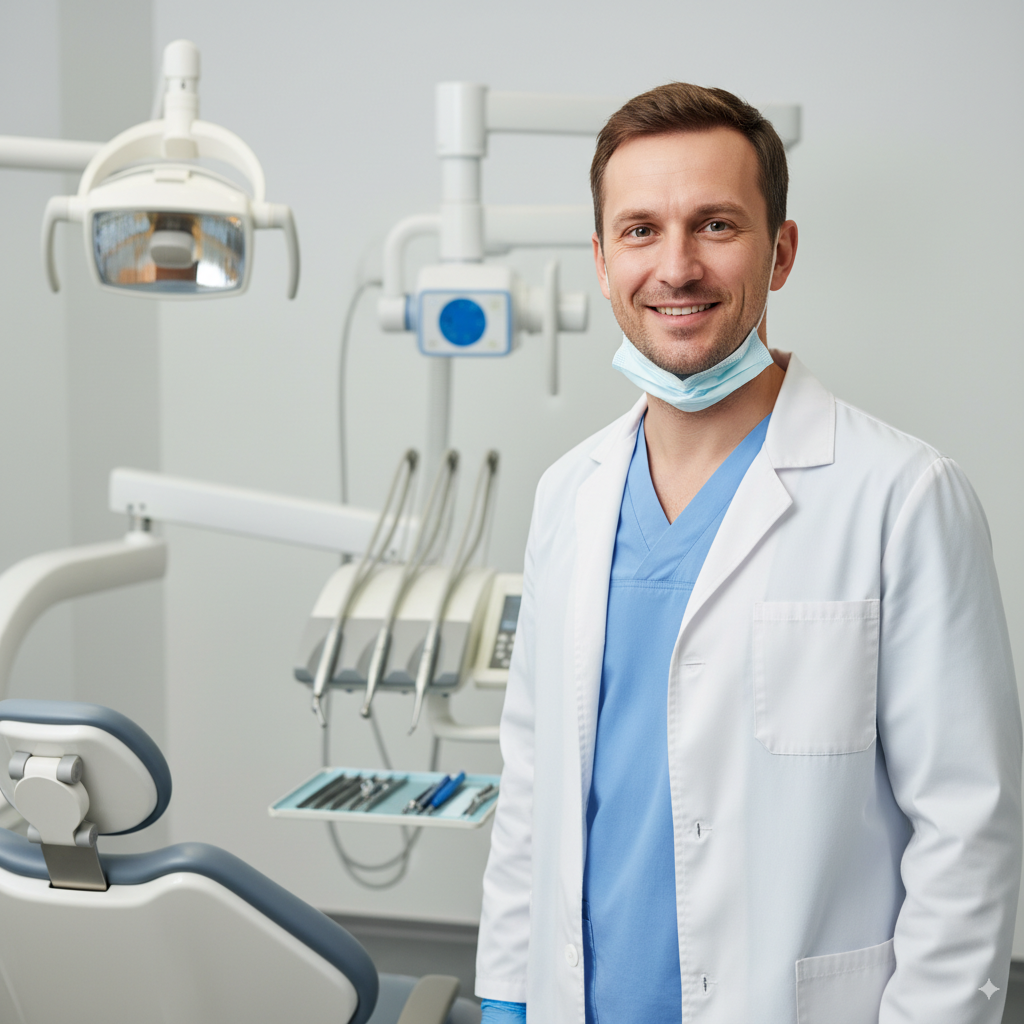
Hi, I’m Dr. Martin, the founder of BraceBasics.com. With years of experience in orthodontics, I’ve made it my mission to simplify braces care for patients of all ages. Here, you’ll find easy-to-understand advice, practical tips, and reliable resources to make your braces journey smoother, healthier, and stress-free. My goal is to help you smile with confidence every step of the way.