

Your braces are off. Your smile looks amazing. However, the journey isn’t finished yet. Many patients ask, how long to wear retainer after braces, and the answer often surprises them. Teeth don’t stay still on their own. Without proper care, they slowly drift back.
Think of your teeth like freshly planted trees. They need support until roots settle firmly. A proper post-braces care routine keeps your smile stable for years. If you want to learn how to keep teeth straight after braces, understanding retainer use is essential.
Why Wearing a Retainer After Braces Is Essential
Teeth naturally move after treatment. This process is called teeth shifting after braces removal, and it happens because bones and tissues are still adjusting. Without retainers to prevent teeth shifting, your straight smile may not last long.
A retainer acts like a holding device. It keeps your teeth aligned while your mouth stabilizes. Many patients wonder, why do I need a retainer after braces, or even can teeth move back without a retainer. The simple truth is yes. Ignoring your orthodontist retainer instructions leads to relapse faster than expected.
How Long to Wear a Retainer After Braces? (Quick Answer)
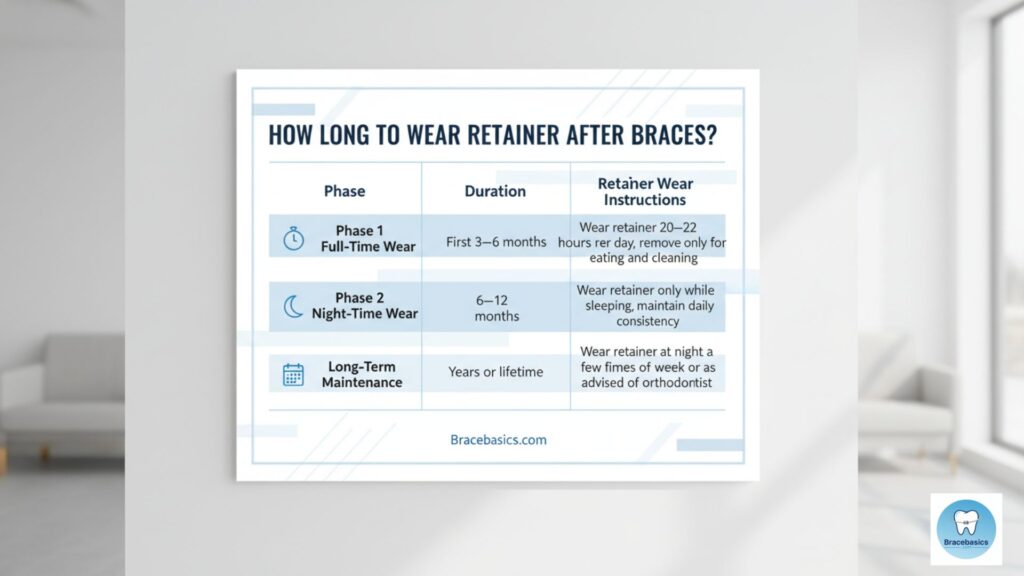
After braces, you should wear your retainer full-time (20–22 hours per day) for the first 3–6 months, then transition to nighttime wear (every night). For long-term results, most orthodontists recommend wearing your retainer 3–5 nights per week for life to prevent teeth from shifting back.
Retainers are essential because, after braces are removed, your teeth are not fully stable. The surrounding bone and soft tissues need time to adjust to the new positions. During the first few months, consistent full-time wear helps “lock in” your results. Skipping wear during this stage can quickly lead to unwanted movement.
Once your teeth have stabilized, you can move to nighttime-only wear. However, this does not mean you can stop completely. Teeth naturally shift with age, which is why long-term or lifelong retainer use is necessary to maintain a straight smile.
Retainer Wear Timeline
1. Initial Phase (0–6 Months)
Wear your retainer 20–22 hours daily
Remove only for eating, drinking (except water), and brushing
This phase is critical for stabilizing your teeth
2. Transition Phase (6+ Months)
Switch to nighttime wear only
Wear it every night to prevent early shifting
3. Long-Term Maintenance (Lifelong)
Wear your retainer 3–5 nights per week
Teeth naturally move with age, so ongoing use is essential
If you have a fixed (permanent) retainer, it will hold your front teeth in place 24/7, but it does not protect your back teeth. In many cases, orthodontists still recommend a removable retainer at night for complete protection.
If you stop wearing your retainer, teeth can begin shifting in just a few weeks, and over time, this can undo your orthodontic results—sometimes requiring braces again.
In short: wear your retainer full-time at first, switch to nights, and continue wearing it a few times a week for life to keep your teeth straight.
The 3 Phases of Retainer Wear You Should Know
The first phase focuses on stability. During the retainer wear first 6 months, your teeth are most vulnerable. This stage answers the common concern, how long to wear retainers full-time, which is usually several months.
The second and third phases reduce wear gradually. Patients often ask, when can I stop wearing my retainer or do I need to wear a retainer forever. The truth is simple. You should continue night wear for years. Many orthodontists recommend lifelong use to avoid relapse.
7 Powerful Key Takeaways for Long-Lasting Results
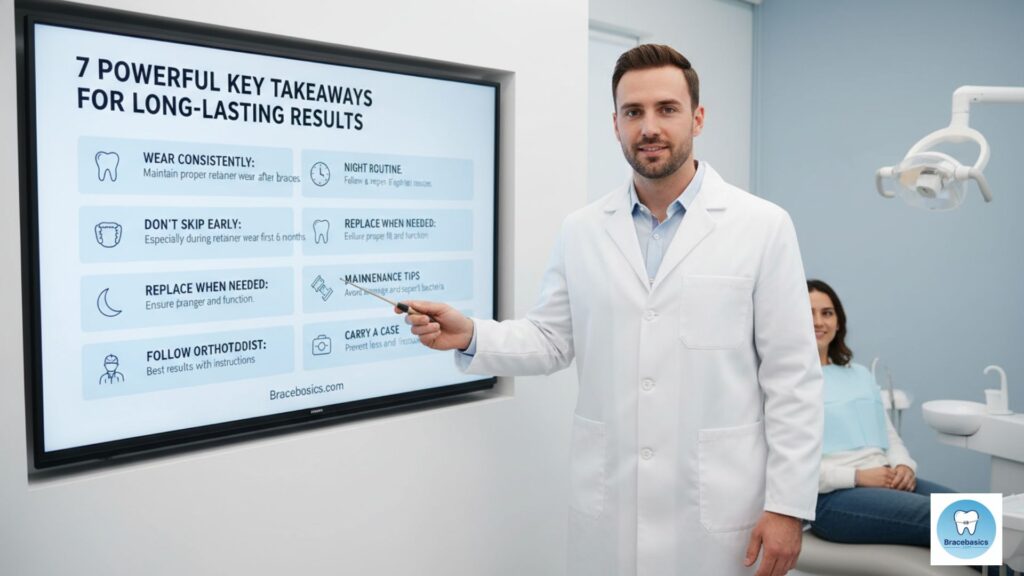
A lasting smile doesn’t happen by chance. It depends on discipline, awareness, and small daily habits that protect your results. Many patients underestimate retainer compliance importance, yet even minor negligence can undo months of progress. If you truly want to understand how long to wear retainer after braces, focus on these essential habits that keep your teeth perfectly aligned.
- Wear your retainer consistently to maintain proper retainer wear time after braces
- Never skip the first few months, especially during retainer wear first 6 months
- Follow a strict night routine based on how often to wear retainer at night
- Replace retainers when needed to ensure proper fit and function
- Keep up with retainer maintenance tips to avoid damage and bacteria
- Always carry a case to prevent loss and support daily retainer care tips
- Follow your orthodontist closely for best results with orthodontist retainer instructions
Types of Retainers and How They Affect Wear Time
Different retainers offer different benefits. A permanent retainer vs removable retainer changes how often you need to wear one. Fixed retainers stay in place. Removable ones require discipline.
Clear aligners follow a clear retainer wear duration plan. Meanwhile, Hawley retainer wear time tends to be longer due to durability. Patients often compare Essix retainer usage guide details to choose the best fit.
| Retainer Type | Wear Style | Durability | Visibility |
| Hawley | Removable | High | Visible |
| Essix | Removable | Moderate | Clear |
| Permanent | Fixed | Very High | Invisible |
What Happens If You Stop Wearing Your Retainer?
Skipping your retainer leads to movement. Many patients ask, what happens if you stop wearing retainer or how long does it take for teeth to shift without retainer. In some cases, movement begins within days.
As teeth shift, bite problems may develop. You may need braces again. Patients often worry, what happens if I don’t wear my retainer, and the reality is costly retreatment. Following your routine helps how to prevent teeth from shifting after braces effectively.
How Often Should You Replace Your Retainer?
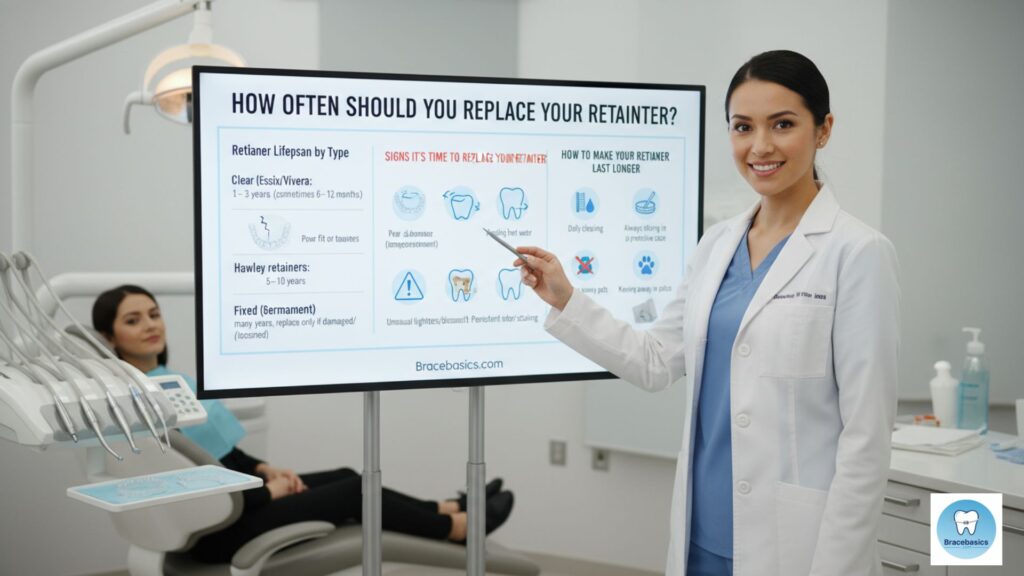
Clear (Essix/Vivera) retainers should generally be replaced every 1–3 years, although some may need replacement as often as 6–12 months depending on wear and care habits. Hawley retainers (wire and acrylic) typically last longer, around 5–10 years, while fixed (permanent) retainers can last many years and usually only need replacement if they break, loosen, or fail.
Retainers are not permanent devices. Over time, daily use, biting pressure, cleaning methods, and natural wear can change their shape or fit. Even small distortions can reduce how effectively they hold your teeth in position, increasing the risk of teeth shifting.
🦷 Signs It’s Time to Replace Your Retainer
You may need a new retainer if you notice:
- Visible damage: cracks, chips, or warped plastic
- Loose or poor fit: it no longer feels snug or slips easily
- Tightness or discomfort: unusual pressure when wearing it
- Staining or odor: persistent buildup that won’t clean off
- Reduced effectiveness: teeth starting to shift despite regular wear
🧼 How to Make Your Retainer Last Longer
- Clean it daily using a soft toothbrush and mild soap or recommended cleaner
- Never use hot water, as it can warp clear plastic retainers
- Always store it in a protective case when not in use
- Keep it away from pets, who may chew or damage it
- Avoid wrapping it in tissue or leaving it exposed
🩺 Professional Care Matters
It’s recommended to have your retainer checked by an orthodontist every 6–12 months. Regular check-ups help ensure the fit is still accurate and your teeth are staying properly aligned.
Most people replace clear retainers every 1–3 years, Hawley retainers every 5–10 years, and fixed retainers only when needed. With proper care and regular monitoring, you can extend their lifespan and protect your smile from unwanted shifting.
Cost varies depending on type. In the U.S., replacement can range from $100 to $500. Regular checks ensure proper fit. Many patients ask, how tight should a retainer feel, and it should feel snug but not painful.
Tips to Make Wearing a Retainer Easier
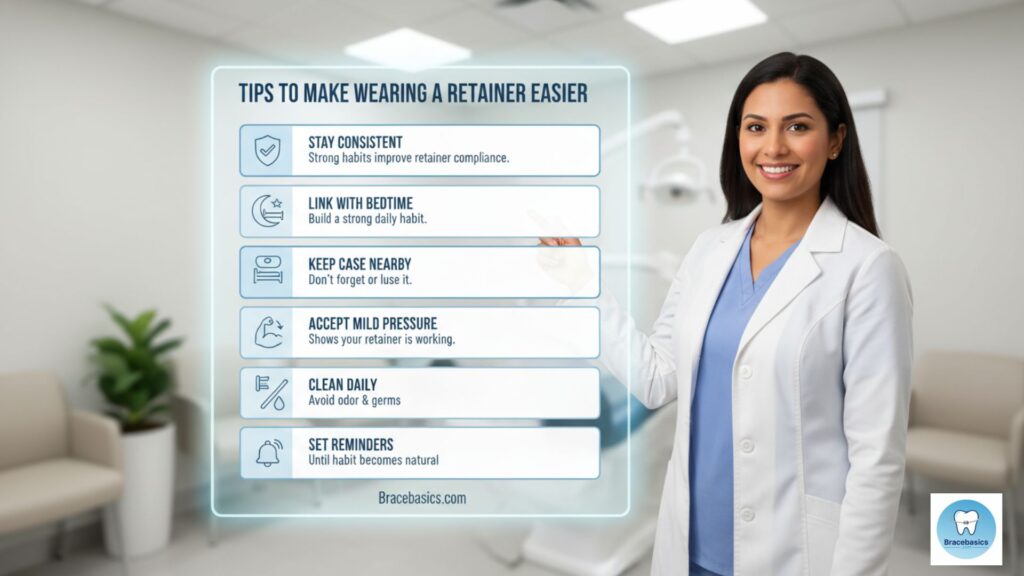
Getting used to a retainer doesn’t have to feel like a struggle. At first, it may seem annoying or uncomfortable. However, once you build a simple routine, it becomes automatic. Many patients wonder, should I wear retainer every day, and the answer is yes, especially in the beginning. Small habits create lasting results.
- Stay consistent because strong habits improve retainer compliance importance
- Link your retainer use with bedtime to build a strong daily habit
- Keep your retainer case nearby so you don’t forget or lose it
- Follow a consistent routine based on how often to wear retainer at night
- Accept mild pressure as normal since it shows your retainer is working
- Clean it daily using simple daily retainer care tips to avoid odor
- Set reminders on your phone until the habit becomes natural
How to Clean and Maintain Your Retainer Properly?
To properly clean and maintain your retainer, you should rinse it with lukewarm water every time you remove it and gently brush it daily using a soft toothbrush and mild dish soap to remove bacteria, plaque, and odor buildup. Avoid hot water and toothpaste, as hot water can warp the retainer and toothpaste can scratch the plastic surface, making it easier for bacteria to grow.
For deeper cleaning, soak your retainer once or twice a week in retainer cleaning tablets or a 50/50 mixture of white vinegar and lukewarm water for about 15–30 minutes. This helps remove stains, kill bacteria, and keep it fresh and hygienic.
Always store your retainer in a protective case when not in use to prevent damage, loss, or contamination. Never wrap it in tissue or napkins, as it can easily be thrown away by mistake.
Avoid exposing your retainer to heat, harsh chemicals, or pets, as these can damage or destroy it. Regularly clean and wash the retainer case as well to prevent bacterial buildup.
If you have a fixed (bonded) retainer, you should brush and floss carefully around it daily using floss threaders or interdental brushes to prevent plaque accumulation.
Overall, proper retainer care is simple: clean it daily, deep clean weekly, and store it safely. Good hygiene ensures your retainer stays fresh, fits properly, and continues protecting your straight smile for years.
Common Mistakes People Make With Retainers
Skipping nights is the most common issue. Even one missed night can cause tightness. This answers the frequent concern, can I stop wearing retainer after a year, which is not recommended.
Another mistake is poor cleaning. Dirty retainers cause odor and damage. Following a proper post-braces care routine avoids these issues and ensures long-lasting results.
Final Thoughts: How to Keep Your Smile Perfect for Life
A straight smile requires commitment. Understanding how long to wear retainer after braces helps you protect your investment. Simple habits make a huge difference over time.
Stay consistent. Follow your dentist’s advice. If you ever wonder, what is the best retainer schedule after braces, remember this. Wear it regularly. Keep it clean. Your smile will stay perfect for life.
FAQs
How many hours a day should I wear my retainer?
Right after braces, you should typically wear your retainer 20–22 hours per day for the first 3–6 months, removing it only for eating, drinking (except water), and brushing. After this initial phase, most orthodontists recommend switching to nighttime wear only (every night). In the long term, you may need to wear it 3–5 nights per week for life to maintain your results, because teeth naturally tend to shift over time.
Can teeth shift back after years?
Yes, teeth can still shift even after many years. This is a natural process called orthodontic relapse, and it can happen due to aging, jaw changes, gum health, or not wearing retainers consistently. Even if your teeth look stable for years, gradual movement can still occur without retainer use. That’s why long-term or lifelong retainer wear is often recommended to keep your smile aligned.
Is it okay to stop wearing retainers eventually?
In most cases, no—it is not recommended to completely stop wearing retainers. Teeth naturally continue to shift throughout life. While some people may reduce wear over time, completely stopping can allow teeth to slowly move back toward their original positions. Orthodontists usually advise lifelong nighttime maintenance wear (a few nights per week) to preserve results and avoid needing braces again.
What if my retainer feels tight?
If your retainer feels tight, it usually means your teeth have already started shifting slightly. This can happen if you skipped wearing it for a few days or longer. You should try wearing it consistently again, but if it feels very painful, doesn’t fit fully, or cannot be seated properly, you should contact your orthodontist immediately. Avoid forcing it in, as this can damage your teeth or the retainer.
Related Posts You May Find Helpful
If you want to improve your smile care routine and understand how long to wear retainer after braces, these helpful guides will give you deeper insights and practical tips for everyday braces care.
- Learn expert tips here: https://bracebasics.com/best-dentist-for-braces-in-texas/
- Improve daily care habits: https://bracebasics.com/how-to-take-care-of-braces/
- Discover what to avoid: https://bracebasics.com/what-not-to-do-after-getting-braces-off/
- Understand treatment timelines: https://bracebasics.com/how-long-do-you-have-to-wear-braces/
- Explore essential braces hacks: https://bracebasics.com/braces-hacks-every-patient-must-know/
Hi, I’m Dr. Martin, the founder of BraceBasics.com. With years of experience in orthodontics, I’ve made it my mission to simplify braces care for patients of all ages. Here, you’ll find easy-to-understand advice, practical tips, and reliable resources to make your braces journey smoother, healthier, and stress-free. My goal is to help you smile with confidence every step of the way.