

Braces are a powerful tool for correcting misaligned teeth and creating a healthy, beautiful smile. However, tooth cavities can significantly affect orthodontic treatment if not addressed before braces are applied. Untreated cavities increase the risk of tooth infection and can cause enamel damage, which may interfere with the success of braces with cavities.
Before starting orthodontics, it is essential to ensure healthy teeth before braces. This includes a thorough dental examination and treatment of any dental decay. Following proper oral health maintenance reduces the chances of cavity-related tooth pain and ensures the teeth can withstand bracket and wire removal adjustments without complications.
Can You Get Braces With Cavities? Quick Answer
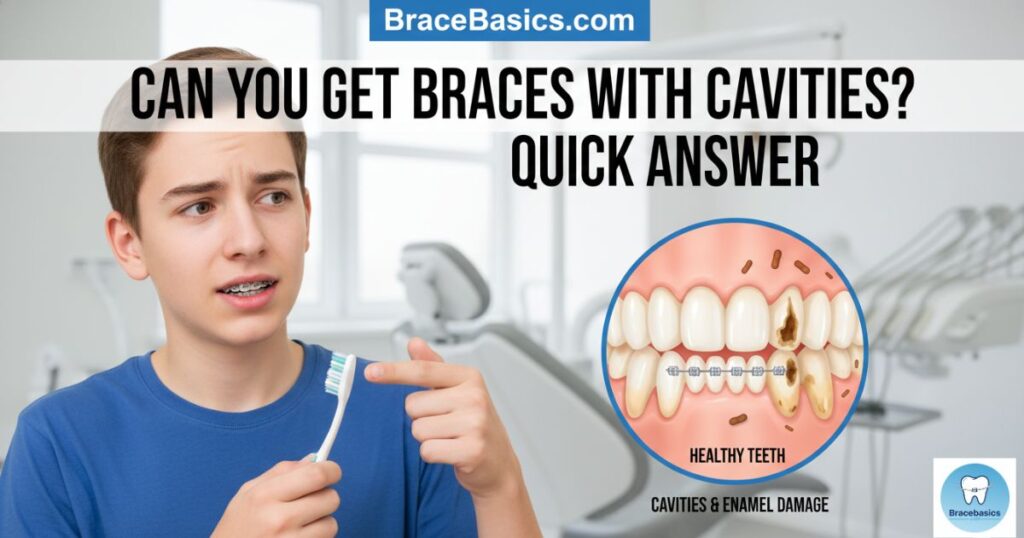
No, you generally cannot get braces with cavities. Braces put continuous pressure on your teeth, and any untreated cavities can worsen, cause cavity pain, weaken the enamel, and increase the risk of tooth infection. Dentists recommend that all cavity treatment and dental fillings be completed before starting orthodontic treatment to ensure healthy teeth before braces and prevent orthodontic complications.
What Are Tooth Cavities?
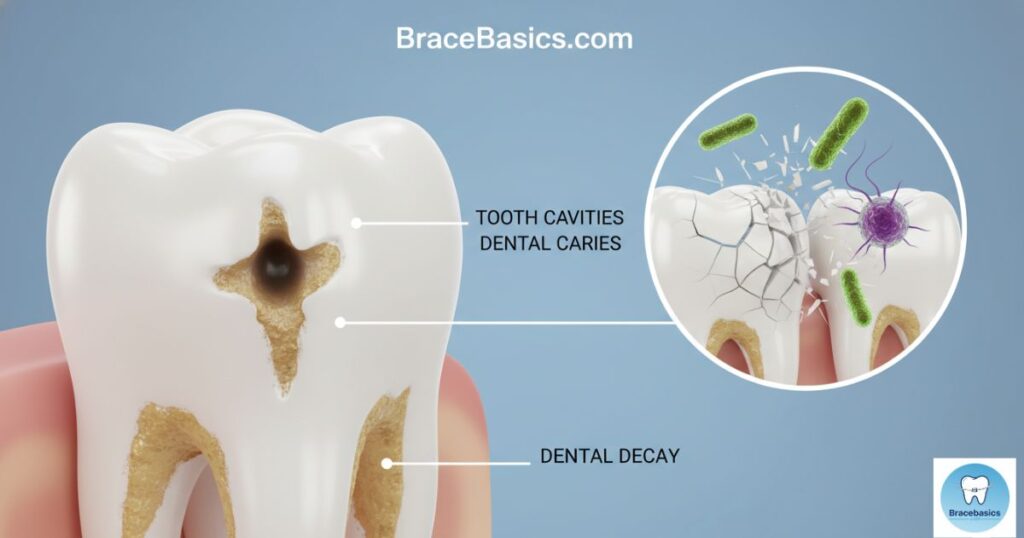
Tooth cavities are areas of permanent dental caries caused by bacteria in the mouth and poor oral hygiene routine. These bacteria produce acids that erode tooth enamel erosion, leading to enamel damage from bacteria. Cavities can cause cavity pain, sensitivity, and in severe cases, broken teeth risk if left untreated.
Symptoms of dental decay include visible holes, discoloration, or discomfort when eating sugary snacks and drinks. Dentists diagnose cavities during a dental examination, often using X-rays to detect hidden dental caries. Early cavity treatment preserves enamel and reduces the chance of complications during orthodontic treatment.
How Cavities Affect Braces Treatment
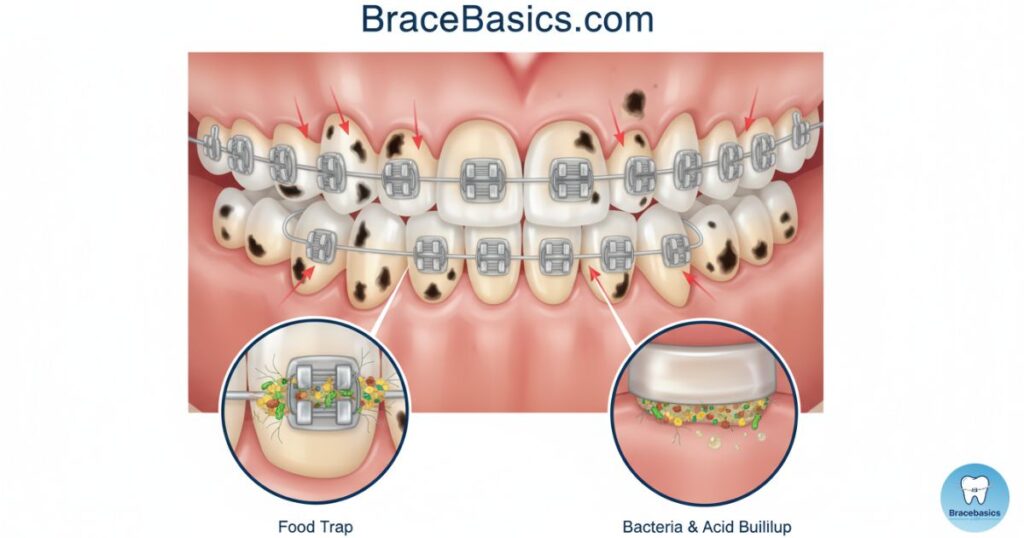
Starting braces with untreated cavities can lead to serious orthodontic process complications. Brackets and wires apply continuous pressure, which can worsen enamel damage and cavity pain. Cavity risks with braces include weakened teeth that may fracture under pressure, delaying treatment and compromising the final alignment.
Orthodontic adjustments become challenging when dental caries causes enamel weakening. Plaque and food particles trapped around orthodontic appliances accelerate tooth decay during braces, making tooth decay prevention critical. Coordinated care between the dentist and orthodontist ensures the teeth remain strong throughout braces and tooth decay treatment.
Can You Get Braces If You Have Cavities?
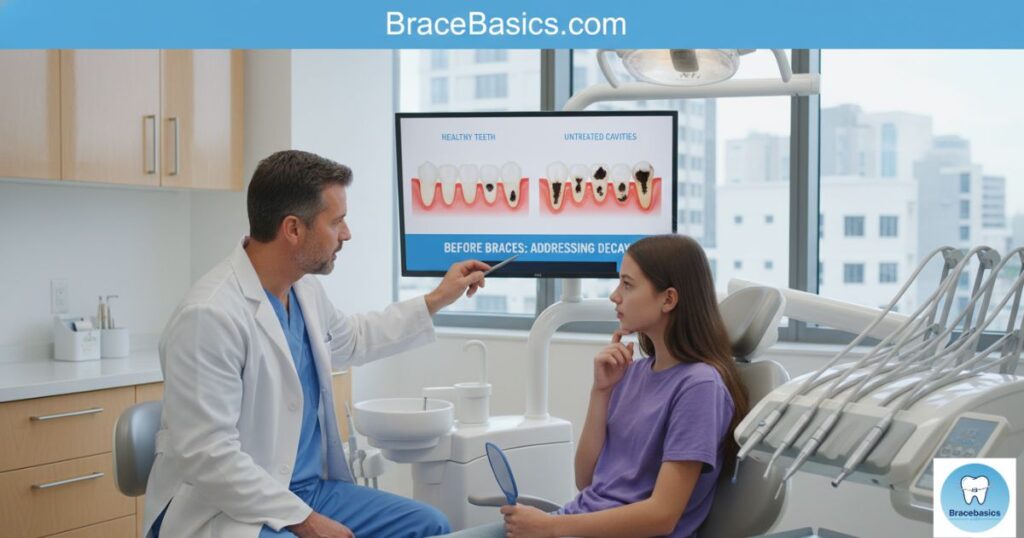
Dentists and orthodontists generally recommend treating cavity risks with braces before applying brackets. Braces with cavities may increase the risk of tooth infection, cavity-related tooth pain, and orthodontic complications. Any existing decay must be addressed to avoid long-term damage to weakened teeth.
While minor enamel erosion can sometimes be monitored, dental fillings or dental restoration are usually required. Following orthodontist advice for cavities ensures the brackets adhere properly and orthodontic success factors are maximized. Healthy enamel is a prerequisite for safe cavity management with braces.
Do You Need to Fill Cavities Before Braces?
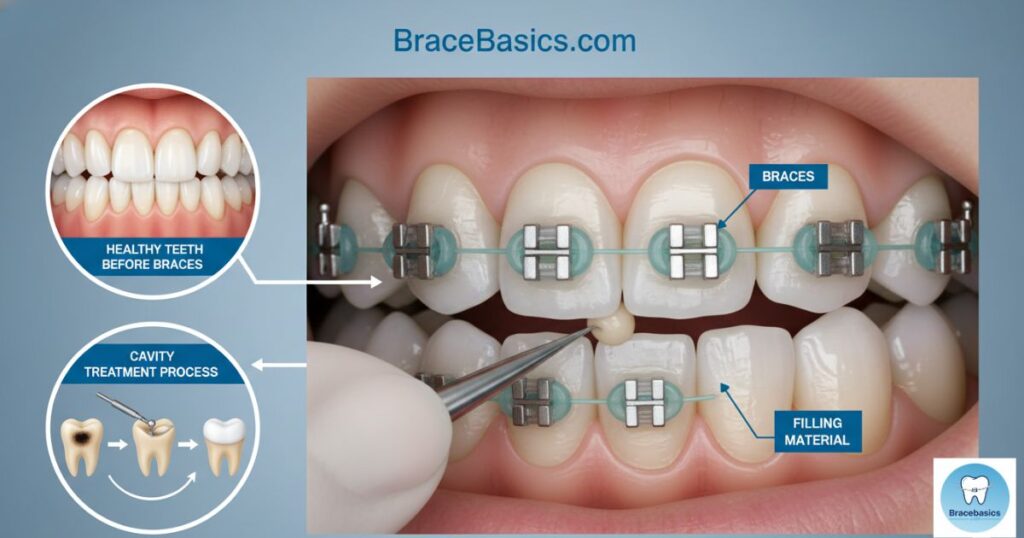
Yes, patients must get cavities filled before braces to maintain healthy teeth before braces. Cavity filling procedure strengthens the enamel and reduces risk of tooth infection. Ignoring treatment may lead to cavity during orthodontic treatment and complications during orthodontic adjustments.
Fluoride treatment and enamel-strengthening products may complement cavity treatment. Coordinating orthodontist and dentist coordination ensures fillings do not interfere with braces pressure and cavity pain, providing a stable foundation for brackets and wires throughout orthodontic treatment.
What Happens If You Start Braces With Untreated Cavities?
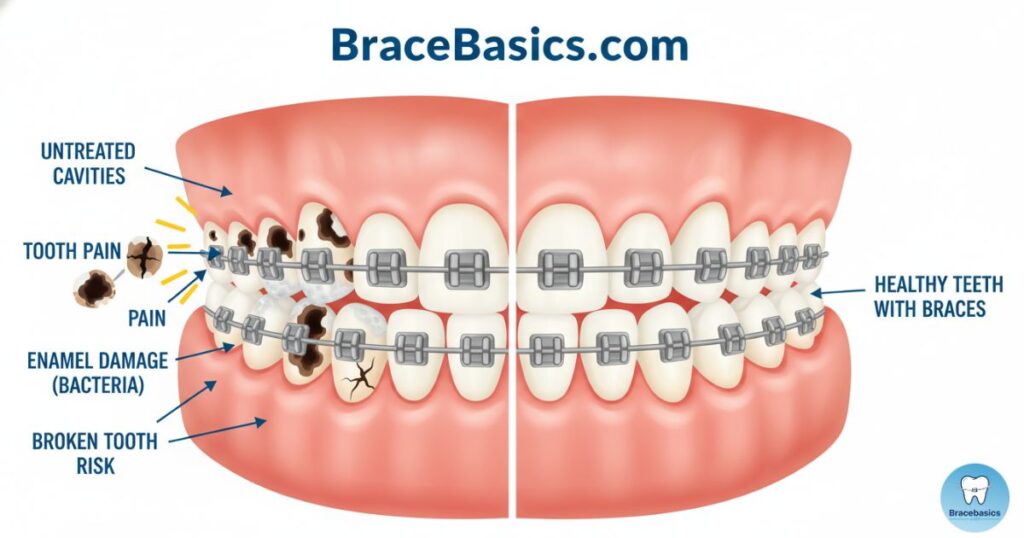
Starting braces with untreated cavities often leads to cavity-related tooth pain. Continuous pressure from orthodontic appliances can worsen enamel damage from bacteria, increase sensitivity, and raise the broken teeth risk. Tooth decay may progress rapidly under brackets, leading to serious orthodontic process complications.
Additionally, effects of cavities on orthodontic treatment include delayed treatment results, misaligned teeth due to weakened teeth, and poor aesthetic outcomes. Braces and tooth decay together can undermine orthodontic success factors, making early cavity treatment and preventive care essential for a healthy smile.
Can You Get a Cavity Filled While Wearing Braces?
Yes, a cavity filled with braces on is possible but depends on cavity location. Dentists may perform cavity filling procedure without removing brackets for accessible areas, but sometimes bracket and wire removal is required. Careful planning prevents damage to orthodontic appliances and ensures proper dental restoration.
During this process, orthodontist and dentist coordination is critical. Tools like interdental brush and water flosser help maintain oral hygiene with braces during healing. Proper care reduces cavity risks with braces and protects enamel-strengthening products from becoming ineffective.
Can You Get Braces If You Already Have Fillings?
Braces can be applied to teeth with dental fillings if the enamel is strong. Can you get braces with fillings is common in adults and teens with prior cavity treatment. The type of dental restoration influences how brackets adhere, and sometimes minor adjustments are required during orthodontic adjustments.
Will braces work on teeth with cavities is closely related to the quality of previous restorations. Composite fillings integrate better with orthodontic appliances, reducing cavity during orthodontic treatment risks. Regular dental check-ups help monitor fillings and prevent tooth decay during braces.
What If You Get a New Cavity After Getting Braces?
A cavity after getting braces requires prompt cavity management with braces. Dentists evaluate access and determine whether bracket and wire removal is needed. Cavity filling procedure prevents enamel damage and stops further dental decay under wires and brackets.
Cavity access with braces can be challenging. Tools like interdental brush, water flosser, and fluoride treatment aid oral hygiene routine to prevent further damage. Continuous dental examination ensures orthodontic success factors remain on track, maintaining a healthy smile with braces.
11 Powerful Tips for Safe Braces Treatment With Cavity Risk
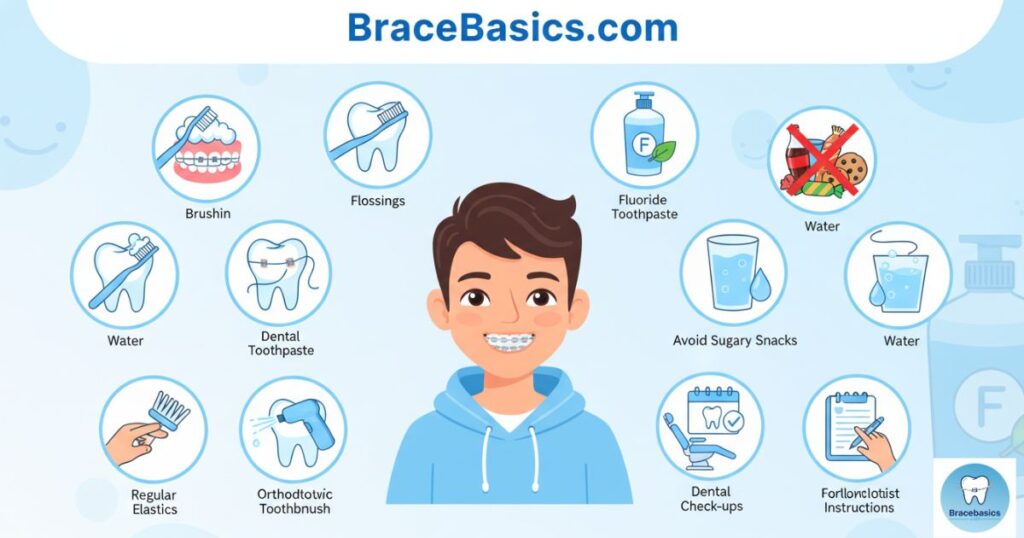
- Follow orthodontist care instructions to avoid orthodontic complications, protect weakened teeth, and ensure orthodontic success factors.
- Brush after every meal to remove food particles trapped around orthodontic appliances and prevent tooth decay during braces.
- Floss daily using a water flosser or interdental brush to eliminate bacteria in the mouth and reduce enamel damage.
- Use fluoride toothpaste to strengthen tooth enamel and protect against dental decay or acid erosion.
- Use fluoride mouthwash for extra enamel-strengthening support and to help prevent cavity-related tooth pain.
- Avoid sugary snacks carbonated and soft https://bracebasics.com/can-you-drink-soda-with-braces/drinks, which feed bacteria in the mouth and accelerate dental caries or tooth cavities.
- Limit acidic foods that cause acid erosion and weaken tooth enamel, increasing cavity risks with braces.
- Drink plenty of water to wash away food debris, neutralize acids, and maintain oral hygiene routine.
- Use an orthodontic toothbrush designed for braces and tooth decay prevention to reach tight spaces around brackets and wires.
- Use a water flosser daily to flush out hidden dental caries and maintain oral health maintenance.
- Visit your dentist regularly for dental check-ups, cavity monitoring, and cavity management with braces guidance.
How to Prevent Cavities When You Have Braces
Preventing braces and tooth decay requires strict oral health maintenance. Sealants, enamel-strengthening products, and proper brushing with orthodontic appliances reduce dental caries causes. Avoiding sugary snacks and drinks and following a strict oral hygiene routine minimizes cavity risks with braces.
Early detection is essential, as cavity symptoms may appear as sensitivity, discoloration, or minor pain. Prompt cavity treatment prevents orthodontic complications. Regular dental check-ups and monitoring pediatric cavities statistics or adult tooth decay concerns ensures a healthy smile with braces and a smooth orthodontic process.
Do people with braces get cavities easier?
Yes, tooth decay during braces is more common due to food trapping and difficulty cleaning around orthodontic appliances. Bacteria in the mouth thrive on leftover sugars, increasing cavity risks with braces. Regular dental check-ups and proper oral hygiene routine prevent enamel damage.
Using fluoride products, water flosser, and brushing around brackets minimizes orthodontic complications. Monitoring cavity symptoms like sensitivity or discoloration allows early cavity treatment, reducing broken teeth risk and ensuring orthodontic success factors are achieved.
How do I know if I have a cavity?
Cavity symptoms include tooth sensitivity, pain when eating sugary snacks and drinks, visible discoloration, or holes. Dentists perform dental examination using X-rays and tools to detect dental caries causes early. Early detection prevents orthodontic process complications.
Maintaining oral health maintenance, practicing dental hygiene with braces, and consulting orthodontist advice for cavities ensures cavity management with braces is timely. Prompt treatment reduces broken teeth risk, enamel damage from bacteria, and supports healthy smile with braces.
FAQs
Can you put braces on teeth with cavities?
You should not put braces on teeth with cavities. Untreated cavities can worsen under the pressure of orthodontic appliances, increasing cavity pain, enamel damage from bacteria, and the risk of tooth infection. Dentists usually require that all cavity treatment and dental fillings are completed before starting braces with cavities to ensure orthodontic success factors. Starting braces on decayed teeth can lead to orthodontic complications, including delayed treatment, broken teeth, and poor alignment.
What disqualifies you from getting braces?
Several dental conditions can temporarily disqualify someone from orthodontic treatment. Active tooth decay, severe gum disease, or widespread enamel damage must be treated first. Missing teeth without prior planning, uncontrolled oral hygiene issues, or chronic cavity-related tooth pain can also prevent safe braces application. Dentists need healthy teeth before braces to avoid orthodontic process complications and ensure brackets and wires bond properly. Once these conditions are managed, braces can usually be applied safely.
How long do you have to be cavity free to get braces?
There is no fixed timeline, but most orthodontists want patients to have a fully cavity-free dental examination before applying orthodontic appliances. Typically, after cavity treatment and any necessary dental fillings, dentists recommend maintaining excellent oral hygiene routine for a few weeks to ensure the teeth are strong and enamel-strengthening products have had time to protect the tooth enamel. Being cavity-free reduces cavity risks with braces and ensures smoother orthodontic adjustments.
Can I get braces without having fillings?
You can get braces without fillings if you have never had cavities and all teeth are healthy. Braces require strong, decay-free teeth because orthodontic appliances apply pressure that could worsen tooth enamel erosion or reveal hidden dental caries causes. If teeth have minor enamel damage but no cavities, fluoride treatment and careful monitoring may suffice. Dentists ensure that orthodontic success factors are met, so brackets adhere correctly and cavity management with braces is easier.
Conclusion
Starting braces without treating tooth cavities can jeopardize orthodontic success factors, cause cavity-related tooth pain, and create long-term orthodontic complications. Following orthodontist recommendations, practicing oral hygiene with braces, and completing cavity treatment before brackets are applied ensures a smooth, safe, and effective orthodontic journey.
A well-maintained oral hygiene routine, regular dental check-ups, and careful monitoring of cavity symptoms provide the foundation for a healthy smile with braces, protecting enamel and preventing braces and tooth decay throughout orthodontic treatment.
Table: Effects of Untreated Cavities During Braces
| Cavity Condition | Potential Risk | Recommended Action |
| Untreated cavities | Broken teeth risk | Fill before braces |
| New cavity during braces | Orthodontic complications | Prompt filling with wire adjustments |
| Enamel erosion | Weakened teeth | Use fluoride treatment |
| Sugary diet | Accelerated decay | Limit sugary snacks and drinks |
References
- CDC – About Cavities (Tooth Decay) – Comprehensive information on tooth cavities, causes, and prevention strategies.
- American Dental Association – Cavities – Detailed guide on dental decay, dental caries causes, and maintaining oral health maintenance.
- Mayo Clinic – Cavities: Diagnosis & Treatment – Expert insights on cavity treatment, dental restoration, and cavity filling procedures.
- ADA – Evidence-Based Clinical Practice Guideline on Restorative Treatments for Caries – Professional guidance on managing untreated cavities, enamel damage, and cavity management with braces.
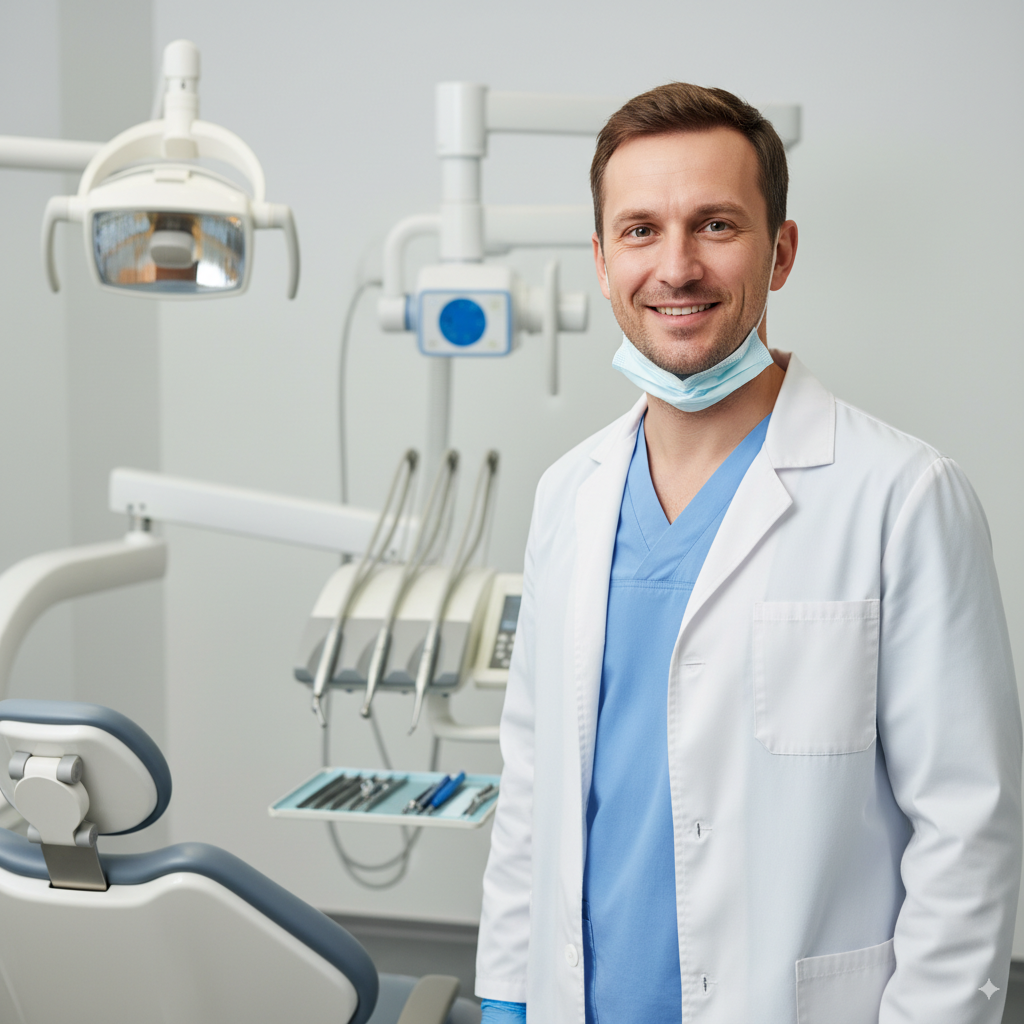
Hi, I’m Dr. Martin, the founder of BraceBasics.com. With years of experience in orthodontics, I’ve made it my mission to simplify braces care for patients of all ages. Here, you’ll find easy-to-understand advice, practical tips, and reliable resources to make your braces journey smoother, healthier, and stress-free. My goal is to help you smile with confidence every step of the way.