
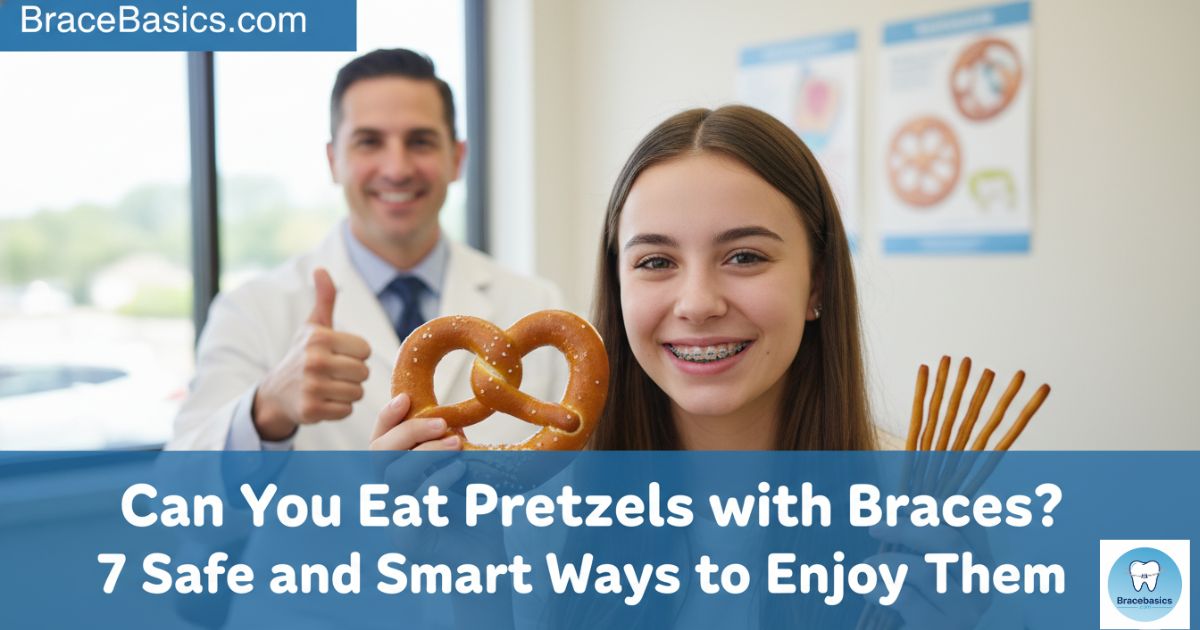
Pretzels are a classic snack, but when you’re wearing braces, eating pretzels with braces becomes a tricky question. Some varieties pose real danger to your orthodontic hardware, while others are much safer. This article covers why some pretzels are risky and gives you 7 safe and smart ways to enjoy pretzels without harming your brackets or wires.
Why Pretzels Can Be Risky with Braces?
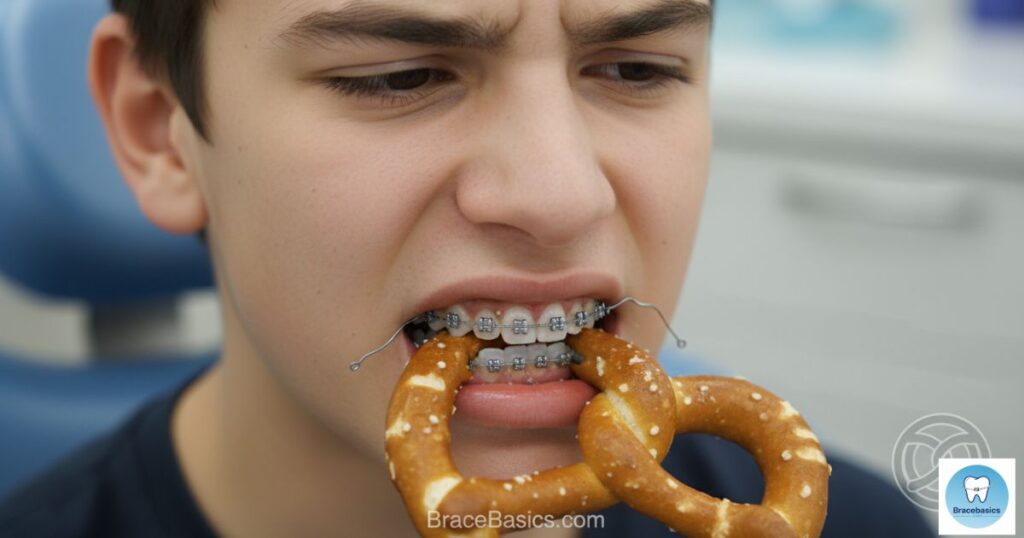
Hard, crunchy pretzels can easily lead to bracket damage risk and wire bending concerns, because biting into them exerts too much force. On top of that, pretzels coated with sticky or sharp toppings can trap around your braces, increasing the chance of orthodontic treatment care becoming complicated.
Can You Eat Pretzels with Braces? Short Answer
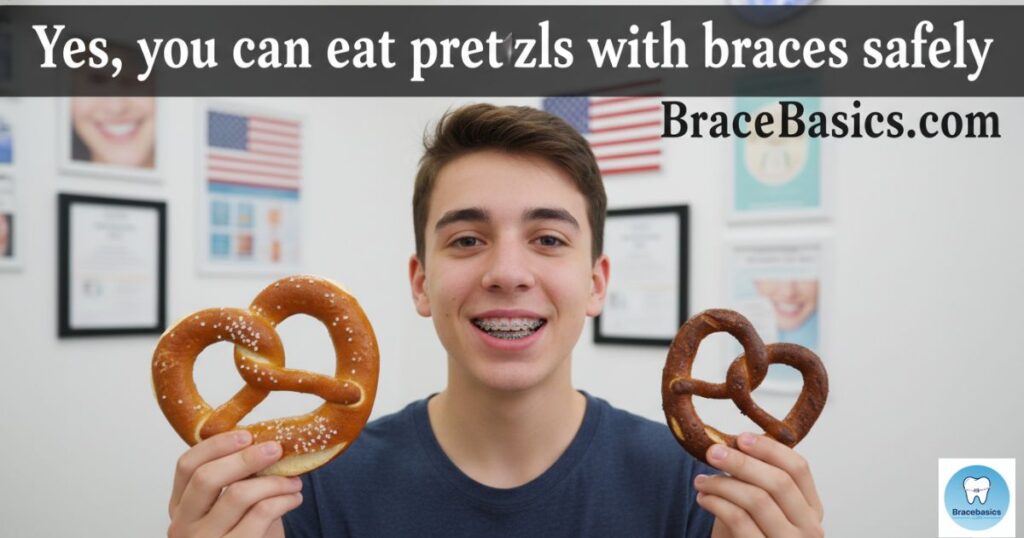
Yes, you can eat pretzels while wearing braces but only if you pick the right kinds and use care. Soft pretzels are much safer for your braces, and thin sticks or twists pose less risk than thick, rod-like pretzels. Still, you need to manage bite pressure management to keep your orthodontic treatment on track.
Safe Pretzel Options
Soft Pretzels
Soft pretzels are a braces‑friendly choice because their dough is gentle and pliable, offering minimal stress on brackets and wires. When you take small bites and chew slowly using your back teeth, you reduce strain on sensitive teeth and uphold optimal chewing techniques. This way, you enjoy a beloved snack without risking damage.
Thin Pretzel Sticks or Twists
Thin pretzel sticks or twisted pretzels give you the crunch you love while reducing risk because they are less dense than pretzel rods. If you choose them, break them into bite‑size food pieces and chew cautiously. This helps with bite pressure management, lowers the chance of wire bending concerns, and keeps your braces intact.
Pretzels to Avoid
Hard, Crunchy Pretzels
Crunchy, rigid pretzels are a big no for braces. Their hardness can lead to bent wires, broken brackets, or both. Orthodontists consistently warn against these, because they increase bracket damage risk and can delay your treatment, as explained by Thomas Orthodontics.
Thick Pretzel Rods
Those thick, rod‑style pretzels are especially dangerous: you often bite them off piece by piece, which applies too much force on your orthodontic hardware. The risk of wire bending concerns or bracket breakage is very high with these.
Pretzels with Sharp Corners
Pretzels that are hard and have sharp edges or corners can scratch your gums or your bracket bases. Even if they’re not as hard as pretzel rods, their shape makes them risky for maintaining braces integrity, especially if chewed carelessly.
7 Tips to Enjoy Pretzels Safely with Braces
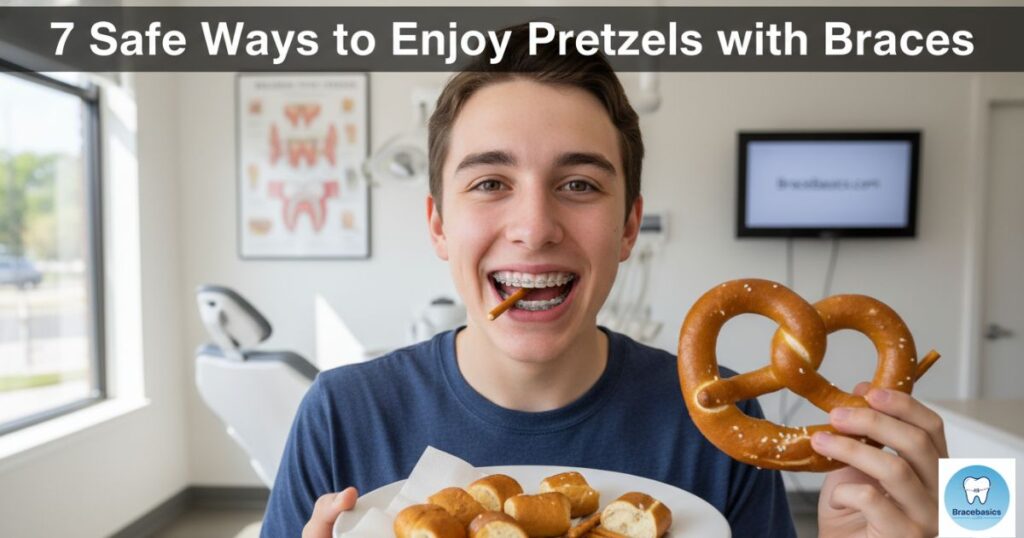
First, always chew with your back teeth rather than front ones. Your molars can handle more pressure, reducing risk to your front brackets. Then, take small bites, small bites minimize sudden force on your braces and help with better bite‑size food pieces control. If you have a large pretzel, break it into small pieces in your hand before eating. This makes each bit much safer.
Avoid any pretzel that’s coated in something sticky like caramel or nuts. Those toppings can cling to wires and braces, which isn’t good for oral hygiene with braces. After eating, rinse or brush after meals to remove crumbs and prevent buildup. Make soft pretzels your first choice, since they are far gentler than the crunchy ones. Finally, be thoughtful about the shape: avoid sharp corners or thick rods, because they can harm your braces or irritate your gums.
Can you eat chocolate covered pretzels with braces?
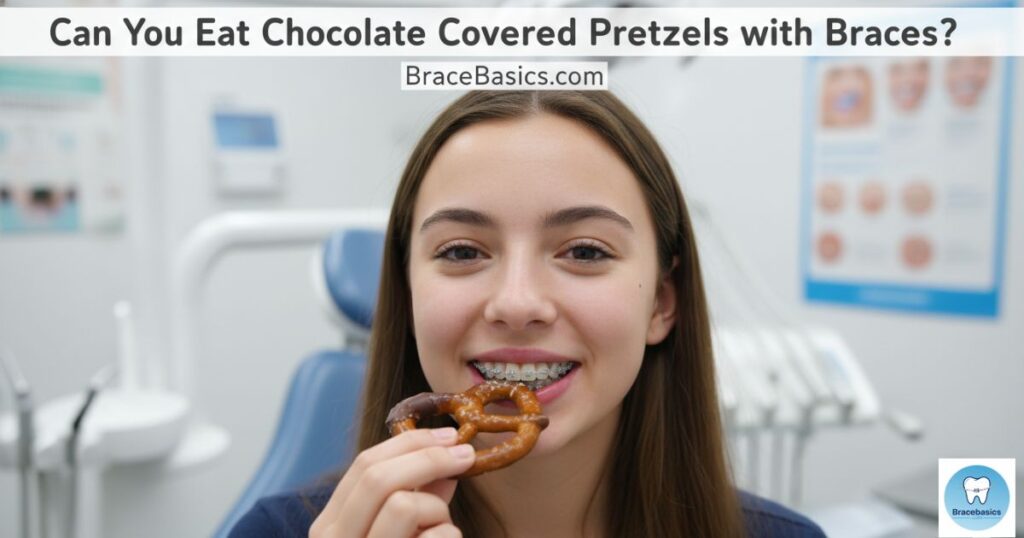
Yes, you can eat chocolate-covered pretzels with braces, but you need to be careful. Plain chocolate is usually fine, but the pretzel part can be hard and crunchy, which increases bracket damage risk or wire bending concerns.
To enjoy them safely, break the pretzel into small bites for braces, chew slowly using your back teeth, and avoid any sticky toppings like caramel or nuts that cling to brackets. Always brush after meals or floss after meals to maintain oral hygiene with braces and prevent cavities.
FAQs
Can you eat a pretzel with braces?
Yes, you can eat pretzels with braces, but only if you choose the right type. Soft pretzels for braces are safe because they are gentle on brackets and wires. Thin pretzel sticks or twists are also better than thick rods or hard, crunchy pretzels. Always break them into bite-size food pieces and chew slowly to reduce bracket damage risk and wire bending concerns. Avoid pretzels with sharp edges or sticky coatings to protect your orthodontic treatment care.
What junk food can you eat with braces?
Not all junk food is off-limits with braces. Softer options like soft breadsticks, soft pretzel bites, yogurt, pudding, and ice cream are safe. Avoid chewy, sticky, or hard foods like caramel, nuts, or candy bars, as they increase strain on sensitive teeth and risk bracket damage. Stick to braces-friendly foods and mindful snacking with braces to maintain oral hygiene with braces and prevent dental complications.
What salty snacks can I eat with braces?
Salty snacks can be enjoyed if they are soft and easy to chew. Thin pretzel sticks, cheese puffs that crumble easily, soft popcorn, and baked chips are braces-safe alternatives. Avoid hard pretzels, thick crackers, or nuts. Eating softer versions ensures bite pressure management and protects braces from wire bending concerns while letting you enjoy salty flavors safely.
Are pretzels ok for your teeth?
Soft pretzels are generally safe for teeth and braces when eaten carefully. Hard pretzels, however, can increase enamel protection risks by applying too much force and potentially breaking brackets or wires. Chocolate-covered pretzels add sugar, so you must clean your teeth thoroughly afterward to maintain optimal oral hygiene with braces and prevent cavities.
Can I eat chocolate covered pretzels with braces?
Chocolate-covered pretzels can be eaten cautiously. The chocolate is usually soft, but the pretzel may be hard or crunchy, creating bracket damage risk. Break them into small bites for braces, chew slowly, and avoid pretzels with sticky toppings like caramel or nuts. Always brush after meals or floss after meals to keep braces clean and maintain enamel protection.
What kind of pretzels can you eat with braces?
The safest options are soft pretzels for braces, soft pretzel bites, and thin pretzel sticks or twists. Avoid hard, thick pretzel rods or pretzels with sharp edges. Eating smaller pieces and chewing with your back teeth ensures bite pressure management and keeps your braces safe, supporting orthodontist food recommendations and maintaining braces integrity.
Is it okay to eat melted chocolate with braces?
Yes, melted chocolate is usually safe as long as it is smooth and free of sticky or crunchy additions. Avoid chocolates with nuts or caramel, which can cling to brackets and cause bracket damage risk or wire bending concerns. Melted chocolate can be a safe chocolate snack option if consumed carefully and followed by brushing after meals.
Is chocolate allowed in braces?
Yes, chocolate is allowed with braces, but moderation and care are key. Stick to soft, smooth chocolate and avoid chunky, sticky, or hard chocolate treats. Eating chocolate safely supports oral hygiene with braces and prevents dental complications, making it a permissible treat as part of braces-friendly foods.
Conclusion
Pretzels don’t have to be totally off-limits when you have braces. By choosing the right kinds like soft pretzels or thin pretzel sticks and following careful eating habits, you can enjoy them without compromising orthodontic treatment care. Be cautious, keep your oral hygiene with braces solid, and snack smart to protect your smile and avoid delays in your treatment.
Additional Braces‑Friendly Snack Ideas
If you’re craving something soft but different than pretzels, consider soft snack alternatives like soft breadsticks, soft pretzel bites, or even soft fruits and yogurts. These orthodontic snack options help you stick to braces food guidelines without feeling deprived and they’re safer than hard or sticky foods. You can check more braces‑friendly foods from trusted sources like the Orthodontics Australia nutritional guide for more ideas.
Hi, I’m Dr. Martin, the founder of BraceBasics.com. With years of experience in orthodontics, I’ve made it my mission to simplify braces care for patients of all ages. Here, you’ll find easy-to-understand advice, practical tips, and reliable resources to make your braces journey smoother, healthier, and stress-free. My goal is to help you smile with confidence every step of the way.