
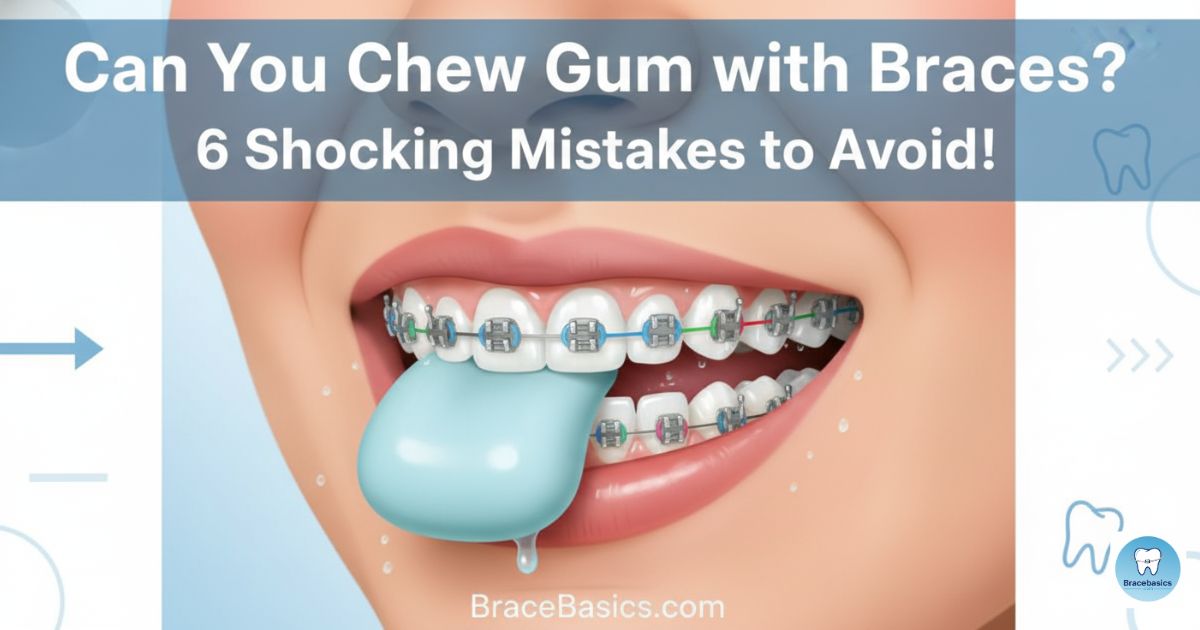
Chewing gum with braces isn’t always harmful, but it comes with clear rules. Many people make simple mistakes that damage braces or slow treatment progress. Understanding safe gum for braces and proper oral care can protect your teeth and ensure your braces work effectively.
Can You Chew Gum with Braces?
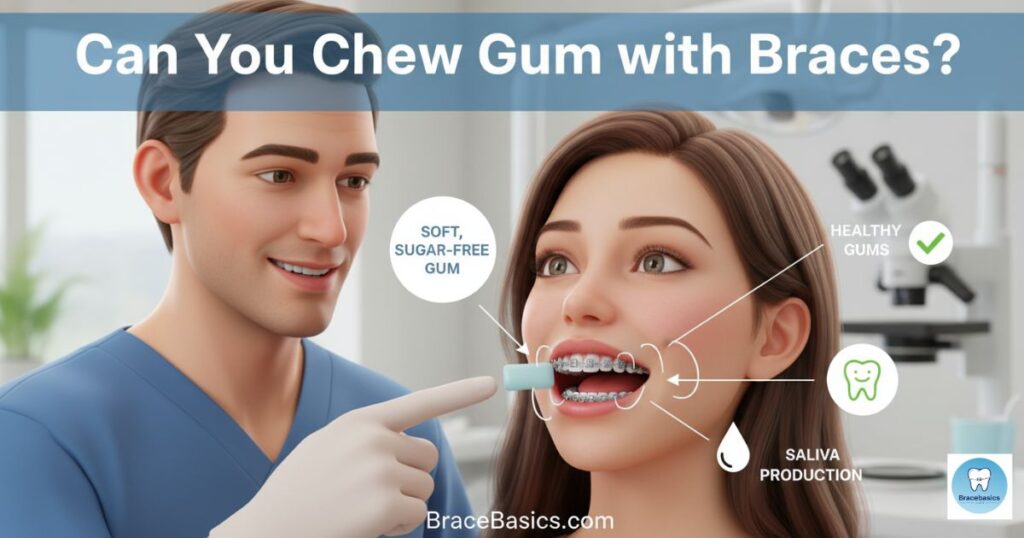
Orthodontists now recognize that chewing gum with braces can be safe if done correctly. Modern treatments allow patients to enjoy gum occasionally, but it must be sugar-free gum for braces to avoid cavities. Using the wrong type can cause hard gum and braces damage or lead to stuck brackets.
Sugar-free gum stimulates saliva, which helps neutralize acids and maintain oral health. This makes it the best gum for braces for patients who want to freshen their breath or relieve mild discomfort after adjustments. Timing is also critical; chewing gum timing with braces should avoid immediately after tightening to prevent stress on new wires.
How Does Chewing Gum Affect Braces?
Chewing gum with braces interacts directly with brackets and wires. Sticky gum can cling to brackets, causing wires to bend or break, while hard gum can chip enamel or dislodge hardware. However, soft, xylitol-containing gum can actually improve oral health, helping clean food particles and stimulating saliva production.
The benefits include fresh breath, relief from soreness after adjustments, and aiding digestion by increasing saliva. Patients should follow orthodontist advice on chewing gum and know that improper habits can lead to costly repairs or prolonged treatment.
The Type of Gum Matters
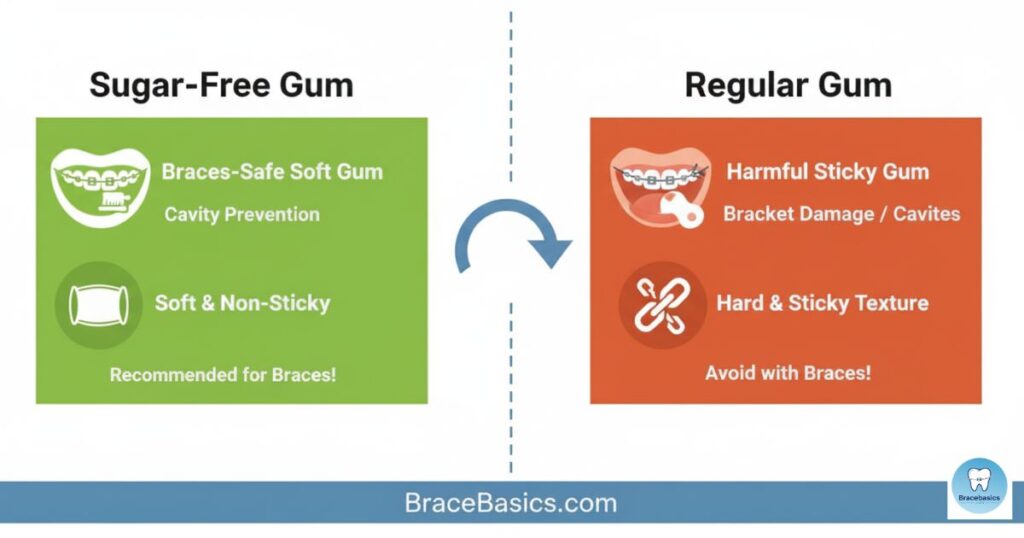
Not all gum is suitable for braces wearers. Sticky gum and braces can easily trap under wires, creating cavities or enamel stains. Hard gum and braces damage is common when patients ignore the type of gum they use. Soft gum for braces wearers reduces stress on brackets and wires, making it the safest option.
Patients should select ADA-approved sugar-free gum for braces. Avoid gum with high sugar content or gum that stretches excessively. Tables comparing gum types help illustrate safe choices:
| Gum Type | Safety for Braces | Notes |
| Sugar-free, soft | High | Stimulates saliva, reduces cavities |
| Regular bubble gum | Low | Sticky, damages brackets |
| Hard candy-like gum | Very Low | Can bend wires or break brackets |
Sugar-Free vs. Regular Gum
Sugar-free gum for braces reduces cavity risk and prevents plaque buildup. It contains xylitol, which strengthens enamel and limits harmful bacteria growth. Regular gum is sticky, can damage wires, and increases acid levels in the mouth.
Types of Gum That Are Safe for Braces
The safest gum includes soft, sugar-free, and ADA-approved gum. Patients should avoid sticky or hard gum, which increases the likelihood of can gum break braces incidents. Soft gum prevents what happens if gum sticks to braces scenarios and protects the progress of treatment.
The Dos of Chewing Gum with Braces
Choosing the best gum for braces is essential. Do choose sugar‑free gum to protect enamel, reduce acid, and promote oral hygiene. It helps maintain teeth between meals without damaging wires or brackets.
Do brush your teeth after chewing gum to remove sugar residue and avoid cavities. Proper brushing after chewing gum ensures food doesn’t stay trapped under brackets. Additionally, do chew gum in moderation, limiting sessions to 10–15 minutes to avoid excess pressure on your braces.
Do Choose Sugar-Free Gum
Using sugar-free gum reduces the risk of cavities and enamel erosion. It supports oral hygiene by stimulating saliva flow and cleaning small debris trapped around brackets. Patients can enjoy gum without compromising the safety of their braces.
Do Brush Your Teeth After Chewing Gum
Brushing after gum is critical to how to clean braces after chewing gum. It removes residual sugars and acids, preventing stains and bacterial growth. Proper brushing also ensures patients avoid what to do if braces break while chewing gum scenarios.
Do Chew Gum in Moderation
Moderation prevents excessive stress on brackets and wires. Over-chewing can lead to jaw pain and misaligned braces. Timing is essential; avoid chewing immediately after tightening. Following chewing gum timing with braces guidelines protects your smile and treatment plan.
The Don’ts of Chewing Gum with Braces
Patients must avoid mistakes that cause hard gum and braces damage. Don’t chew gum if braces are loose or broken, as it can worsen damage. Don’t chew gum immediately after tightening, because new adjustments are delicate and vulnerable.
Chewing while experiencing jaw discomfort is also harmful. Don’t chew gum if you have jaw pain, since this can intensify strain and delay treatment. Ignoring these rules can lead to longer treatment times and additional visits to the orthodontist.
Don’t Chew Gum if Braces Are Loose or Broken
Loose or broken brackets increase the risk of can gum get stuck in braces incidents. Patients must avoid gum entirely until the braces are checked and repaired.
Don’t Chew Gum Immediately After Tightening
New wires are sensitive, and chewing too soon can dislodge brackets. Understanding can I chew gum after tightening braces prevents unnecessary damage and discomfort.
Don’t Chew Gum if You Have Jaw Pain
Jaw strain worsens with gum chewing. Patients should follow how to prevent jaw pain from chewing gum and allow their mouth to adjust after orthodontic adjustments.
Mistakes Most People Make When Chewing Gum with Braces
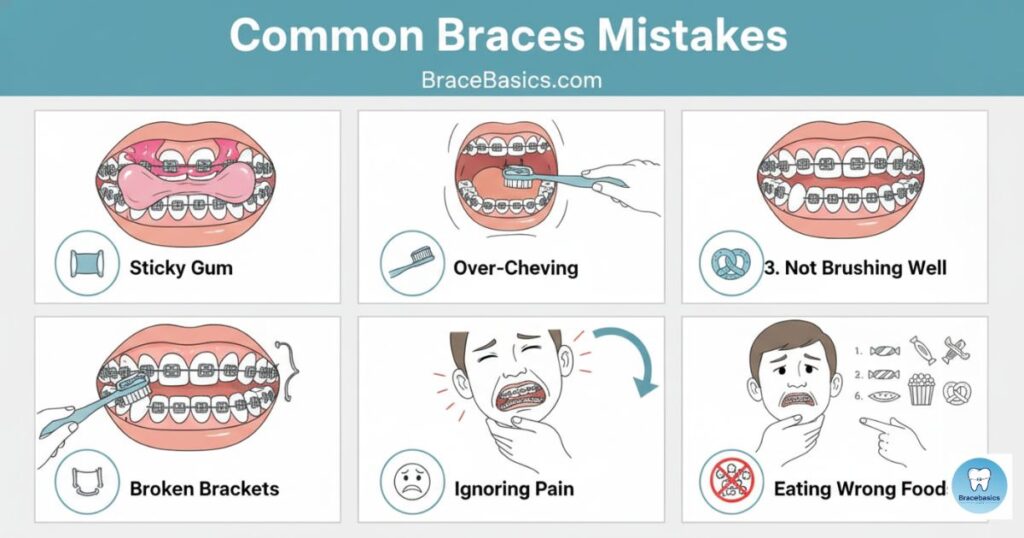
Here’s a concise list of 6 mistakes most people make when chewing gum with braces:
- Chewing sticky gum and braces – Many people don’t realize that sticky gum can cling to brackets and wires, causing them to bend or break. Always pick soft gum for braces wearers instead.
- Ignoring pain or discomfort – Chewing while your mouth is sore or your jaw is aching can make the pain worse and even affect your braces’ alignment.
- Over-chewing – Spending too long chewing gum can put unnecessary pressure on brackets and wires, increasing the risk of damage. Stick to short chewing sessions.
- Not brushing after chewing gum – Failing to brush lets sugar residue and bacteria linger, raising the chance of cavities. Brushing after chewing gum keeps your teeth healthy.
- Chewing with broken or loose braces – Any damaged or loose brackets can be worsened by chewing, which might lead to costly repairs or treatment delays.
- Using gum without orthodontist approval – Skipping guidance from your orthodontist can cause issues, especially if you’re unsure about what kind of gum is safe for braces.
Alternatives to Chewing Gum with Braces
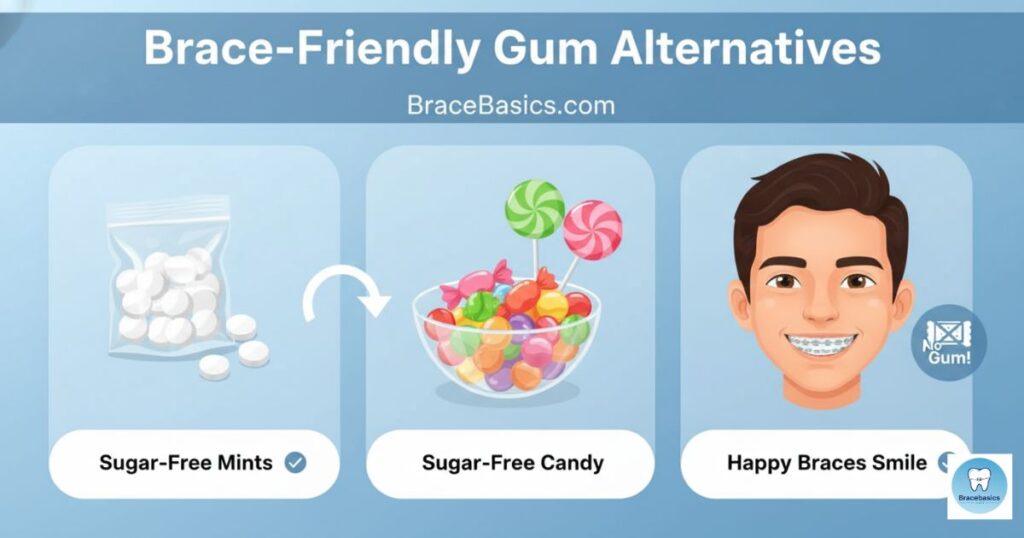
Patients can freshen their mouth safely without gum. Sugar-free mints for braces and sugar-free candy for braces offer safe breath freshening options. Additionally, mouthwash for braces care is highly effective in cleaning brackets and wires.
These alternatives prevent stress on brackets and wires while maintaining oral hygiene with braces. Switching occasionally to safe alternatives reduces the chance of can gum get stuck in braces incidents.
Mints
Soft, sugar-free mints are effective for freshening breath without risking braces damage. Patients should look for xylitol-containing mints for additional xylitol benefits for teeth.
Sugar-Free Candy
Soft sugar-free candy provides enjoyment without causing hard gum and braces damage. They are excellent alternatives to sticky or chewy gum.
Oral Rinses
Rinsing the mouth with fluoride or antiseptic solutions helps maintain oral hygiene with braces. It prevents food buildup and freshens breath safely.
What to Do if Gum Gets Stuck in Your Braces
If gum sticks, gently remove it with floss or a soft brush. Rinse thoroughly and brush after chewing gum to avoid cavities. Contact your orthodontist if removal is difficult, preventing what to do if braces break while chewing gum situations.
Tips for Safe Gum Chewing with Braces
Keep braces care tips in mind. Always have floss, wax, and a toothbrush available. Follow orthodontist advice on chewing gum, attend regular checkups, and educate yourself on foods to avoid with braces. Proper knowledge ensures safe and enjoyable gum chewing.
Benefits of Chewing Sugar-Free Gum with Braces
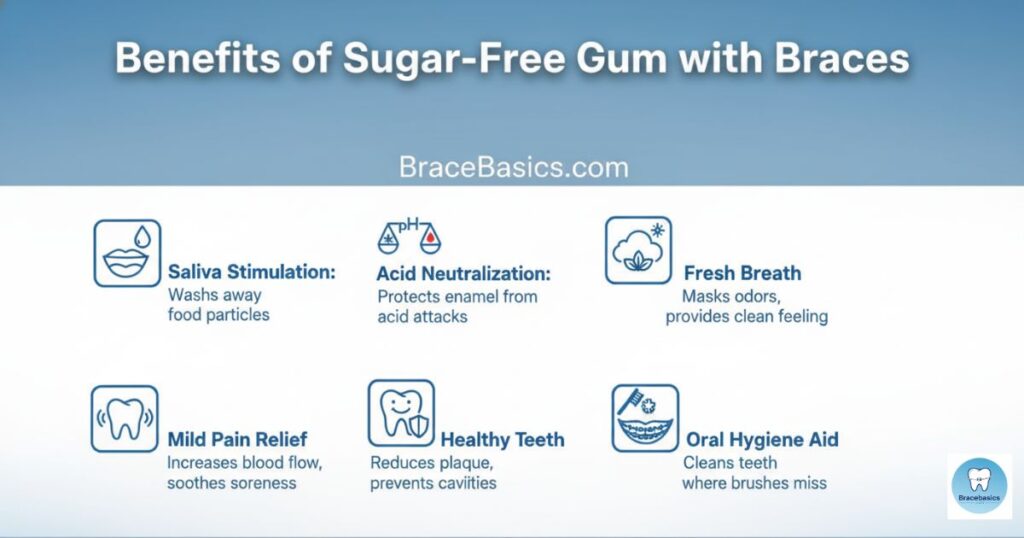
Here’s the Benefits of Chewing Sugar-Free Gum with Braces:
- Stimulates saliva production – Chewing sugar-free gum for braces increases saliva, which naturally neutralizes acids and washes away food particles.
- Helps keep teeth clean – Extra saliva aids in how to keep teeth clean with braces, reducing plaque and protecting enamel.
- Relieves soreness – Gentle chewing eases minor discomfort after braces adjustments, making your mouth feel more comfortable.
- Maintains fresh breath – Regular gum chewing supports fresh breath with braces throughout the day.
- Supports oral hygiene routines – Complements brushing after chewing gum and mouth rinses, ensuring maintaining oral hygiene with braces.
- Reduces risk of cavities and staining – Sugar-free gum lowers acid buildup and protects teeth from decay, helping preserve a healthy smile.
Conclusion
Safe gum chewing protects braces, reduces treatment delays, and supports oral health. Patients should follow best gum for braces guidelines, avoid sticky or hard gum, and use alternatives like mints or sugar-free candy. Always consult your orthodontist before chewing gum and practice proper brushing and rinsing routines to maintain healthy, clean teeth with braces.
FAQs
Can you chew Trident gum with braces?
Yes, Trident gum is generally safe for braces because it is sugar-free. Sugar-free gum like Trident helps reduce acid in the mouth, protects enamel, and stimulates saliva. However, only chew it in moderation and avoid sticky or hard varieties, as these can still damage brackets or wires.
How long until you can chew gum with braces?
It’s best to wait at least 24–48 hours after getting braces or after a tightening appointment before chewing gum. This allows your teeth and brackets to settle, preventing loose or broken brackets and avoiding unnecessary strain on wires. Always follow your orthodontist advice on chewing gum.
Does gum actually stick to braces?
Yes, gum can stick to braces, especially if it’s sticky or sugary. Sticky gum can cling to brackets and wires, potentially bending them or causing braces damage. Using soft sugar-free gum significantly reduces the risk of gum sticking to your braces.
Can You Chew EXTRA Sweet Watermelon Sugar-Free Gum With braces?
Yes, EXTRA Sweet Watermelon sugar-free gum is safe for braces if chewed gently and in moderation. Being sugar-free, it doesn’t promote cavities and can help freshen breath. Avoid over-chewing or chewing immediately after tightening, as this can cause bracket stress or jaw discomfort.

Hi, I’m Dr. Martin, the founder of BraceBasics.com. With years of experience in orthodontics, I’ve made it my mission to simplify braces care for patients of all ages. Here, you’ll find easy-to-understand advice, practical tips, and reliable resources to make your braces journey smoother, healthier, and stress-free. My goal is to help you smile with confidence every step of the way.