
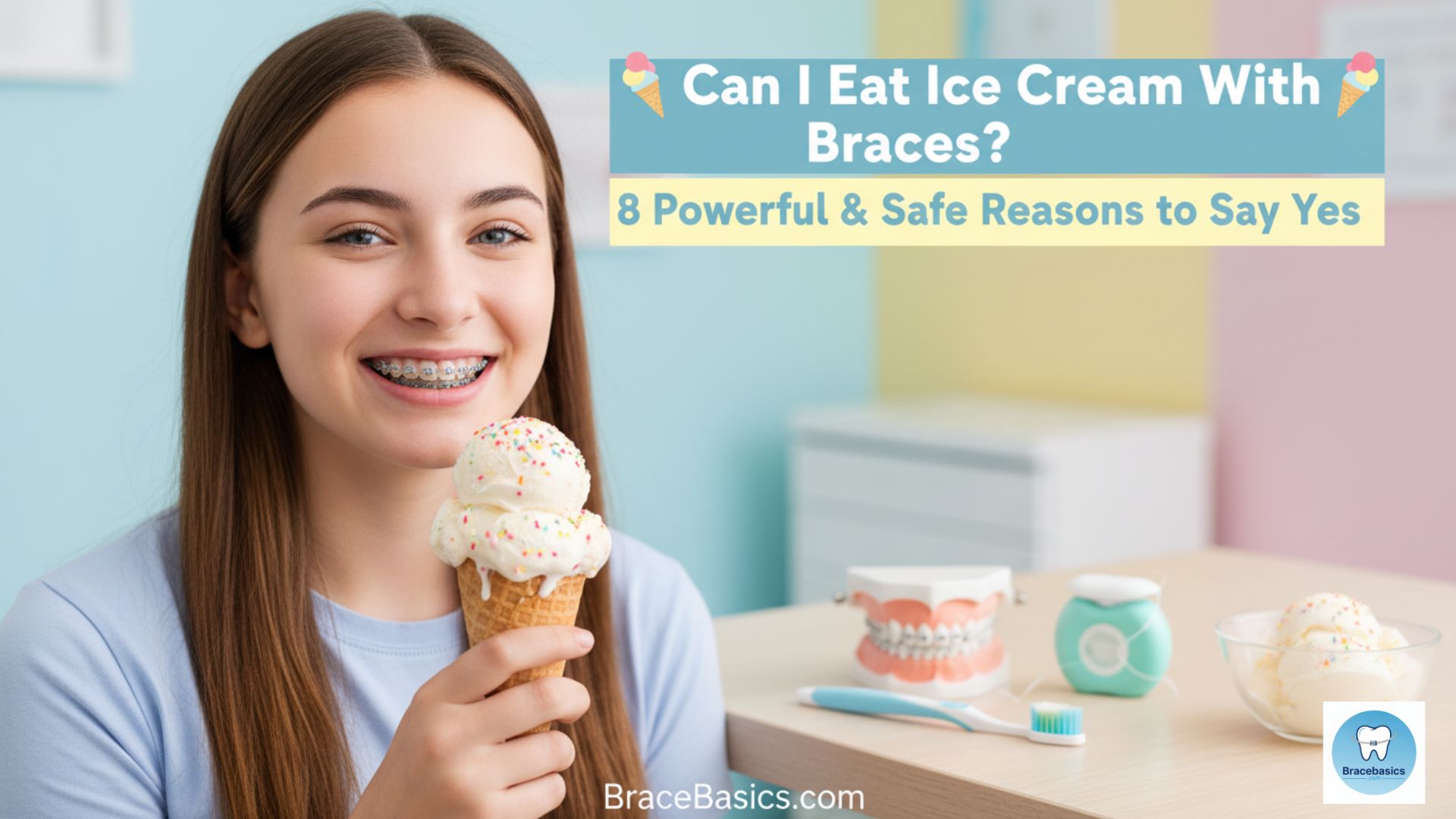
Ice cream often feels forbidden once braces on teeth appear. However, that fear usually comes from confusion rather than facts. Many people worry about cold pain, sugar damage, or broken brackets and wires. The truth sits somewhere calmer and far more reassuring for everyday life.
Across the United States, orthodontic patients ask the same question during ice cream and orthodontic treatment. With guidance based on orthodontist advice, ice cream can fit safely into treatment. Texture, timing, and care matter more than avoidance. Understanding those details changes everything.
Surprisingly, ice cream behaves gently around dental hardware when eaten correctly. Unlike crunchy snacks, it softens quickly. That quality makes it one of the most comforting soft foods for braces during sore days. The cold also plays a role in calming discomfort.
For teens with colored braces bands and adults using clear braces for adults, ice cream often becomes a comfort ritual. When chosen wisely, it supports emotional comfort without risking treatment progress or damaging orthodontic braces.
Can I Eat Ice Cream With Braces?
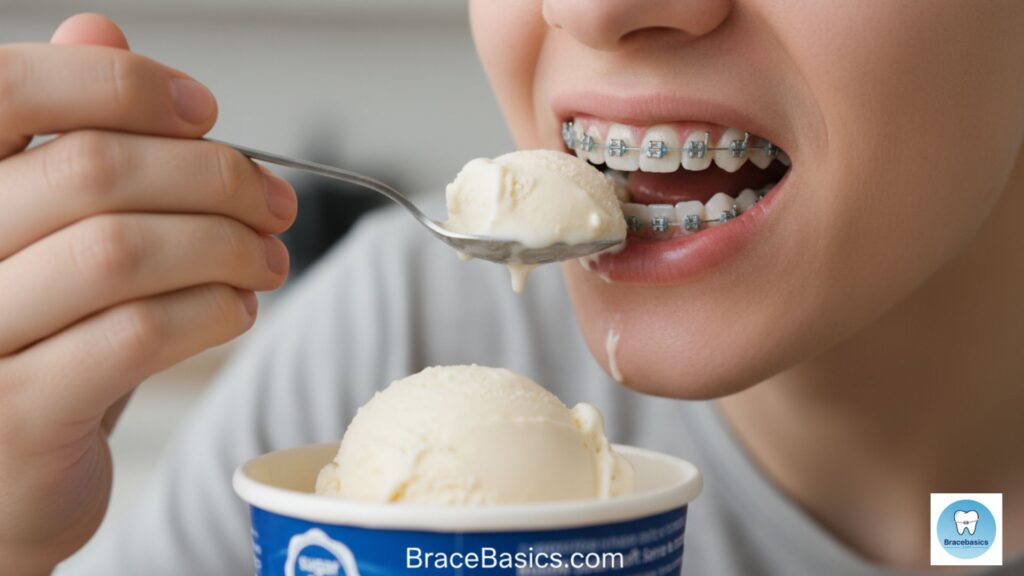
Yes, you can eat ice cream with braces, but with care. Ice cream is generally soft and melts quickly, which makes it one of the most braces-friendly desserts you can enjoy. It does not directly damage metal braces, ceramic dental braces, or clear braces for adults. In fact, the cold temperature can help reduce braces tightening pain and calm sensitive teeth after adjustments.
The key is how you eat it. Avoid biting directly into hard, frozen scoops because that can put pressure on brackets and wires and potentially cause damage. Instead, let the ice cream soften slightly and eat it with a spoon. Also, stay mindful of the sugar content. Ice cream sugar and braces can contribute to plaque buildup and tooth decay if not cleaned properly. After eating, rinse your mouth with water, and follow your usual oral hygiene routine using fluoride toothpaste, brushing and flossing, or tools like a water flosser or interdental brushes to protect your teeth and dental hardware.
With these precautions, enjoying ice cream is perfectly safe, soothing, and compatible with your orthodontic treatment.
Is Ice Cream Safe to Eat with Braces?
Ice cream remains safe because it lacks crunch. Safety depends on temperature awareness and portion control. Rock-hard scoops can trigger braces and tooth sensitivity if bitten directly. Letting it soften avoids that risk entirely.
Sugar exposure matters though. Ice cream sugar and braces require balance through cleaning. With proper oral hygiene routine, ice cream stays enjoyable without increasing tooth decay or plaque buildup.
When Can You Eat Ice Cream With Braces?
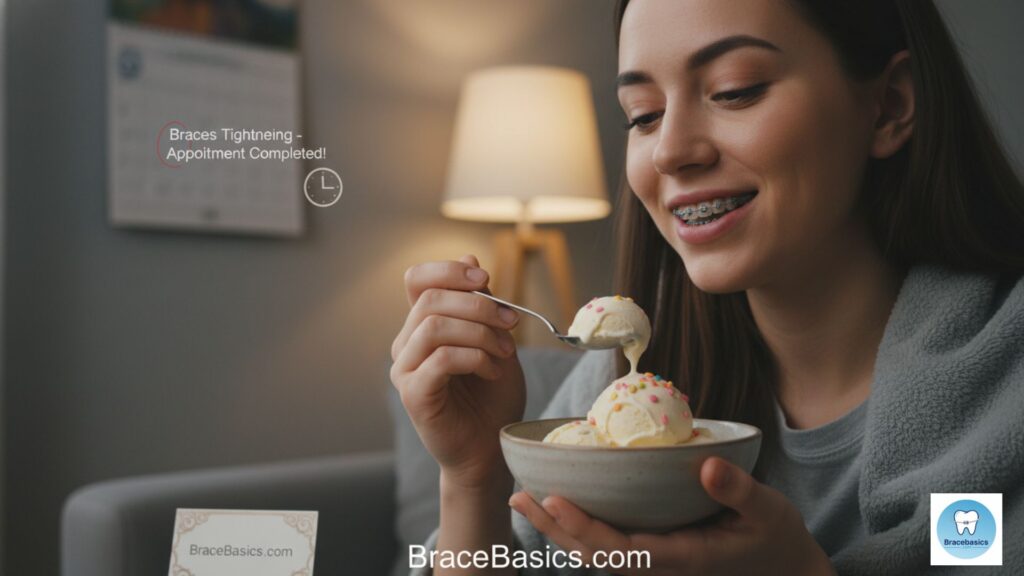
Timing shapes comfort more than most foods. Ice cream often works best during sensitive phases. Many orthodontists suggest cold foods after adjustments due to their soothing effect on swollen tissues and tight ligaments.
Understanding when to eat ice cream reduces discomfort and prevents regret. From day one to final months, ice cream can stay present during treatment when timing aligns with healing stages.
How Soon After Getting Braces Can I Eat Ice Cream?
Eating ice cream after getting braces often feels comforting within the first 24 hours. Teeth feel tender. Gums feel tight. Cold foods help calm braces tightening pain while allowing nourishment without chewing stress.
This early phase favors soft serve ice cream, milkshakes and smoothies, or melted scoops. These choices avoid pressure while supporting recovery from new orthodontic braces.
Can I Eat Ice Cream Right After Getting My Braces Adjusted?
Yes, ice cream after braces tightening often reduces soreness. Cold lowers inflammation around roots and ligaments. Many patients describe ice cream and braces pain relief as immediate and noticeable.
Avoid biting frozen chunks after adjustments. Spoon-fed ice cream protects braces on teeth while easing discomfort linked to sensitive teeth.
Can I Eat Ice Cream During the Entire Duration of Treatment?
Ice cream fits throughout treatment with moderation. Long-term enjoyment depends on hygiene habits and smart choices. Soft textures remain friendly to dental hardware during every phase.
Consistency matters. Regular brushing prevents braces and plaque buildup from sugars. When care stays strong, ice cream remains a safe companion from start to finish.
8 Powerful & Safe Reasons to Say Yes
- Does Ice Cream Help Braces Pain?
Yes, it can. Cold ice cream gently numbs sore teeth and tight gums after adjustments. This cooling effect works like a natural pain reliever and feels soothing when braces pressure causes tenderness or mild throbbing. - Cold Foods May Reduce Post-Adjustment Pain
Cold temperatures calm inflamed tissues around teeth. Ice cream helps reduce swelling and discomfort after wire tightening. Many orthodontists recommend cold foods during the first 24–48 hours for easier recovery. - Soft Texture Is Braces-Safe
Ice cream melts quickly and needs little chewing. This soft food choice avoids pressure on brackets and wires. Unlike crunchy snacks, it won’t pull brackets loose when eaten slowly and carefully. - Easy to Eat When Chewing Hurts
After adjustments, chewing feels uncomfortable. Ice cream provides calories and comfort without heavy chewing. It helps you eat something enjoyable when solid foods feel difficult or painful. - Quick Energy Boost
Ice cream contains sugar and fats that give fast energy. When braces pain reduces appetite, this easy energy source helps prevent weakness without stressing teeth or gums. - Encourages Better Mood During Treatment
Braces can feel frustrating. Enjoying ice cream improves mood and reduces stress. A happy mindset makes long orthodontic treatment feel more manageable and less emotionally draining. - Calcium Supports Teeth
Milk-based ice cream contains calcium and phosphorus. These nutrients support enamel strength when consumed in moderation and followed by proper brushing and rinsing. - Helps You Stick to Braces-Friendly Foods
Choosing ice cream over hard snacks keeps you away from risky foods. It satisfies sweet cravings while protecting brackets, making it a smart treat choice during braces treatment.
The Best Types of Ice Cream for People with Braces
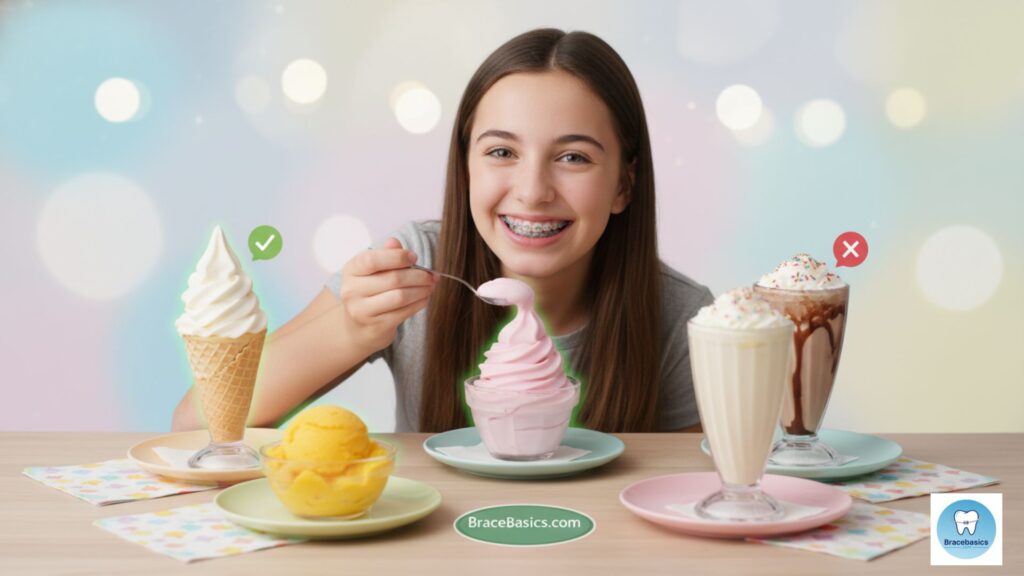
Texture decides safety. Ice cream that melts quickly supports comfort. Ice cream that stays frozen invites trouble. Choosing the right type reduces risk while maximizing enjoyment.
Patients often forget that not all ice creams behave the same. Some support healing. Others challenge brackets. Knowing the difference keeps treatment smooth.
Soft Ice Cream vs Hard-Frozen Ice Cream
Soft serve ice cream melts faster and reduces bite force. Hard-frozen ice cream increases pressure and risks wire strain if bitten. Soft texture wins every time.
Letting ice cream sit briefly improves safety. This habit protects orthodontic braces across all types including ice cream with metal braces and ceramic systems.
Is Sugar-Free Ice Cream a Better Option for Braces?
Sugar-free ice cream lowers cavity risk when consumed moderately. However, acids and sweeteners still linger. Cleaning afterward remains essential for preventing enamel damage.
Sugar-free options help those prone to tooth decay. Balance still matters. Hygiene always decides outcomes.
Alternative Frozen Treats for Braces
Frozen yogurt offers probiotics and softer texture. Milkshakes and smoothies deliver calories without chewing. These remain popular braces-friendly desserts during soreness.
Such treats support nutrition while protecting brackets and wires. Texture again makes the difference.
Are Popsicles Safe to Eat with Braces?
Popsicles qualify among frozen treats safe for braces when sucked rather than bitten. Biting introduces risk to brackets and roots.
Stick control matters. Gentle enjoyment avoids stress on braces on teeth during healing phases.
When Ice Cream Isn’t Ideal
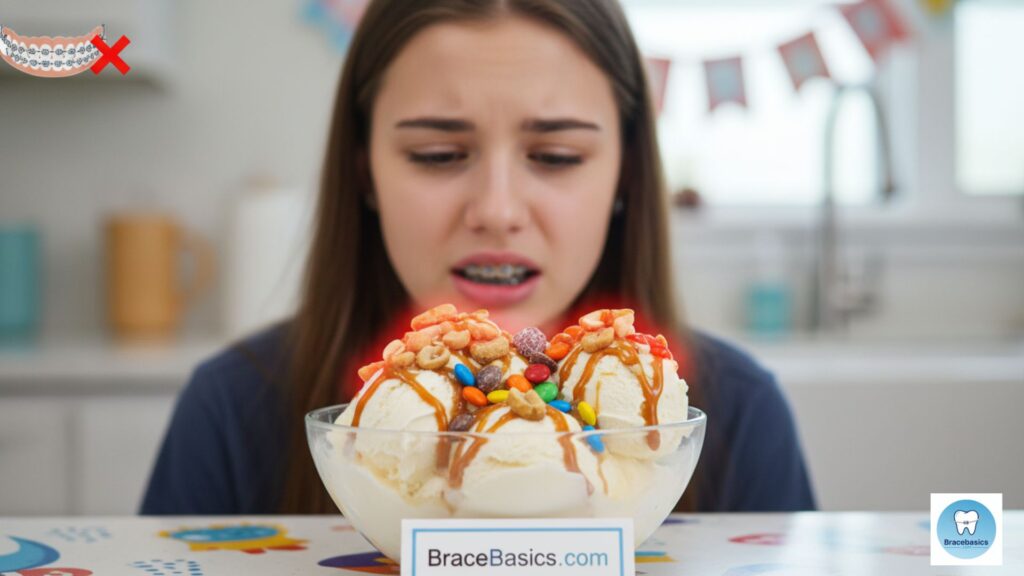
Ice cream turns risky when paired with hard extras. The dessert itself behaves well. Add-ons often cause trouble.
Understanding limits prevents emergencies and unscheduled orthodontic visits. Prevention always beats repair.
Why Toppings Can Be a Problem
Crunchy toppings strain brackets. Sticky toppings trap sugar around wires. Nuts and candy pieces remain leading causes of broken appliances.
Ice cream alone stays safer than dressed versions. Simplicity protects orthodontic braces.
Can You Eat Ice Cream Cones With Braces?
Ice cream cones with braces raise risk due to crunch. Hard cones place pressure on front brackets and enamel.
Soft waffle cones soften faster. Even then, moderation helps protect dental hardware.
Can I Have Toppings on My Ice Cream When I Have Braces?
Soft toppings like melted chocolate remain safer. Avoid chocolate chip ice cream when chips feel hard or frozen.
Texture testing matters. If it crunches loudly, skip it.
How to Enjoy Ice Cream Safely with Braces
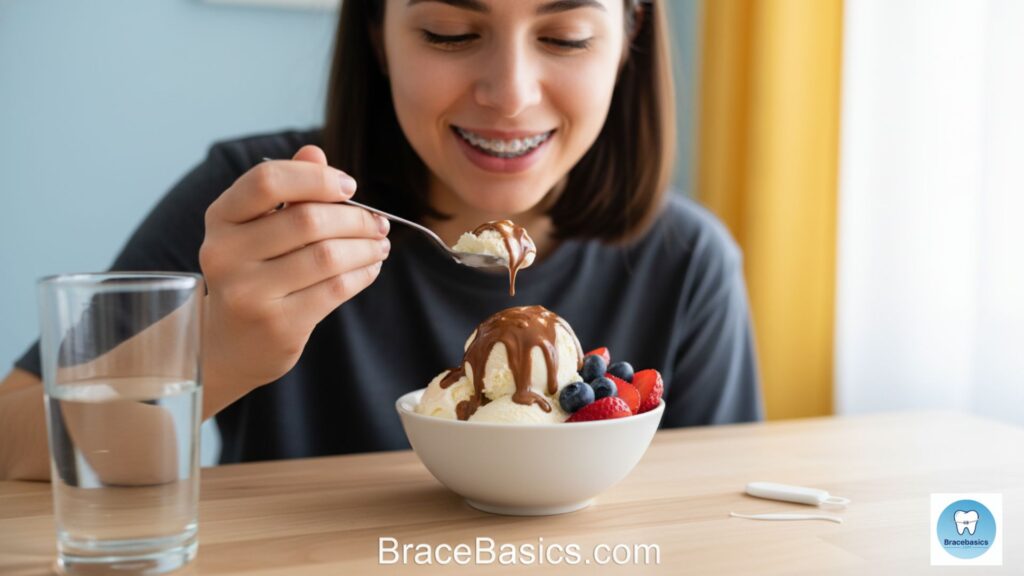
Eating ice cream with braces can be safe if you follow simple habits. You don’t have to avoid it completely. By making small adjustments, ice cream can become a low-risk treat that still feels fun and comforting. Eating slowly and carefully helps protect your brackets and wires while letting you enjoy every bite.
Best Practices for Enjoying Ice Cream with Braces
Always use a spoon instead of biting directly into frozen ice cream. Eating slowly prevents sensitivity and protects sensitive teeth. After eating, rinse your mouth with water to wash away sugar before it sticks to your braces. These small steps keep your orthodontic treatment safe and reduce the risk of plaque buildup or enamel damage.
Braces-Friendly Ice Cream Toppings
Choose soft, smooth toppings that melt easily, like chocolate syrup or fruit puree. Avoid caramel strings, nuts, or candy pieces, as they can get stuck in brackets and wires and damage your braces. Always check the texture—soft toppings are safe, hard or sticky ones are risky.
Can I Eat Chocolate Chip Ice Cream with Braces?
Chocolate chip ice cream is fine if the chips are soft and melted. Don’t bite into frozen chips immediately after a braces adjustment. Let the ice cream soften first so the dental hardware stays protected. Patience prevents broken brackets and wires.
Can You Eat Chocolate With Braces?
Plain chocolate melts easily in your mouth and cleans off your braces quickly. Crunchy chocolate bars or candies with nuts can damage metal braces, ceramic dental braces, or clear braces for adults. Enjoy chocolate in moderation and always follow with proper oral hygiene with braces to keep your teeth safe.
Oral Hygiene After Ice Cream
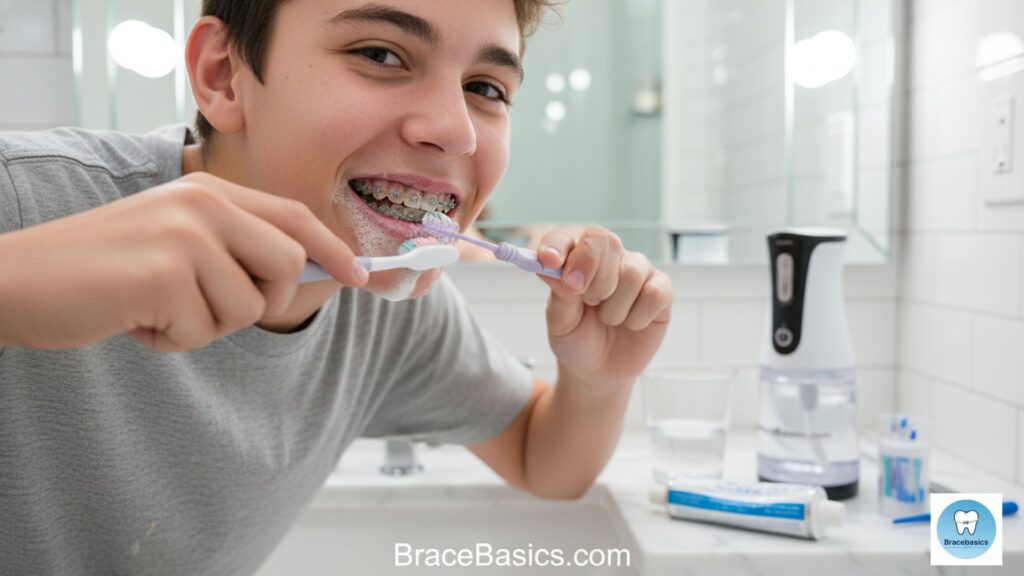
Eating ice cream is fun, but taking care of your teeth afterward is just as important. Sugar from ice cream can feed bacteria that cause plaque buildup and tooth decay. Braces create small spaces where food can hide, so careful cleaning is essential to keep your dental hardware safe and your teeth healthy.
Does Ice Cream Increase the Risk of Cavities with Braces?
Yes, ice cream can increase cavity risk if you don’t clean properly. Sugar sticks around brackets and wires, giving bacteria a chance to damage enamel and cause tooth decay. However, this risk drops quickly with good oral hygiene with braces, including brushing, flossing, and rinsing after eating.
Maintaining Oral Hygiene After Sweet Treats
https://bracebasics.com/how-to-brush-teeth-with-braces/Wait about thirty minutes after eating ice cream before brushing with fluoride toothpaste to protect sensitive teeth. Use a water flosser to remove sugar from hard-to-reach areas and interdental brushes to clean around brackets and wires. Following this routine keeps teeth healthy and appliances safe during orthodontic treatment.
This routine defines success.
| Hygiene Tool | Purpose During Braces |
| Fluoride toothpaste | Strengthens enamel |
| Water flosser | Flushes sugar |
| Interdental brushes | Cleans brackets |
Conclusion
Ice cream does not threaten braces when eaten wisely. Texture, timing, and cleaning shape safety far more than fear. From teens with braces for kids to adults with ceramic systems, enjoyment remains possible.
Ice cream fits into treatment with awareness. Choose soft textures. Avoid risky toppings. Maintain oral hygiene with braces. When care leads, ice cream becomes comfort rather than concern.
FAQs
Does ice cream stain braces?
Ice cream itself rarely stains metal braces, ceramic dental braces, or clear braces for adults. The main risk comes from colored toppings, sauces, or mix-ins. Dark sauces like chocolate syrup or fruit toppings can leave temporary discoloration on staining elastic ligatures. Eating plain or lightly colored ice cream and rinsing afterward keeps your braces on teeth safe and clean.
Can I eat chocolate ice cream with braces?
Yes, you can eat chocolate chip ice cream or regular chocolate ice cream with braces safely. The key is to avoid biting into hard chocolate chunks or frozen chips that can damage brackets and wires. Let the ice cream melt slightly and eat it with a spoon. Always brush and rinse afterward to prevent plaque buildup and tooth decay.
Which ice cream is safe for braces?
Soft serve ice cream, milkshakes, frozen yogurt, and melted scoops are the safest options. They are gentle on brackets and wires and easy to eat even with sensitive teeth. Avoid hard-frozen scoops or ice cream with nuts, candy pieces, or crunchy toppings, as these can harm your dental hardware. Sugar-free ice cream is also a better option for oral hygiene with braces.
Can I lick ice cream with braces?
Yes, licking ice cream is safe and actually safer than biting hard frozen scoops. Licking prevents excessive pressure on metal braces, ceramic dental braces, or clear braces for adults. Make sure to clean your teeth afterward, as sugar from the ice cream can contribute to plaque buildup if left on braces on teeth.
Can I chew ice with braces?
No, you should avoid chewing ice with braces. Hard ice can crack brackets and wires and cause discomfort to sensitive teeth. Even clear braces for adults are at risk from biting hard substances. Stick to soft and melting treats like ice cream, frozen yogurt, or milkshakes and smoothies to stay safe and protect your orthodontic braces.
Related Posts
1. Can You Eat Corn With Braces?
Explore safety tips, preparation tricks, and alternatives to enjoy corn without risking brackets and wires.
2. Can You Eat Apples With Braces?
Learn how to eat apples safely, prevent enamel damage, and enjoy this crunchy favorite during treatment.
3. Braces-Friendly Foods You’ll Actually Love
Discover a full list of soft foods for braces, snacks, and desserts that keep your teeth safe.
4. Can You Drink a Milkshake With Braces?
Check which drinks are safe, how to avoid plaque buildup, and enjoy creamy treats without hurting metal braces.
5. How to Eat at Restaurants With Braces
Tips and tricks for eating out safely, managing sensitive teeth, and protecting dental hardware while enjoying meals.
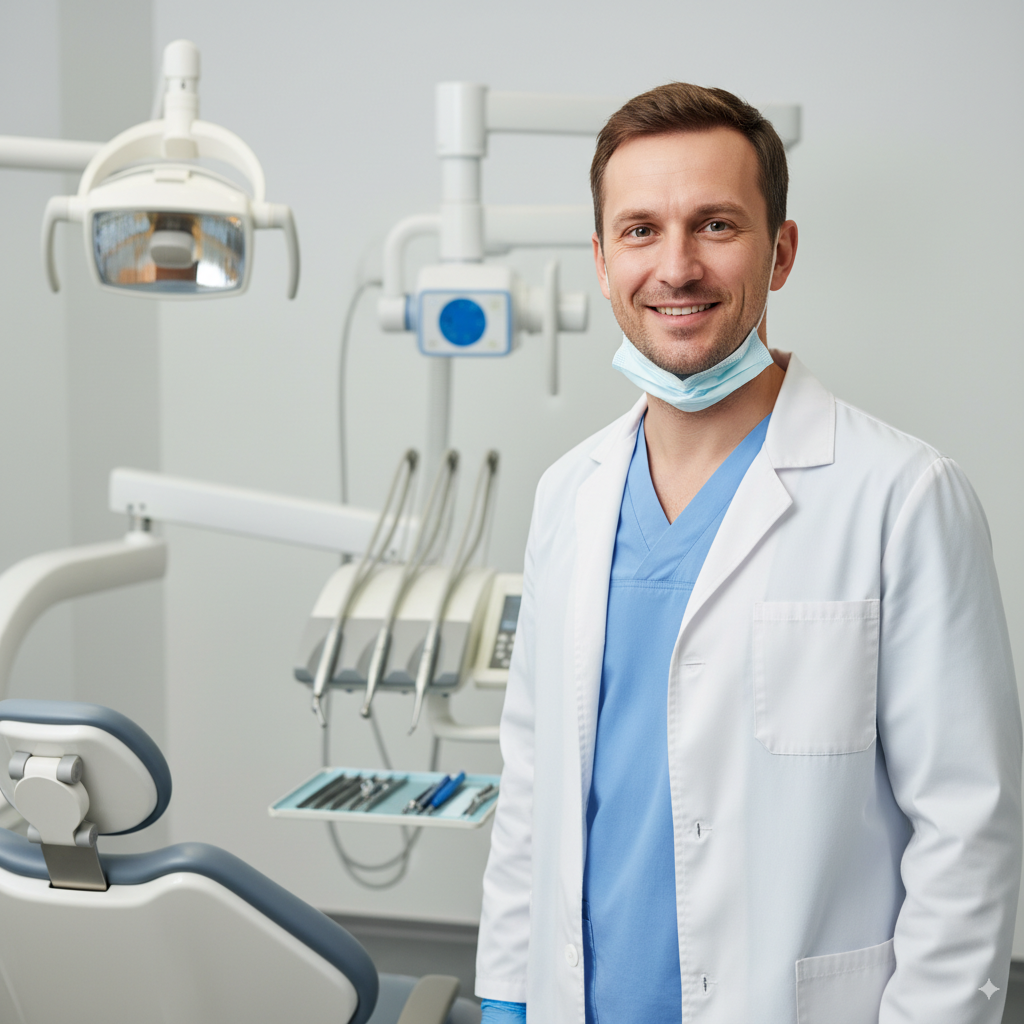
Hi, I’m Dr. Martin, the founder of BraceBasics.com. With years of experience in orthodontics, I’ve made it my mission to simplify braces care for patients of all ages. Here, you’ll find easy-to-understand advice, practical tips, and reliable resources to make your braces journey smoother, healthier, and stress-free. My goal is to help you smile with confidence every step of the way.