

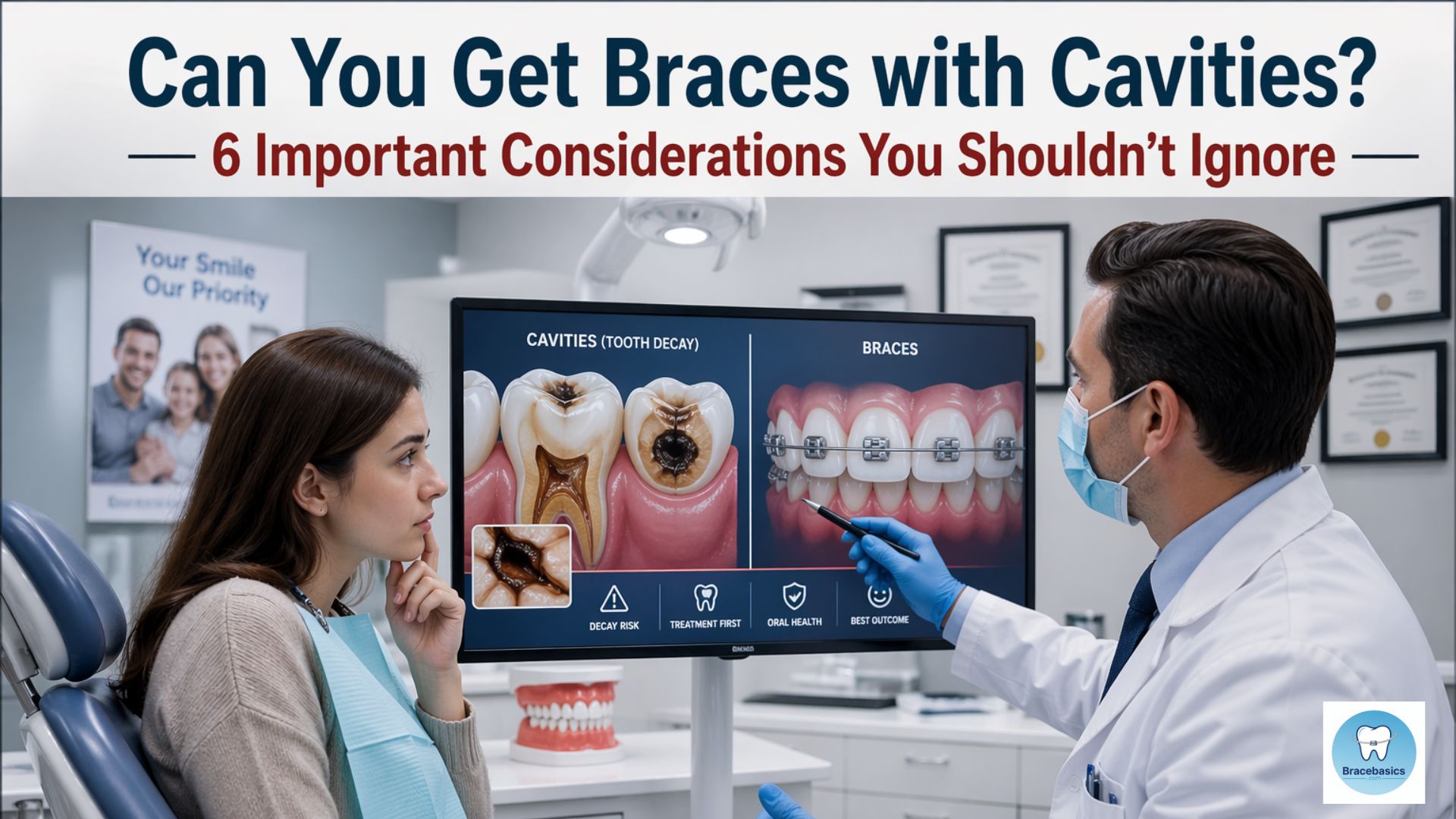
Many patients ask a simple question before starting treatment: can you get braces with cavities? It sounds straightforward. However, the answer affects your long-term dental health. When braces with cavities are involved, small issues can quietly turn into serious damage. That’s why understanding your condition early really matters.
If you’re planning orthodontic care in the USA, your dentist will first check your oral health before braces. This includes a full braces consultation dental exam and orthodontist cavity check. In this guide, you’ll learn risks, timing, and smart decisions. You’ll also understand how can cavities delay braces and what to do next.
Can You Get Braces With Cavities?
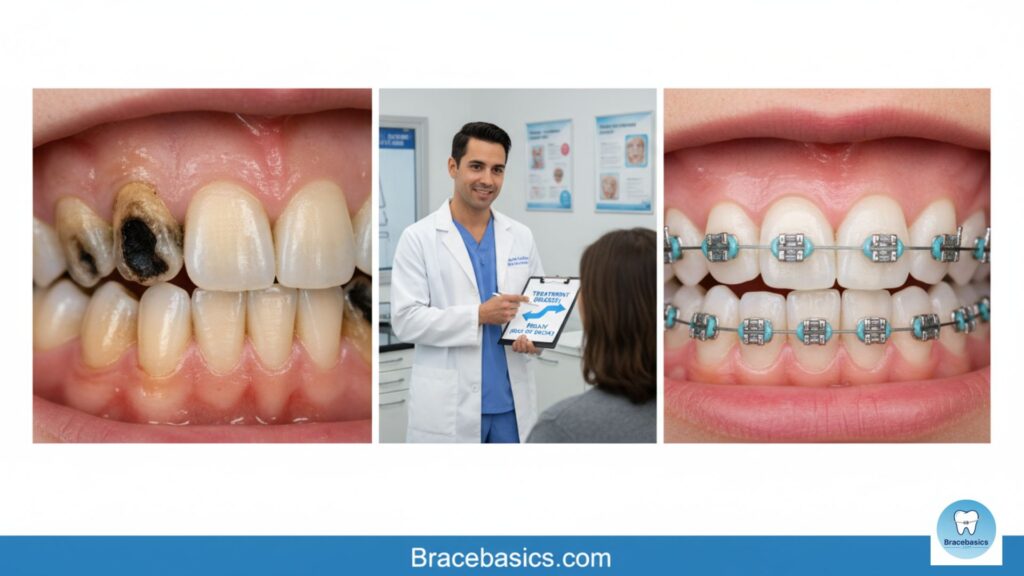
Yes, you can technically get braces with cavities, but in most cases orthodontists will not start treatment until those cavities are treated first. This is because cavities are areas of tooth decay caused by bacteria such as Streptococcus mutans, and leaving them untreated can lead to faster damage once braces are placed.
When braces are fitted, they make it more difficult to clean your teeth properly. Food particles and plaque can easily get trapped around brackets and wires, which creates the perfect environment for cavities to grow and spread. If you already have decay before starting treatment, it can quickly become worse, leading to pain, infection, or even more serious dental procedures later.
Because of these risks, dentists usually prefer to treat all existing cavities first. This typically involves simple fillings and a full cleaning to make sure your teeth and gums are healthy enough for orthodontic work. Once your mouth is in good condition, braces can be safely applied without increasing the risk of further decay.
Even small cavities are rarely ignored before braces because what looks minor at the start can become a bigger problem during treatment. Braces stay on for months or years, and during that time oral hygiene becomes more challenging, so starting with healthy teeth is very important.
If a cavity develops while you already have braces, it can still be treated, although your orthodontist may need to temporarily adjust a wire or bracket to allow access. This might slightly slow down your treatment, but it is manageable.
In short, braces are still possible if you have cavities, but they almost always need to be treated first to ensure your teeth stay healthy and your orthodontic results are successful in the long run.
Why Cavities Must Be Treated Before Getting Braces
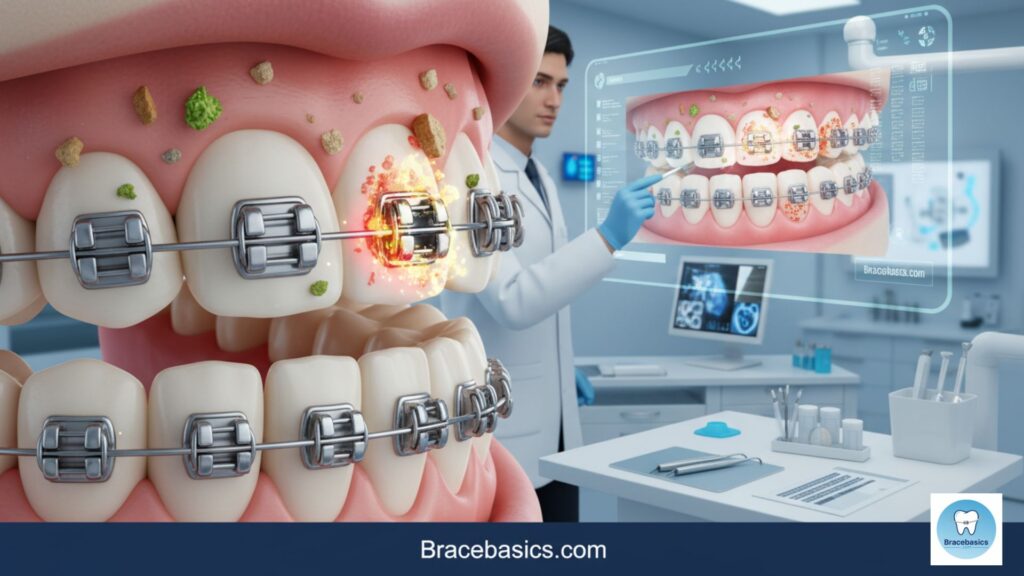
Cavities grow faster under brackets. Food particles stick easily, increasing plaque buildup with braces. Once bacteria settle, they release acids. These acids cause enamel damage and braces complications that are hard to reverse.
Ignoring decay leads to bigger problems. The risk of untreated cavities includes infection and tooth loss. Dentists often recommend deep cleaning before orthodontic treatment and fluoride treatment before braces. These steps reduce oral bacteria and tooth decay before starting treatment.
What Happens If You Get Braces with Untreated Cavities?
Decay hidden under brackets becomes dangerous. You may not notice pain until damage spreads. This is why do cavities affect braces is such a critical concern. Untreated decay increases the braces and tooth decay risk significantly.
Patients sometimes face emergency removal of braces. The consequences of ignoring cavities include delays, infections, and extra costs. In severe cases, gum disease and braces complications appear. This can ruin your entire braces treatment plan process.
6 Important Considerations Before Getting Braces with Cavities
Before starting treatment, you need to look at more than just straight teeth. Dentists carefully review your full condition before allowing braces with cavities. Every case is different. These key factors decide if you’re ready or if you need cavity treatment before braces first.
1. Severity of the Cavities
The depth of decay plays a major role. Small cavities are easier to fix and may only need simple fillings. However, deep decay can reach the nerve and require advanced treatment like crowns or root canals. In such cases, cavities before braces must be fully treated before moving forward.
Dentists always check how serious the damage is. Mild decay may not delay treatment for long. But severe cases can affect your eligibility completely. This is why can cavities delay braces depends heavily on how deep the decay goes.
2. Location of Decay (Front vs Back Teeth)
Where the cavity is located also matters a lot. Front teeth are easier to see and treat. Back teeth are harder to reach, especially after braces are placed. This creates challenges during orthodontic treatment with cavities.
Location also affects function and appearance. Front teeth impact your smile, while back teeth handle chewing. Dentists consider both before starting dental cavities and braces treatment to avoid future complications.
3. Type of Orthodontic Treatment
Not all braces work the same way. Traditional metal braces cover more tooth surface, which can trap food. Ceramic braces act similarly. Clear aligners, like Invisalign, can be removed, making cleaning easier in some cases.
This flexibility makes a difference when dealing with can you have braces with tooth decay situations. However, even with aligners, dentists still prefer fixing cavities before braces to ensure safe results.
4. Oral Hygiene Habits
Your daily habits matter more than you think. If you already struggle with brushing or flossing, braces can make things worse. Poor cleaning increases bacteria and raises the braces and tooth decay risk.
Good hygiene helps control problems. Strong routines support safe oral health before braces and during treatment. Without proper care, even small cavities can grow quickly under braces.
5. Dentist and Orthodontist Coordination
Braces treatment is not handled by one expert alone. Your general dentist and orthodontist must work together. The dentist treats decay, while the orthodontist plans alignment.
This teamwork ensures safe and smooth progress. Proper communication helps manage tooth decay and orthodontics together. Without coordination, treatment may fail or get delayed.
6. Overall Oral Health Condition
Finally, your overall oral health decides everything. Healthy gums, strong enamel, and good bone support are all important. If you have gum disease or weak teeth, braces may not be safe yet.
Dentists perform full checks before approval. This ensures strong braces eligibility dental health. A healthy mouth gives better results and reduces risks during orthodontic treatment.
Can Minor Cavities Be Treated While Wearing Braces?
Minor decay can sometimes be treated during braces. Dentists may adjust wires to reach the affected area. However, access remains limited. This makes treatment slower and slightly uncomfortable.
Even then, most experts prefer treating decay before braces. It ensures smoother progress later. Maintaining strong maintaining oral hygiene with braces habits helps prevent new issues. This approach supports long-term success.
How Dentists Treat Cavities Before Orthodontic Treatment
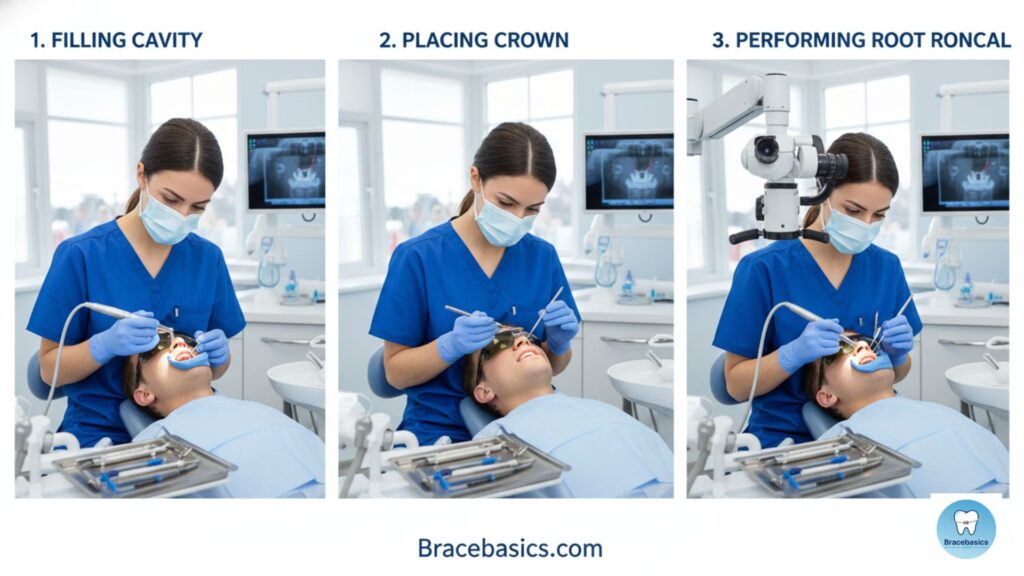
Dentists use several methods before starting braces. Common tooth decay treatment options include fillings, crowns, and sometimes root canals. These procedures restore strength and remove infection.
Below is a simple table explaining treatment timing:
| Condition | Treatment | Wait Time Before Braces |
| Small cavity | Filling | Few days |
| Deep cavity | Crown | 1–2 weeks |
| Severe infection | Root canal | 2–3 weeks |
Proper dental health assessment before braces ensures everything heals well. This makes braces after filling cavities safe and effective.
Do Orthodontists Check for Cavities Before Braces?
Yes, every patient goes through a full exam. This includes dental X-rays before braces and visual inspection. These steps help detect hidden decay early.
The orthodontist often requests clearance from your general dentist. This step confirms proper orthodontic care requirements. Without it, treatment may fail. This is why cavities before braces must always be addressed first.
How to Prevent Cavities While Wearing Braces
Braces require strict hygiene. Food gets stuck easily, increasing decay risk. Good brushing and flossing reduce plaque buildup with braces and protect enamel.
Here’s a quick comparison of habits:
| Good Habit | Poor Habit |
| Brushing after meals | Skipping brushing |
| Using floss tools | Ignoring flossing |
| Regular checkups | Avoiding dentist visits |
Following best practices for braces care and cavity prevention tips with braces keeps your teeth safe throughout treatment.
Are There Alternatives to Braces If You Have Cavities?
Some patients delay braces until treatment finishes. Others choose aligners temporarily. Still, no option replaces proper care. Ignoring decay only worsens outcomes.
Customized plans help manage can you have braces with tooth decay cases carefully. Dentists focus on safety first. Proper braces preparation steps always begin with healthy teeth.
When Is It Safe to Get Braces After Treating Cavities?
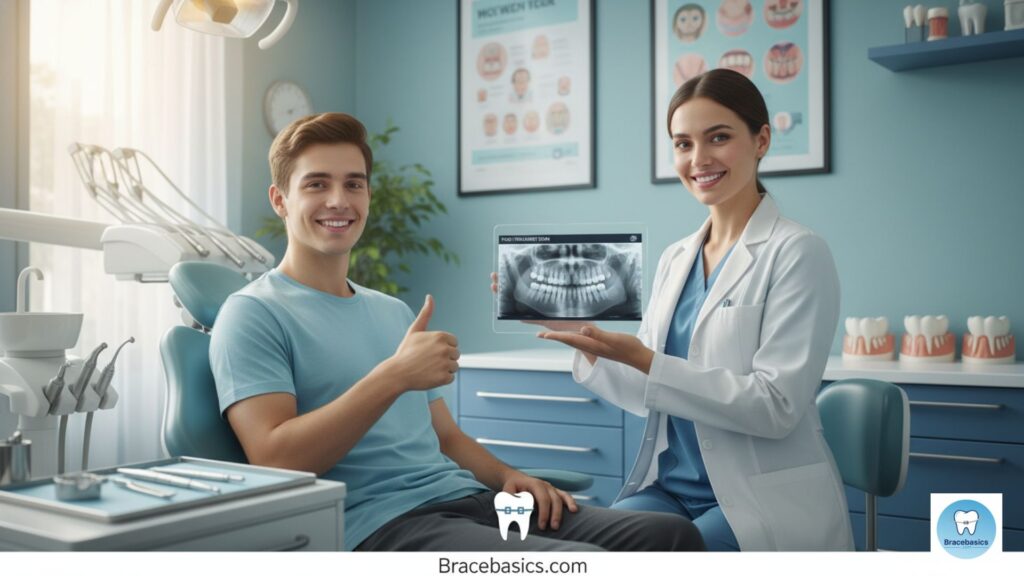
Once treatment ends, your dentist checks healing. No pain, no sensitivity, and no infection are good signs. At this stage, you can safely begin orthodontics.
Timing depends on the procedure. Simple fillings heal quickly. Complex cases take longer. Your dentist confirms readiness before moving forward with braces.
Final Thoughts – Should You Fix Cavities Before Braces?
Fixing decay first always gives better results. It protects your teeth and ensures smooth alignment. Starting braces without treatment risks long-term damage.
Think of braces as an investment. Strong teeth create strong results. Always consult your dentist and follow professional advice before beginning your journey.
FAQs
Can you get braces with cavities safely without first treating tooth decay?
You can technically start braces with cavities, but it is not safe in most cases. Dentists usually avoid this because decay spreads faster once brackets are placed. Food gets trapped easily, and cleaning becomes harder. This increases oral bacteria and tooth decay risks. That is why most orthodontists require cavity treatment before braces. It protects your teeth and prevents long-term damage during treatment.
Can you get cavities with braces after orthodontic treatment has already started?
Yes, you can still develop cavities after getting braces. This happens when cleaning is not done properly. Braces create small spaces where food and plaque stay trapped. Over time, this leads to plaque buildup with braces and weak enamel. Regular brushing, flossing, and dental visits are important to reduce braces and tooth decay risk during treatment.
Can you get a cavity filled with braces on without removing the brackets?
Yes, in many cases dentists can fill cavities without removing braces. However, it depends on the cavity’s location. If the decay is easy to reach, the filling can be done around the bracket. But if access is blocked, partial removal may be needed. This is part of normal tooth decay treatment options during orthodontics.
Can you get cavities filled with braces while still wearing your orthodontic wires?
Yes, cavities can be treated while wires are still in place. Sometimes the orthodontist may remove the wire temporarily to help the dentist work more easily. After treatment, everything is placed back. This ensures safe orthodontic care requirements while still maintaining the braces structure. Coordination between both doctors is very important here.
Can you get braces with a cavity if the decay is very small or minor?
In rare cases, small cavities may not delay braces for long. However, even minor decay can grow quickly once braces are attached. That is why dentists often recommend fixing cavities before braces, even if they are small. It prevents future complications and ensures smoother braces treatment plan process without interruptions.
Can you still get braces with cavities if your overall oral health is good?
Even if your oral health is generally good, untreated cavities still matter. Good gums and strong teeth help, but decay must be treated first. Orthodontists focus on dental health assessment before braces to avoid risks. A single untreated cavity can affect the entire treatment outcome, even if everything else looks healthy.
Can you get braces put on with cavities during your first orthodontist visit?
Usually no. During your first visit, the orthodontist performs X-rays and a full orthodontist cavity check. If cavities are found, treatment is delayed. Braces are only placed after approval from your general dentist. This ensures proper braces consultation dental exam standards and avoids future complications during alignment.
Can you get braces with cavity fillings already present in your teeth?
Yes, having fillings does not stop you from getting braces. In fact, many patients already have treated cavities before starting. Fillings are part of normal dental care. As long as the tooth is stable, braces can be safely applied. This is common in dental cavities and braces cases across orthodontic clinics.
Can you get rid of cavities with braces, or do they need separate treatment first?
Braces do not remove cavities. Decay must always be treated separately. Orthodontic treatment focuses on alignment, not healing infection. Ignoring cavities can lead to worse damage under braces. That is why treating decay before braces is always recommended. Healthy teeth are needed before movement begins.
Why can’t you get braces with cavities in some dental cases or conditions?
You cannot get braces with cavities in many cases because decay weakens the tooth structure. Braces add pressure, which can worsen damage. This leads to infection, pain, and possible tooth loss. Dentists prioritize oral health before braces to prevent these outcomes. Safe treatment always starts with a clean and healthy mouth.
Related Posts You May Find Helpful
If you’re trying to understand braces with cavities and how oral health affects orthodontic treatment, these guides will help you go deeper into safe care, food habits, and preparation steps.
🦷 How to Take Care of Braces
Learn the full routine for protecting your teeth during treatment and avoiding complications like plaque buildup and decay.
👉 https://bracebasics.com/how-to-take-care-of-braces/
🍏 Braces-Friendly Foods
Find out what you can safely eat without damaging brackets or increasing tooth decay risk during orthodontic care.
👉 https://bracebasics.com/braces-friendly-foods/
🪥 How to Brush Teeth with Braces
A step-by-step guide on cleaning techniques that help prevent cavities and maintain strong enamel during treatment.
👉 https://bracebasics.com/how-to-brush-teeth-with-braces/
🍬 Foods You Cannot Eat with Braces
Understand which foods increase the risk of damage, decay, and treatment delays while wearing braces.
👉 https://bracebasics.com/foods-you-can-not-eat-with-braces/
🦷 Can You Get Braces with Missing Teeth?
Explore how dentists handle complex cases involving missing teeth, spacing issues, and orthodontic planning.
👉 https://bracebasics.com/can-you-get-braces-with-missing-teeth/
Hi, I’m Dr. Martin, the founder of BraceBasics.com. With years of experience in orthodontics, I’ve made it my mission to simplify braces care for patients of all ages. Here, you’ll find easy-to-understand advice, practical tips, and reliable resources to make your braces journey smoother, healthier, and stress-free. My goal is to help you smile with confidence every step of the way.