

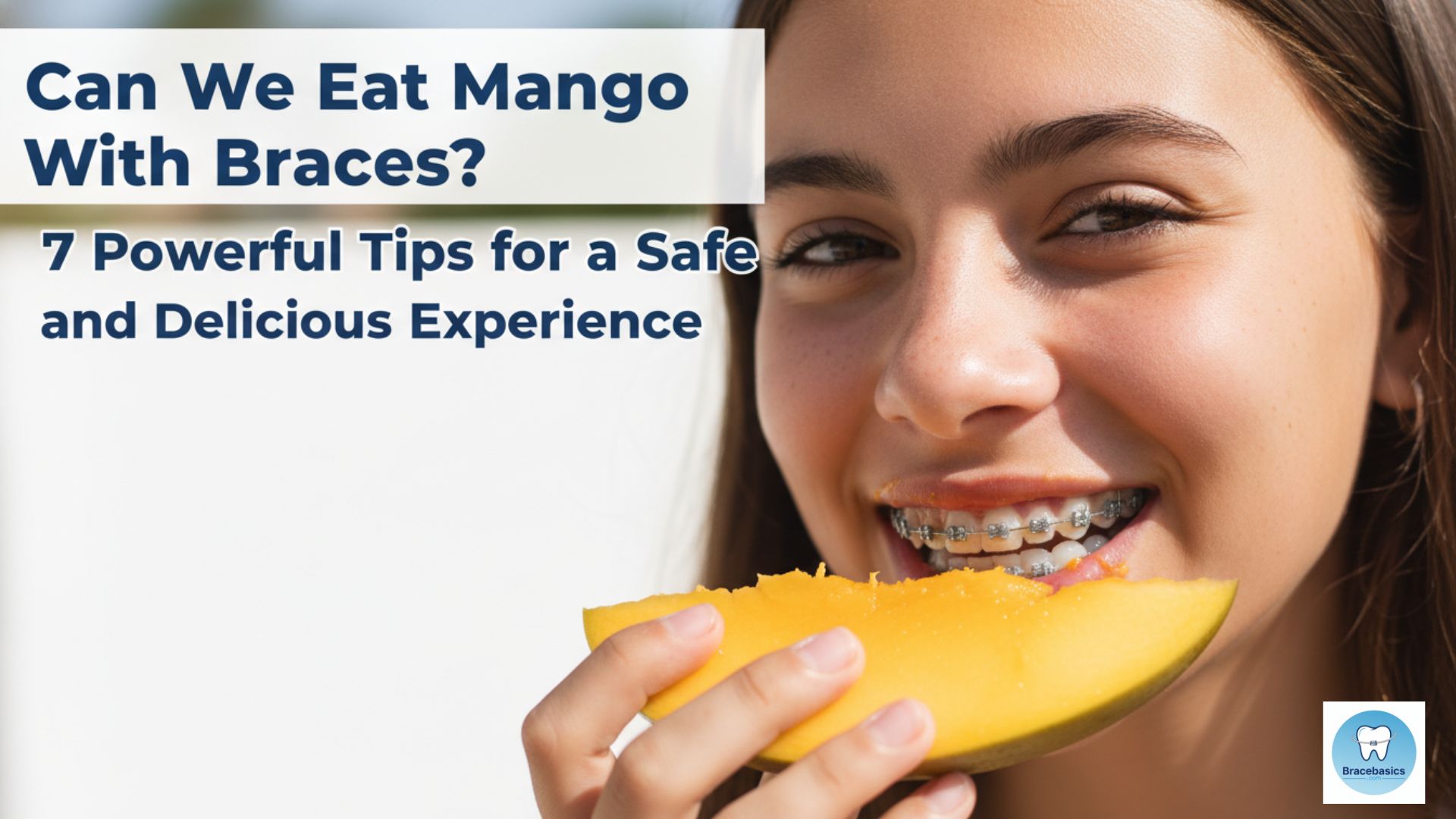
Mango is a juicy and sweet fruit loved by many, but if you wear braces, you may wonder can you eat mango while wearing braces without causing damage. The answer is yes, but it depends on how you handle the fruit. Understanding mango texture and braces and following proper habits ensures you enjoy this fruit safely. Eating ripe mango can even be a healthy braces-safe snack that fits well in an orthodontic diet.
Eating mango with braces requires care. How to eat mango with braces safely involves cutting it properly, avoiding the pit, and cleaning your teeth afterward. Without proper attention, fibers can get stuck, sugar can accumulate, and braces can become stressed. Knowing the right way helps prevent avoiding braces breakage while still enjoying your favorite fruit.
Can You Eat Mango With Braces? Quick Answer
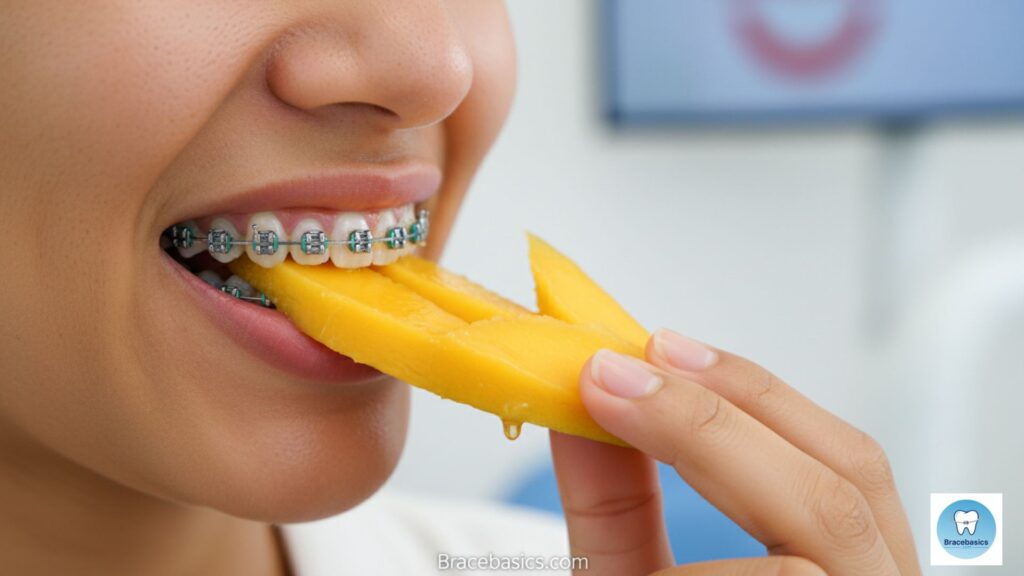
Yes, you can eat mango with braces if it is soft, ripe, and cut into small pieces. Biting into a whole mango or unripe fruit can cause pressure on brackets and wires. Best way to eat mango with braces is to chew gently and use your back teeth. Always clean your teeth afterward to maintain dental care with braces.
Eating mango correctly also avoids common issues like mango fiber and braces getting stuck in wires or brackets. For children or teenagers asking can kids with braces eat mango, the same rules apply: ripe fruit, cut properly, and careful chewing. When done right, mango can fit perfectly into your list of safe fruits for orthodontic patients.
Why Mango Can Be Safe (or Risky) With Braces
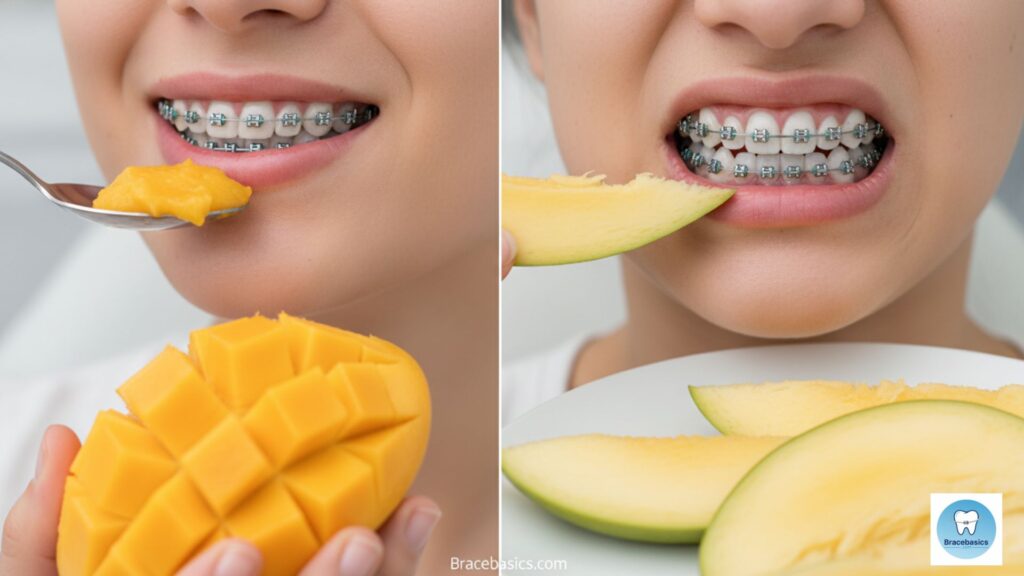
Ripe mango has a soft, buttery texture, making it ideal among soft fruits for braces. The fruit provides vitamins A and C, supports hydration, and satisfies sweet cravings naturally. Mango benefits for teeth include nutrients that strengthen gums and overall oral health. Juicy mango pulp is gentle on brackets and wires, making it a top choice among braces-friendly fruits.
However, mango can be risky if eaten carelessly. Fibers can cling to wires, and hard or unripe pieces may strain brackets. Sugar in the fruit can increase plaque buildup, so fruit sugars and braces must be managed. Understanding is mango safe for braces or not ensures you enjoy the fruit without harming your braces or oral hygiene.
Benefits of Eating Mango With Braces
Ripe mango is soft, juicy, and easy to chew. It provides essential vitamins and keeps you hydrated. Sweetness from mango pulp can satisfy cravings while avoiding sticky candies. Nutrients in mango also support gums, making it a fruit that fits naturally in a dentist-recommended orthodontic diet.
Risks to Watch Out For
Unripe mango is firm and can stress brackets, while fibers from ripe mango can lodge between wires. Sugars from mango may contribute to cavities if oral hygiene is neglected. Mango fiber and braces is usually not damaging, but it can be annoying and requires careful cleaning.
How to Eat Mango Safely With Braces? 7 Powerful Tips for a Safe and Delicious Experience

Eating mango with braces can be a delicious experience if done carefully. The soft, juicy pulp of a ripe mango is generally gentle on brackets and wires, but its fibers and natural sugars require attention. Following a few simple strategies ensures you enjoy mango without risking damage or discomfort while keeping oral hygiene after eating fruit at its best. Here are 7 powerful tips to make mango a braces-safe snack:
- Choose fully ripe mangoes: Soft and ripe mangoes are easier to chew and minimize the risk of stressing brackets. Avoid unripe or hard fruit to prevent avoiding braces breakage.
- Cut mango into small pieces: Slicing mango into bite-sized pieces helps with controlled chewing and reduces the chance of fibers getting stuck in wires. This is a key step in cutting fruit for braces wearers.
- Avoid biting near the pit: Mango pits are hard and can damage brackets if bitten directly. Always remove the seed and enjoy only the soft flesh.
- Chew with back teeth: Use your molars instead of front teeth to reduce pressure on brackets and wires, following braces maintenance tips recommended by orthodontists.
- Eat slowly and mindfully: Taking small bites allows better control and reduces the likelihood of mango fiber and braces complications.
- Rinse and clean immediately after eating: Rinsing with water and brushing after 20–30 minutes helps remove fibers and sugar residues. Proper dental care with braces prevents plaque buildup. (10 Amazing Toothpastes for Braces)
- Use an interdental brush or floss: Gently clean between brackets and teeth to remove any remaining mango fibers, maintaining oral hygiene after eating fruit and protecting your braces from damage.
Best Types of Mango for People With Braces
Choose fully ripe mangoes with a soft and buttery texture. Juicy varieties are easier to chew and less likely to cause avoiding braces breakage issues. Avoid raw or firm mango, as these can stress brackets and wires. Is ripe mango better for braces? Absolutely—it provides sweetness, nutrients, and softness all at once.
Some mango types are fibrous, so knowing the variety matters. Ripe Ataulfo, Honey, or Kent mangoes are often softer and safer than firmer types. Selecting easy fruits to eat with braces helps maintain a healthy orthodontic diet without risking broken brackets.
Foods to Avoid Eating With Mango
Mango pairs well with other foods if you choose carefully. Avoid sticky foods like caramel or gum, as these combined with fruit fibers can stress braces. Hard foods like nuts or ice can damage brackets. Sour or sugary combinations with mango pulp can also accelerate fruit sugars and braces issues.
Mixing mango with unsafe foods can lead to can eating mango loosen braces scenarios. Sticking to soft fruits for braces ensures your orthodontic treatment remains on track, and your teeth stay healthy.
Do Mango Fibers Damage Braces?
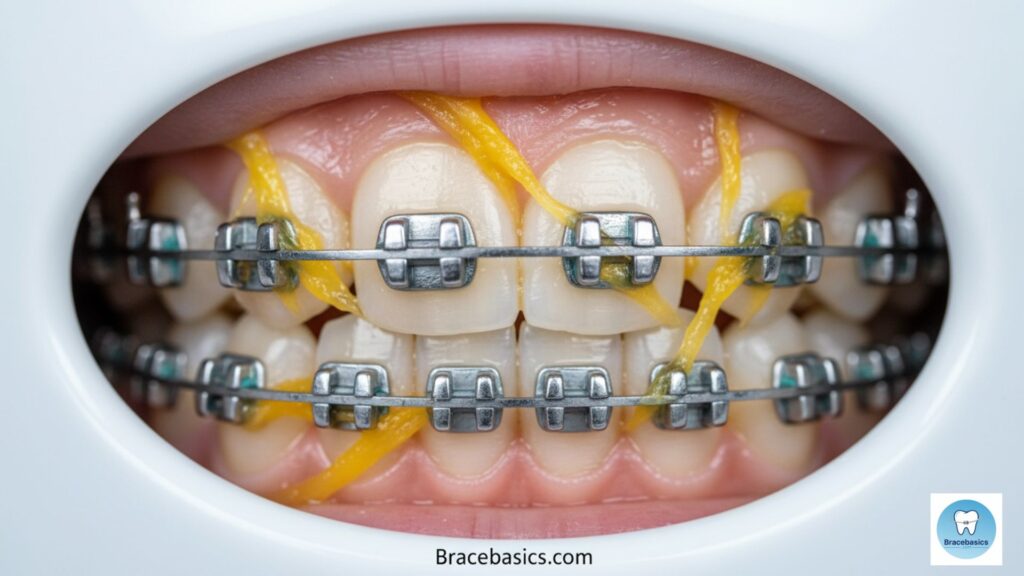
Mango fibers are usually not strong enough to break brackets, but they can get caught in wires. Mango fiber and braces may cause minor irritation or plaque buildup if not removed. Daily brushing and careful flossing prevent issues. Maintaining dental care with braces ensures fibers don’t interfere with brackets or wires.
Even if fibers get stuck, braces are resilient. Follow braces maintenance tips and rinse after eating. Understanding what happens if mango gets stuck in braces allows you to take immediate corrective action.
How to Clean Braces After Eating Mango
Rinse your mouth immediately to remove loose fibers. Use an interdental brush to clean around wires and brackets. Floss carefully between teeth, and brush thoroughly after 20–30 minutes to prevent sugar buildup. How to clean braces after eating mango is critical for preventing cavities and keeping braces in good condition.
Proper cleaning reduces the risk of can mango cause cavities with braces and ensures that mango remains a braces-safe snack. Pairing good cleaning habits with orthodontist food recommendations maximizes both enjoyment and dental safety.
Can You Drink Mango Juice or Smoothies With Braces?

Mango juice or smoothies are softer alternatives for can braces patients eat soft fruits like mango. Smoothies reduce chewing pressure on brackets, but sugar content must be monitored. Avoid added sugars to prevent plaque accumulation. Is mango pulp safe for braces? Yes, especially when consumed as a smooth puree rather than chunks.
Drinking mango smoothies can be a safe way to enjoy the fruit while following orthodontic diet tips. Keep a straw handy if recommended by your orthodontist to reduce direct contact with teeth.
Best Fruits to Eat With Braces
Besides mango, safe fruits for orthodontic patients include bananas and papaya. Apples must be sliced thin to prevent bracket damage, while pineapple is acidic and should be consumed cautiously. Juicy fruits like mango, when prepared properly, remain top choices for easy fruits to eat with braces.
| Fruit | Braces Safety | Notes |
| Mango | ✅ | Soft and ripe |
| Banana | ✅ | Naturally soft |
| Papaya | ✅ | Soft and easy to chew |
| Apple | ❌ | Slice thin |
| Pineapple | ⚠️ | Acidic, can irritate |
Conclusion
Mango can be safely enjoyed with braces when it is ripe, soft, and properly prepared. Following tips for eating mango with braces ensures no brackets break and fibers do not get stuck. Cleaning your teeth afterward is essential for oral hygiene after eating fruit. Incorporating mango into your orthodontist food recommendations list makes it a healthy, sweet, and braces-friendly treat that satisfies cravings safely.
FAQS
Can I eat raw mango with braces?
Raw or unripe mango is firm and can put stress on your brackets and wires. Eating it may increase the risk of avoiding braces breakage or loosening brackets. Always choose soft, ripe mango, cut into small pieces, so it’s gentle on braces and easier to chew safely.
Can mango break braces?
Ripe, soft mango is generally safe and won’t damage your braces. However, biting directly into hard mango chunks or the pit can put too much pressure on brackets and wires. Following how to eat mango with braces safely by cutting fruit into small pieces protects your braces.
Is mango sticky for braces?
Mango isn’t as sticky as candy or caramel, but its fibers can get trapped between wires and brackets. If not cleaned properly, this can cause plaque buildup or mild irritation. Maintaining oral hygiene after eating fruit ensures mango remains a braces-safe snack.
How often can I eat mango with braces?
You can enjoy mango regularly, but moderation is key. Frequent eating without proper cleaning can increase fruit sugars and braces risks, like plaque buildup or minor staining. Following orthodontist food recommendations and cleaning afterward lets you enjoy mango safely.
What happens if mango gets stuck in braces?
Mango fibers can lodge between brackets or wires, causing discomfort and making cleaning harder. Leaving them too long may lead to plaque buildup or mild irritation. Using floss, an interdental brush, or rinsing removes stuck fibers and protects your braces effectively.
Related Posts You Should Read
If you’re looking to expand your braces-friendly diet and care tips, check out these informative posts:
- Can I Eat Grapes With Braces? – Learn how to safely enjoy grapes without damaging brackets or wires, including tips on cutting and cleaning.
- Can You Eat Strawberries With Braces? – Discover how soft fruits like strawberries fit into an orthodontic diet, and ways to prevent fibers from getting stuck in braces.
- Can You Eat Carrots With Braces? – A guide to eating harder vegetables safely while protecting your braces, including slicing and cooking tips.
- Braces-Friendly Foods – Complete list of safe fruits, snacks, and meals suitable for orthodontic patients, including preparation tips and oral care advice.
- Soft Food Diet For Braces – Everything you need to know about soft foods that are gentle on brackets and wires, helping you maintain dental care with braces.

Hi, I’m Dr. Martin, the founder of BraceBasics.com. With years of experience in orthodontics, I’ve made it my mission to simplify braces care for patients of all ages. Here, you’ll find easy-to-understand advice, practical tips, and reliable resources to make your braces journey smoother, healthier, and stress-free. My goal is to help you smile with confidence every step of the way.