

Fruit snacks often look harmless. They are colorful, sweet, and marketed as healthy treats for kids and teens with braces. But the reality is, fruit snacks and braces rarely mix safely. Sticky texture, chewy consistency, and sugar content make them a risky choice. Many orthodontists warn about the hidden dangers of processed fruit treats. Understanding how fruit snacks damage braces helps you make better snack choices and avoid long-term braces damage.
Eating fruit snacks seems simple, but braces introduce extra challenges. The metal brackets and wires are delicate. Every bite matters because trapped sugar can cause plaque buildup, enamel damage, and even broken brackets. Knowing what snacks are braces safe sweets ensures comfort and faster treatment. This guide explains why fruit snacks are risky and what alternatives are truly orthodontist approved snacks.
Can You Eat Fruit Snacks With Braces?
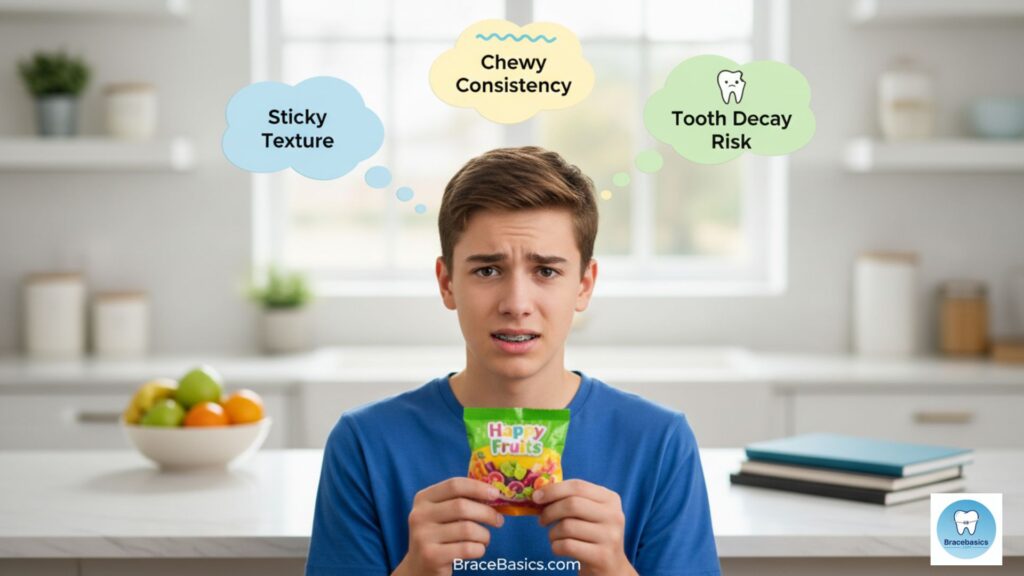
Most orthodontists advise against traditional fruit snacks while wearing braces. They are sticky snacks and braces don’t mix well with. Chewy candy with braces can pull brackets off or bend wires. Even a single bite may cause loose wires or require an emergency orthodontist visit. Occasional consumption is sometimes allowed, but brushing immediately is crucial.
Braces food restrictions exist for a reason. Sugary, sticky, or hard snacks increase tooth decay risk. Even soft fruit rolls can stick to brackets for hours, giving bacteria more time to create acids that erode enamel. If you are asking, “can braces eat fruit snacks?”, the safest answer is no for regular consumption.
What Are Fruit Snacks Made Of?
Typical fruit snacks in the USA contain corn syrup, sugar, gelatin, and artificial colors. These ingredients make them sweet, soft, and chewy but very harmful for braces. Trapped sugar in metal brackets and wires increases plaque buildup and increased cavity risk. Many people think fruit snacks are healthy, but sugar levels are similar to candy.
Acids in these snacks also affect dental health. When acids mix with saliva and sugar interaction, enamel weakens. That means enamel damage is possible even with careful brushing. Understanding the composition shows why are fruit snacks bad for braces is a valid concern. Processed fruit snacks are far from the best snacks for braces wearers.
Why Fruit Snacks Are Dangerous for Braces
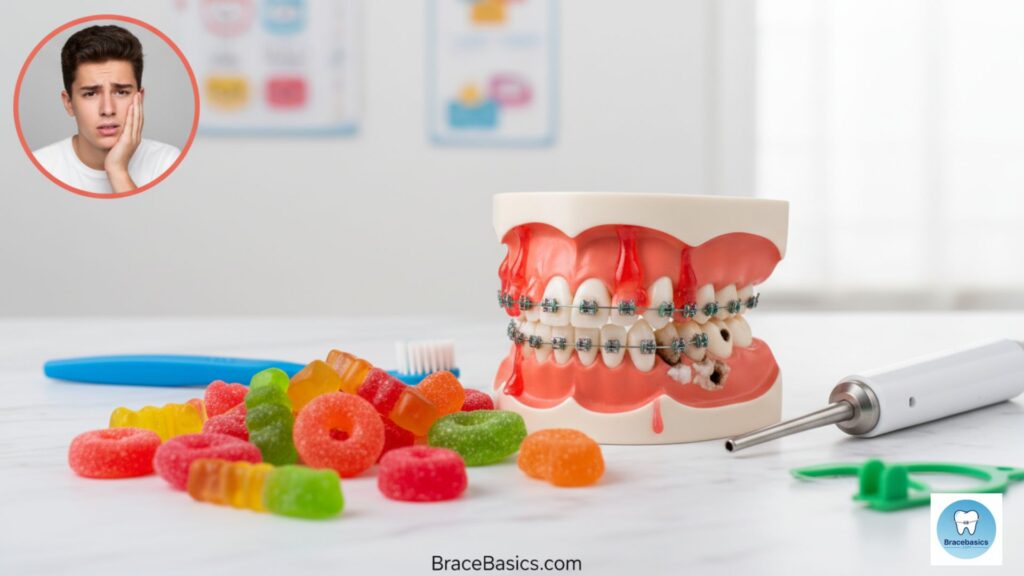
Fruit snacks are more than sugary treats—they are a direct threat to orthodontic treatment. Their sticky texture can glue itself to brackets, while chewy consistency exerts tension on wires. Long-term exposure increases tooth decay risk and can trigger emergency visits. Kids often enjoy fruit snacks unaware of the harm, making braces maintenance more complex.
Eating these snacks regularly causes trapped sugar, leading to plaque buildup. The combination of sugar and brackets is a formula for enamel damage and increased cavity risk. Even a brief snack session can require extra cleaning, flossing, and vigilance. Braces safe sweets are far more effective at avoiding these complications.
Reason 1 – Extremely Sticky Texture
Fruit snacks are notorious for their sticky texture. Once they adhere to metal brackets and wires, cleaning becomes difficult. Sticky foods often leave sugar residues in tight spaces, raising tooth decay risk. Continuous exposure increases plaque buildup, demanding rigorous braces care after eating sweets.
Sticky snacks and braces often cause brackets to loosen. Patients may need an emergency orthodontist visit, which delays progress. Even soft fruit snacks can cling stubbornly to teeth for hours. Brushing after snacks is essential to reduce damage.
Reason 2 – Stretchy Chewiness Damages Wires
The chewy consistency of fruit snacks can bend or pull metal brackets and wires. Chewing hard or stretchy snacks increases the chance of broken brackets. Teens often chew fruit roll-ups without realizing they stress the orthodontic hardware.
Stretchy snacks can extend treatment time. Patients may notice loose wires or long-term braces damage if consumption continues. Orthodontists stress avoiding chewy candy with braces to protect wires and brackets.
Reason 3 – High Sugar Feeds Cavity-Causing Bacteria
Fruit snacks are high in sugar. Sugary snacks and braces create an environment where bacteria thrive. Trapped sugar interacts with saliva, producing acids that damage enamel. This accelerates tooth decay risk and can create white spots on teeth.
Regular consumption leads to plaque buildup around brackets and between teeth. Poorly cleaned areas increase the likelihood of cavities. Oral hygiene with braces becomes more critical after sweet treats.
Reason 4 – Gets Trapped in Brackets and Wires
Tiny bits of fruit snacks often lodge between brackets and wires. Cleaning braces after eating can be challenging, especially for younger patients. Trapped sugar continues to feed bacteria, causing plaque buildup and enamel damage over time.
Even a quick rinse cannot fully remove sticky residues. Persistent debris can lead to increased cavity risk, swelling gums, and discomfort. Kids and teens with braces need constant monitoring after snack time.
Reason 5 – Increases Risk of Broken Brackets
Biting into sticky fruit snacks can cause broken brackets. These repairs are costly and slow treatment. Braces treatment delays increase discomfort and stress, especially for active teens.
Emergency visits become common for repeated consumption. Loose wires are painful and may require immediate orthodontist attention. Avoiding fruit snacks and braces protects both hardware and treatment timelines.
Reason 6 – Leads to Gum Inflammation
Sticky, sugary snacks can irritate gums. Trapped sugar encourages bacteria growth, causing redness and swelling. Inflamed gums are more prone to bleeding and discomfort during orthodontic treatment.
Poorly managed gum inflammation slows tooth movement. It also increases the risk of long-term braces damage and complicates oral care. Braces maintenance must prioritize softer, cleaner foods.
Reason 7 – Slows Down Your Braces Treatment
Damage from fruit snacks can extend treatment timelines. Broken brackets, loose wires, and enamel damage all force additional appointments. Each repair interrupts scheduled adjustments, delaying your desired results.
Long-term effects of sticky snacks can create persistent oral issues. Following orthodontist recommendations ensures faster, safer outcomes. Avoiding fruit snacks damage braces is crucial for treatment efficiency.
Are Any Fruit Snacks Safe With Braces?
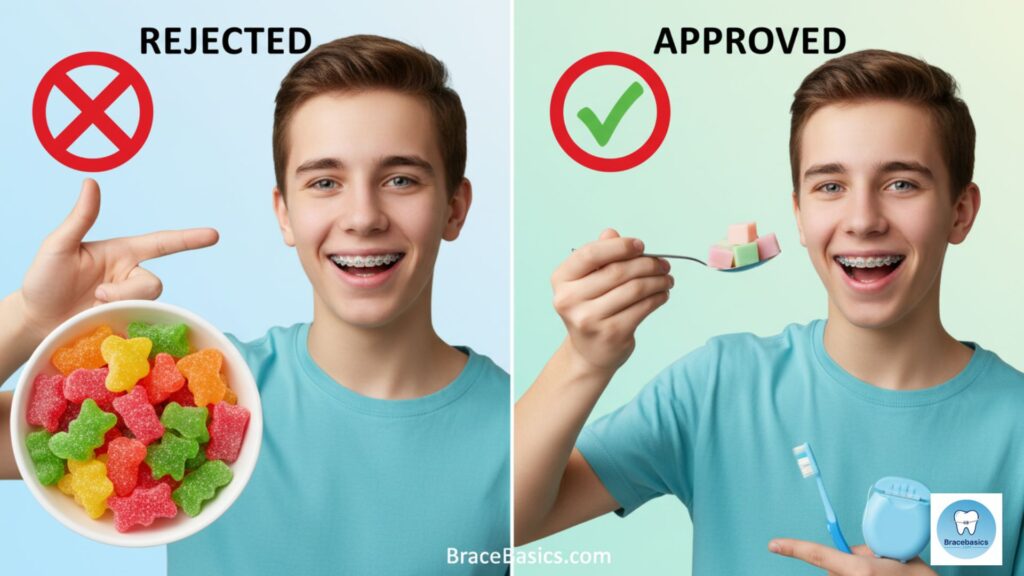
While most traditional fruit snacks and braces don’t mix well, a few options can be safer if eaten carefully. Very soft, gelatin-based treats that are not overly sticky can sometimes be consumed in small portions. These soft snacks for braces are less likely to cause broken brackets or loose wires, especially when paired with proper brushing after snacks and careful cleaning braces after eating.
Even with safer fruit treats, moderation is crucial. Chewy candy with braces or fruit roll-ups and braces should still be avoided whenever possible. Choosing orthodontist approved snacks and incorporating fruit-based alternatives such as applesauce, smoothies without seeds, or soft berries can satisfy sweet cravings without the long-term braces damage. Following these habits maintains oral hygiene with braces and reduces tooth decay risk, ensuring your orthodontic treatment stays on track.
Best Braces-Friendly Fruit Alternatives
Fresh, soft fruits like bananas, peeled peaches, and blueberries are ideal. Smoothies or applesauce without seeds offer sweet flavors without sticky texture risks.
A simple table helps compare fruit snacks and braces safety:
| Snack Type | Braces Safety | Notes |
| Fruit roll-ups | ❌ High risk | Sticky, chewy |
| Soft grapes | ✅ Safe | Cut in halves |
| Applesauce | ✅ Safe | No seeds, soft |
| Gummies | ⚠️ Caution | Only very soft, small portions |
| Smoothies | ✅ Safe | Avoid hard seeds |
These fruit-based alternatives reduce tooth decay risk while satisfying sweet cravings.
What To Do If You Already Ate Fruit Snacks With Braces
Accidentally eating fruit snacks with braces happens, especially for kids and teens with braces. The important thing is not to panic. Even a small amount of trapped sugar or sticky texture can increase plaque buildup and raise the tooth decay risk, but quick action can prevent damage. Immediate care and proper cleaning are key to maintaining metal brackets and wires and avoiding long-term braces damage.
Start by rinsing your mouth thoroughly with water. This helps wash away trapped sugar and reduces the saliva and sugar interaction that feeds bacteria. Next, brushing after snacks for at least two minutes is essential to remove residual sugars and prevent enamel damage. Pay special attention to areas around brackets and under wires, where plaque buildup is most likely.
Flossing with braces or using an interdental brush is highly recommended to remove any tiny debris left between teeth. Check for signs of trouble such as loose wires or broken brackets. If any damage occurs, contact your orthodontist immediately for an emergency orthodontist visit to avoid treatment delays.
Finally, track your habits and choose braces-safe sweets or fruit-based alternatives in the future. Consistent braces maintenance, including cleaning braces after eating, ensures that orthodontic treatment progresses smoothly without unexpected setbacks.
Tips for Eating Sweet Snacks Safely With Braces
Eating sweet treats doesn’t have to ruin your orthodontic progress. With the right approach, kids and teens with braces can enjoy occasional treats without risking broken brackets, plaque buildup, or tooth decay risk. The key is moderation, choosing braces safe sweets, and following proper cleaning routines. Implementing these habits ensures long-term braces damage is minimized and braces maintenance stays manageable.
- Always brush after snacks to remove trapped sugar and prevent enamel damage.
- Flossing with braces helps clear debris stuck in metal brackets and wires.
- Choose sugar-free alternatives or soft, braces-friendly snacks instead of sticky treats.
- Drink water immediately after eating to reduce saliva and sugar interaction that causes increased cavity risk.
- Limit portion size and avoid eating sweets between meals to reduce plaque buildup.
- Monitor kids and teens with braces closely, ensuring cleaning braces after eating sugary foods.
- Rotate treats with healthy snack swaps such as fruit-based alternatives or yogurt for safer snacking.
Foods You Should Completely Avoid With Braces
Avoid sticky snacks and braces, chewy candy with braces, fruit roll-ups and braces, and hard candies. Gum, toffees, and caramel also damage brackets. Foods to avoid with braces protect wires, brackets, and oral hygiene.
Ignoring restrictions leads to broken brackets, loose wires, and emergency orthodontist visits. Long-term issues include tooth decay risk and extended treatment.
Final Verdict – Should You Eat Fruit Snacks
Fruit snacks pose serious risks for braces. Their sticky texture, chewy consistency, and high sugar content make them unsuitable. Occasional very soft, small portions may be tolerable, but braces safe sweets are always better.
Choosing soft snacks for braces or fruit-based alternatives protects metal brackets and wires, reduces plaque buildup, and ensures faster, safer orthodontic treatment. Avoid fruit snacks to prevent long-term braces damage and maintain a healthy, confident smile.
FAQs
Can You Eat Fruit Snack Gummies With Braces?
Fruit snack gummies are extremely sticky snacks and braces don’t mix well with them. The chewy consistency can tug on metal brackets and wires, causing loose wires or broken brackets. The sugar can also get trapped, increasing plaque buildup and tooth decay risk. If eaten occasionally, rinse thoroughly and brush after snacks to reduce damage. However, regular consumption is not recommended because repeated stress can cause long-term braces damage.
Can You Eat Mott’s Fruit Snacks With Braces?
Mott’s fruit snacks are soft but still high in sugar. The sticky texture can cling to brackets and wires, creating areas of trapped sugar that lead to plaque buildup and enamel damage. While small, infrequent portions may be tolerated if brushing after snacks and flossing with braces is done, orthodontists generally advise avoiding them. Choosing braces-friendly snacks or fruit-based alternatives is safer for kids and teens with braces.
Can You Eat Welch’s Fruit Snacks With Braces?
Welch’s fruit snacks, like other commercial brands, are sticky and chewy candy with braces is risky. Trapped sugar can accelerate increased cavity risk and tooth decay risk, while the chewy consistency may damage metal brackets and wires. Eating these snacks occasionally is possible if proper oral hygiene with braces is followed, but frequent consumption can result in long-term braces damage. Orthodontist approved snacks are recommended instead.
Can Kids With Braces Eat Fruit Snacks?
Kids and teens with braces often love sweet treats, but sticky snacks and braces rarely mix safely. Eating fruit snacks can cause broken brackets, loose wires, and enamel damage. Small, very soft snacks may be allowed occasionally, but parents should supervise and ensure brushing after snacks and flossing with braces. Safer options include fruit-based alternatives, yogurt, or soft-baked treats that are braces safe sweets.
Are Homemade Fruit Snacks Safer?
Homemade fruit snacks can be slightly safer because you control ingredients. Using fresh fruit purees and avoiding extra sugar creates soft snacks for braces. However, if the homemade snacks are sticky or chewy, they can still cause trapped sugar, plaque buildup, and long-term braces damage. Homemade options should be eaten in moderation, followed by thorough braces care after eating sweets.
Can I Eat Fruit Snacks After Braces Tightening?
After braces tightening, teeth and gums are sensitive. Eating sticky snacks and braces can increase pain, loose wires, and broken brackets. Sugar left on teeth can cause plaque buildup and tooth decay risk. It’s better to wait a few days and stick to soft snacks for braces or orthodontist approved snacks until discomfort subsides. Proper brushing after snacks is crucial during this period.
How Often Is “Too Often”?
Frequent consumption of fruit snacks greatly increases tooth decay risk and long-term braces damage. Even soft fruit snacks can lead to trapped sugar and plaque buildup if eaten daily. For kids and teens with braces, fruit snacks should be occasional treats, ideally no more than once or twice a week, and always followed by brushing and flossing with braces. Consistent braces maintenance is essential to avoid enamel damage or broken brackets.
Related Posts You Should Read
Can You Eat Jelly Beans With Braces? – Learn why jelly beans are risky and how to enjoy sweets safely.
Can You Eat Oreos With Braces? – Discover which cookies are braces-friendly and which are harmful.
Can You Eat Caramel With Braces? – Caramel can stick to brackets, causing damage—find safer alternatives.
Can You Eat Starburst With Braces? – See why chewy candies are dangerous and which braces-safe sweets work.
Can You Eat Gummies With Braces? – Tips on enjoying gummies without hurting metal brackets and wires.
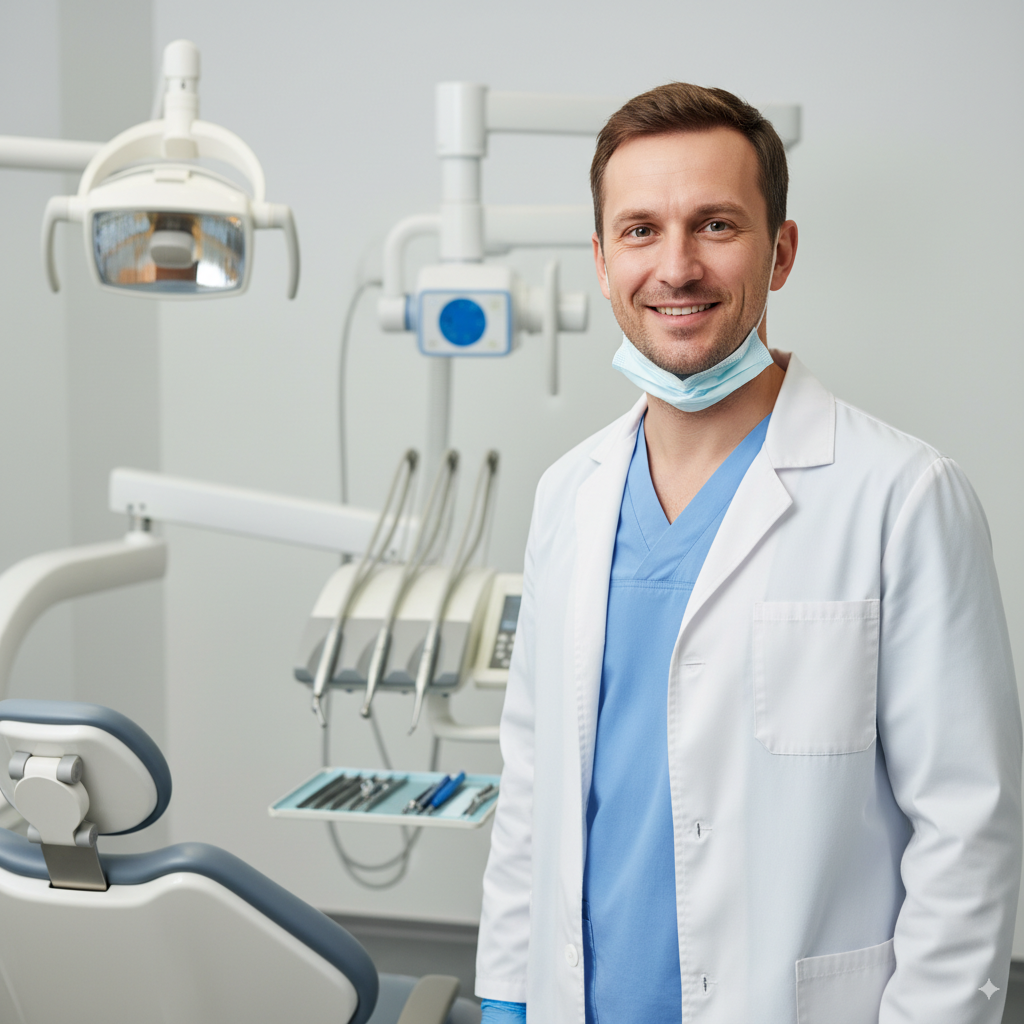
Hi, I’m Dr. Martin, the founder of BraceBasics.com. With years of experience in orthodontics, I’ve made it my mission to simplify braces care for patients of all ages. Here, you’ll find easy-to-understand advice, practical tips, and reliable resources to make your braces journey smoother, healthier, and stress-free. My goal is to help you smile with confidence every step of the way.