

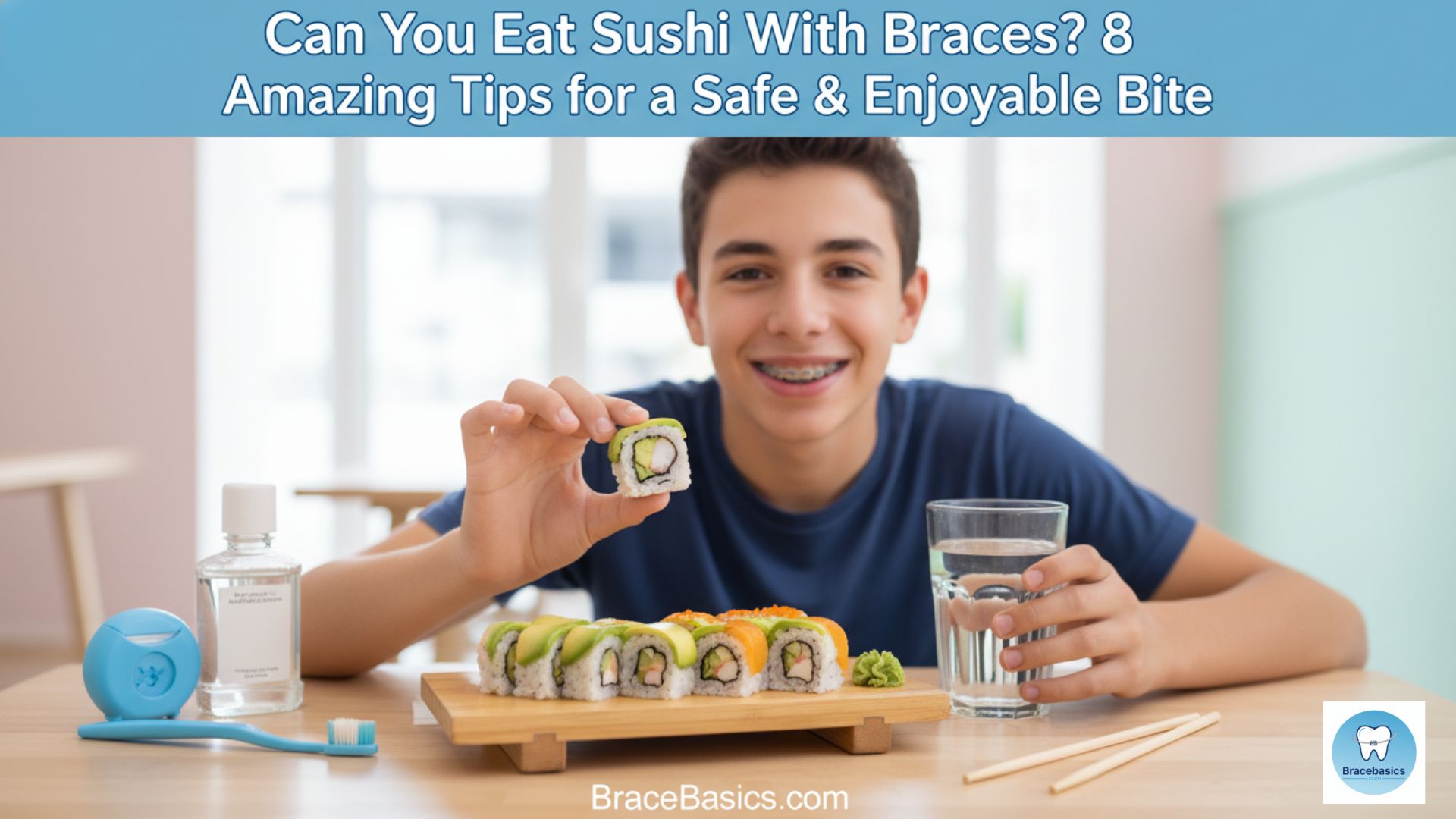
Sushi is loved across the United States for its fresh flavors and calm dining experience. Many people starting orthodontic care suddenly hesitate before ordering rolls. The question can you eat sushi with braces feels important because metal and food textures rarely mix comfortably. Fear of pain or damage often replaces excitement.
This guide explains everything needed to enjoy sushi safely during orthodontic care. It focuses on comfort, safety, and smart habits so sushi with dental braces feels enjoyable instead of risky. With the right choices, sushi can remain part of life during treatment.
Can You Eat Sushi With Braces?
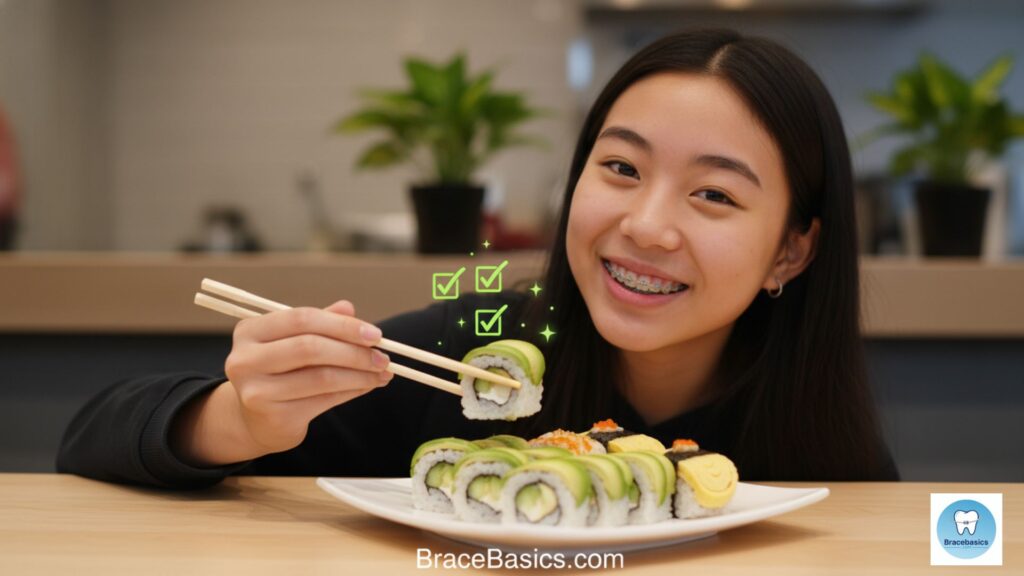
Yes, you can eat sushi with braces, but smart choices matter. Soft sushi is usually safe during orthodontic treatment. Rolls made with soft rice, avocado, cucumber, egg, or cooked fish don’t put much stress on brackets or wires. These options fit well into a braces-friendly diet and feel comfortable to chew.
Problems start with crunchy, sticky, or very chewy sushi. Tempura flakes, crispy toppings, tough raw fish, and thick seaweed can cause discomfort or even damage brackets. Large pieces also increase pressure when biting with front teeth.
To enjoy sushi safely, take small bites, chew slowly, and rinse your mouth after eating. With the right selections and habits, sushi can stay on the menu even while wearing braces.
Best Sushi Choices for Braces
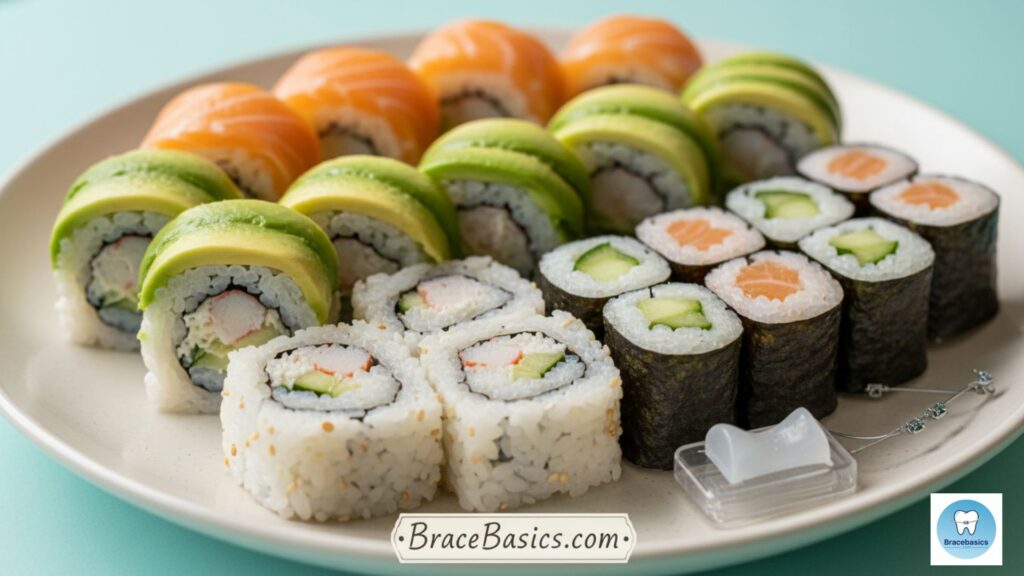
Soft rolls work best during sushi during orthodontic treatment because they align with a soft foods diet and reduce stress on brackets. The safest and most comfortable choices include:
- California rolls made with soft imitation crab and avocado
- Avocado rolls that feel smooth and require very little chewing
- Cucumber rolls that stay light and easy on sensitive teeth
Ingredients matter more than presentation. The most safe sushi for braces wearers usually contains:
- Avocado, which cushions chewing pressure
- Egg (tamago), fully cooked and gentle on sore teeth
- Cooked fish, which avoids tough or rubbery textures
- Smaller bite-sized pieces, helping reduce strain and prevent discomfort
These braces friendly sushi options allow you to enjoy sushi without increasing teeth sensitivity or causing braces discomfort, all while keeping flavor fully intact.
What to Avoid When Eating Sushi With Braces
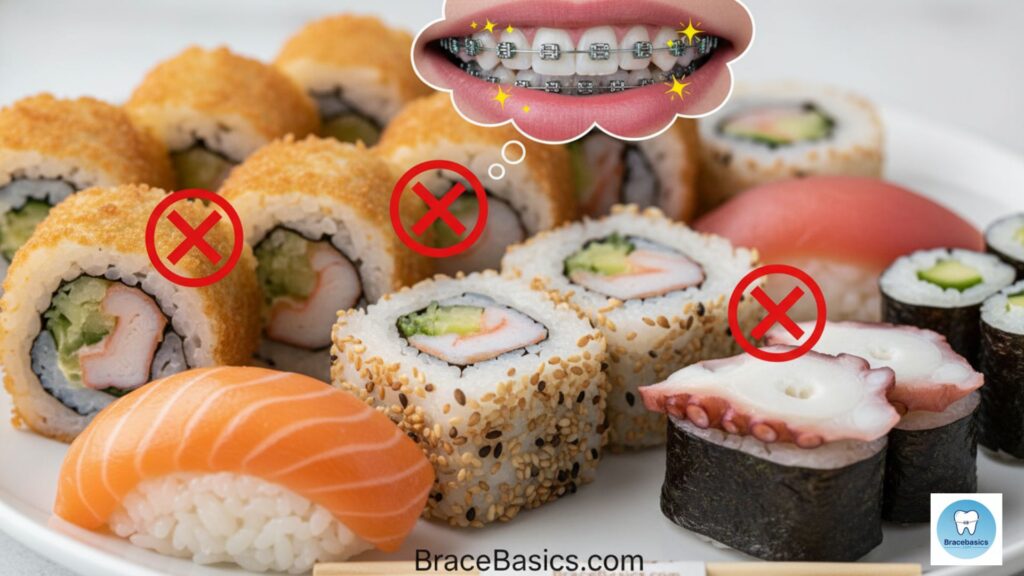
Some sushi textures increase the risk of damage when wearing sushi and metal braces. Foods that feel crunchy or stiff can push directly against brackets and wires, leading to discomfort or repairs. Try to avoid:
- Tempura flakes and fried coatings, which can snap brackets
- Crispy seaweed (nori) that pulls against wires while chewing
- Hard toppings that act like tiny tools against braces
Chewy and sticky ingredients also create problems during orthodontic care. These textures increase chewing pressure and make cleaning harder after meals. It’s best to stay away from:
- Squid and octopus, which stretch and tug while chewing
- Very chewy raw fish that strains brackets
- Sticky rice, because rice stickiness traps food and complicates oral hygiene routines
Avoiding these foods helps prevent broken brackets, painful adjustments, and unnecessary orthodontic visits.
8 Amazing Tips to Enjoy Sushi With Braces
Eating sushi safely depends more on smart habits than strict rules. Simple adjustments can protect braces and make meals more comfortable:
- Choose soft ingredients to protect brackets and reduce pressure
- Cut sushi into smaller pieces to avoid stressing wires
- Avoid crunchy toppings that can shift or damage braces
- Chew slowly and gently to support gum comfort
- Eat evenly on both sides to reduce uneven force
- Use chopsticks instead of biting to protect front teeth
- Rinse with water while eating to clear trapped rice
- Clean braces after the meal following orthodontist advice
These habits help reduce post-adjustment soreness, limit discomfort, and make sushi an enjoyable part of life with braces.
Sushi Rolls That Are Braces-Friendly
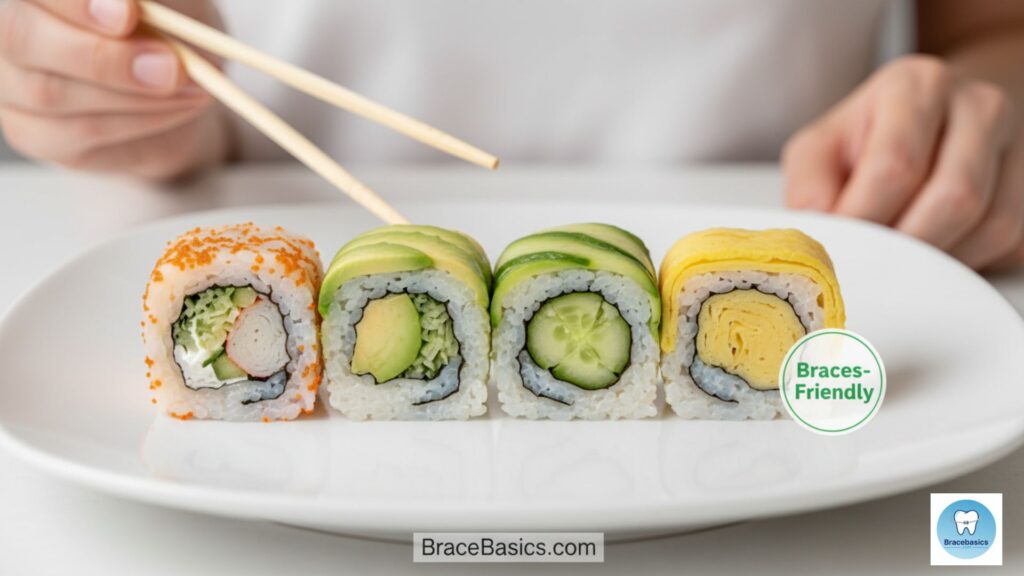
Some sushi rolls braces safe work perfectly for people wearing braces. Choosing soft textures helps protect orthodontic brackets and keeps chewing pressure low. The best options include:
- California roll: Made with soft imitation crab and creamy avocado, it’s gentle on brackets and easy to chew
- Avocado roll: Smooth and tender, requiring minimal effort, making it an orthodontist approved sushi choice
- Cucumber roll: Light and refreshing without any crunch, safe for sensitive teeth
- Egg (tamago) roll: Fully cooked and soft, providing a filling option that avoids braces discomfort
These options are perfect examples of braces safe Japanese food for restaurants and home dining. They allow you to enjoy sushi during treatment without risking archwire damage or broken brackets.
Sushi Rolls to Avoid With Braces
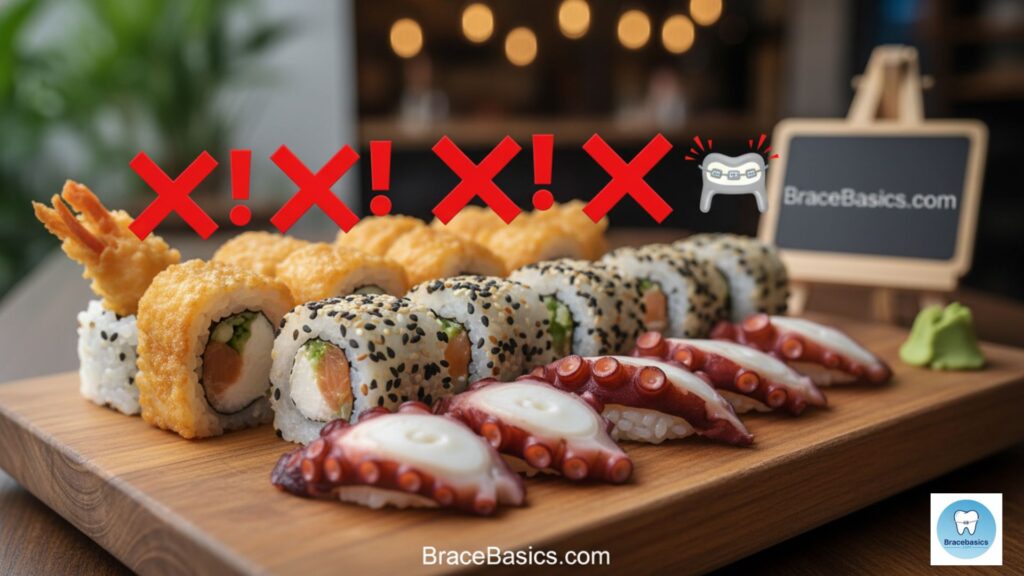
Certain sushi rolls increase the risk of damage during sushi during orthodontic treatment. Understanding which rolls to skip helps protect orthodontic brackets and prevents archwire damage. Avoid these options:
- Tempura or fried rolls: Hard coatings can snap wires and increase chewing pressure
- Crunchy toppings: Sesame seeds or crispy flakes act like tiny tools and may cause broken brackets
- Tough raw fish: Squid, octopus, and thick slices require extra force and strain jaws
- Large rolls requiring front-tooth biting: Increase risk of damage, especially after sushi after braces adjustment
Skipping these rolls keeps meals safe, reduces braces discomfort, and ensures a worry-free sushi experience.
How to Eat Sushi Safely With Braces
Eating sushi safely depends on both selection and technique. Following a simple step-by-step approach protects orthodontic brackets and minimizes chewing pressure while enjoying your favorite rolls:
- Take small bites: Smaller pieces reduce stress on wires and brackets, keeping them aligned
- Avoid biting with front teeth: Protects sensitive areas and prevents broken brackets during early sushi after braces adjustment stages
- Chew slowly and evenly: Helps control chewing pressure and limits braces discomfort
- Use utensils wisely: Chopsticks encourage precision and reduce accidental strain from chopsticks vs biting
- Drink water between bites: Flushes out sticky rice and soy residue, reducing soy sauce acidity effects on enamel and brackets
- Rinse or brush after eating: Supports proper oral hygiene and prevents food buildup around archwires
Following these steps ensures safe sushi for braces wearers while keeping meals enjoyable and worry-free.
Sushi Hygiene Tips for Braces Wearers
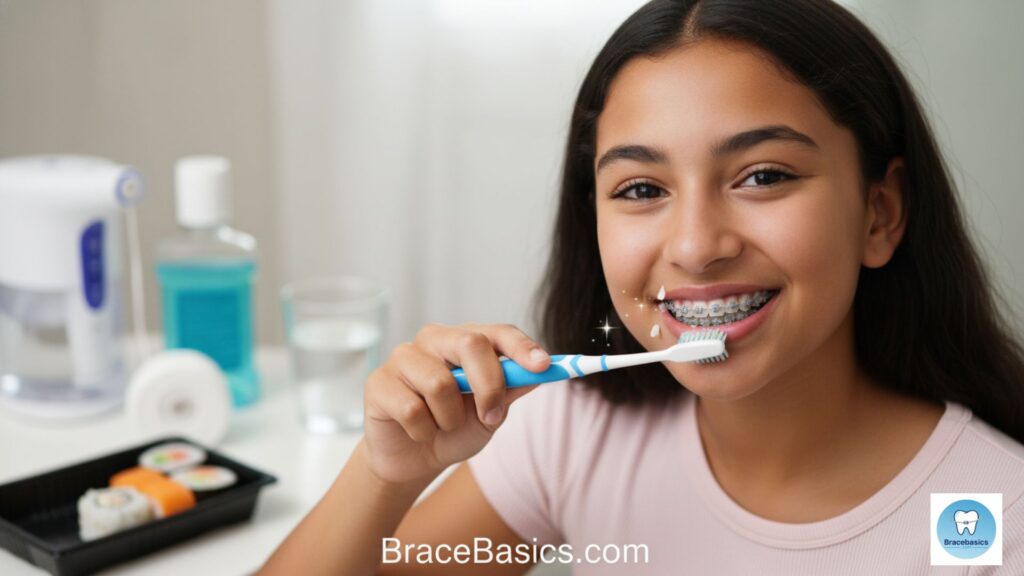
Cleaning after sushi prevents long-term problems. Rice and fish particles hide near brackets and challenge oral hygiene routines. Gentle brushing restores freshness without irritating gums.
Water flossers and floss help clear trapped food where brushes miss. Mouth rinse soothes tissues irritated by wasabi irritation or acidic sauces and keeps breath fresh.
Can You Eat Sushi During the First Week of Braces?
The first week after getting braces often brings post-adjustment soreness and tightness, making chewing uncomfortable. Choosing the right sushi during this stage is crucial for comfort and safety.
- Stick to very soft rolls: Avocado, egg (tamago), and cucumber rolls are gentle on orthodontic brackets
- Avoid crunchy or chewy textures: Tempura flakes, hard fish, and sticky rice increase chewing pressure and can aggravate braces discomfort
- Eat slowly and take small bites: Protects sensitive teeth and reduces strain on gums
- Rinse after eating: Helps remove leftover rice, fish, and soy sauce, supporting oral hygiene and preventing irritation
- Use dental wax if needed: Covers brackets that rub against sensitive tissue, reducing soreness during meals
Following these steps ensures that sushi during orthodontic treatment is comfortable, safe, and enjoyable even in the very first week of braces.
Final Thoughts on Eating Sushi With Braces
Having braces doesn’t mean giving up sushi. By making smart choices and being aware of texture, you can enjoy your favorite rolls without worry. Soft rolls, gentle chewing, and keeping up with oral hygiene make sushi safe and comfortable.
Pay attention to post-adjustment soreness and follow your orthodontist advice. With these habits, sushi can remain a fun, tasty treat, and you can eat confidently without stressing about archwire damage or broken brackets.
FAQS
Can you eat sushi with braces safely?
Yes, you can eat sushi with braces safely if you stick to soft rolls and chew carefully. Rolls with soft rice, avocado, cucumber, or cooked fish are braces safe Japanese food that rarely damage orthodontic brackets or wires when eaten mindfully.
Is sushi rice bad for braces?
Sushi rice isn’t harmful, but its rice stickiness can trap food around brackets and wires. Rinsing with water or brushing gently after eating helps maintain oral hygiene and prevents leftover rice from causing braces discomfort or plaque buildup.
Can sushi damage braces?
Sushi can damage braces when it contains hard foods, crunchy toppings, or very chewy fish. These ingredients may bend archwires, loosen orthodontic brackets, or increase chewing pressure, especially if you bite large pieces with front teeth.
What is the best sushi for new braces?
The best sushi for new braces includes soft rolls like avocado rolls, cucumber rolls, California rolls, and egg (tamago) rolls. These options are soft sushi for braces, gentle on sore teeth, and minimize post-adjustment soreness during the first weeks of treatment.
Can you eat raw fish sushi with braces?
Some raw fish sushi is safe if the slices are thin and soft. Avoid very chewy fish such as squid or octopus, because the raw fish texture can tug on orthodontic brackets and wires, increasing chewing pressure and risk of damage.
Should you avoid soy sauce with braces?
Soy sauce is generally safe, but its soy sauce acidity can stain clear or white elastic bands. Rinsing with water after eating reduces staining and keeps braces clean while protecting archwires from residue buildup.
How should you clean braces after eating sushi?
After eating sushi, rinse your mouth, brush gently around brackets, and floss carefully. Using a water flosser helps remove sticky foods like rice or fish trapped near orthodontic brackets, supporting proper oral hygiene and preventing braces discomfort.
Can you eat sushi during the first week of braces?
Yes, but only soft sushi during the first week. Teeth are often sore due to post-adjustment soreness, so stick to avocado, cucumber, or egg rolls. Eat slowly, take small bites, and rinse often to minimize chewing pressure and avoid damage.
Related Posts You May Like
- Can You Eat Starburst With Braces? – Learn how to enjoy candy safely without damaging brackets.
- Can You Eat Goldfish With Braces? – Tips on eating crunchy snacks while protecting wires.
- Can You Eat Noodles With Braces? – Discover soft pasta options for braces wearers.
- Can You Eat Pizza With Braces? – A guide to eating pizza safely without hurting your braces.
- Braces-Friendly Foods – Comprehensive list of foods safe for sushi with dental braces and more.
Hi, I’m Dr. Martin, the founder of BraceBasics.com. With years of experience in orthodontics, I’ve made it my mission to simplify braces care for patients of all ages. Here, you’ll find easy-to-understand advice, practical tips, and reliable resources to make your braces journey smoother, healthier, and stress-free. My goal is to help you smile with confidence every step of the way.