

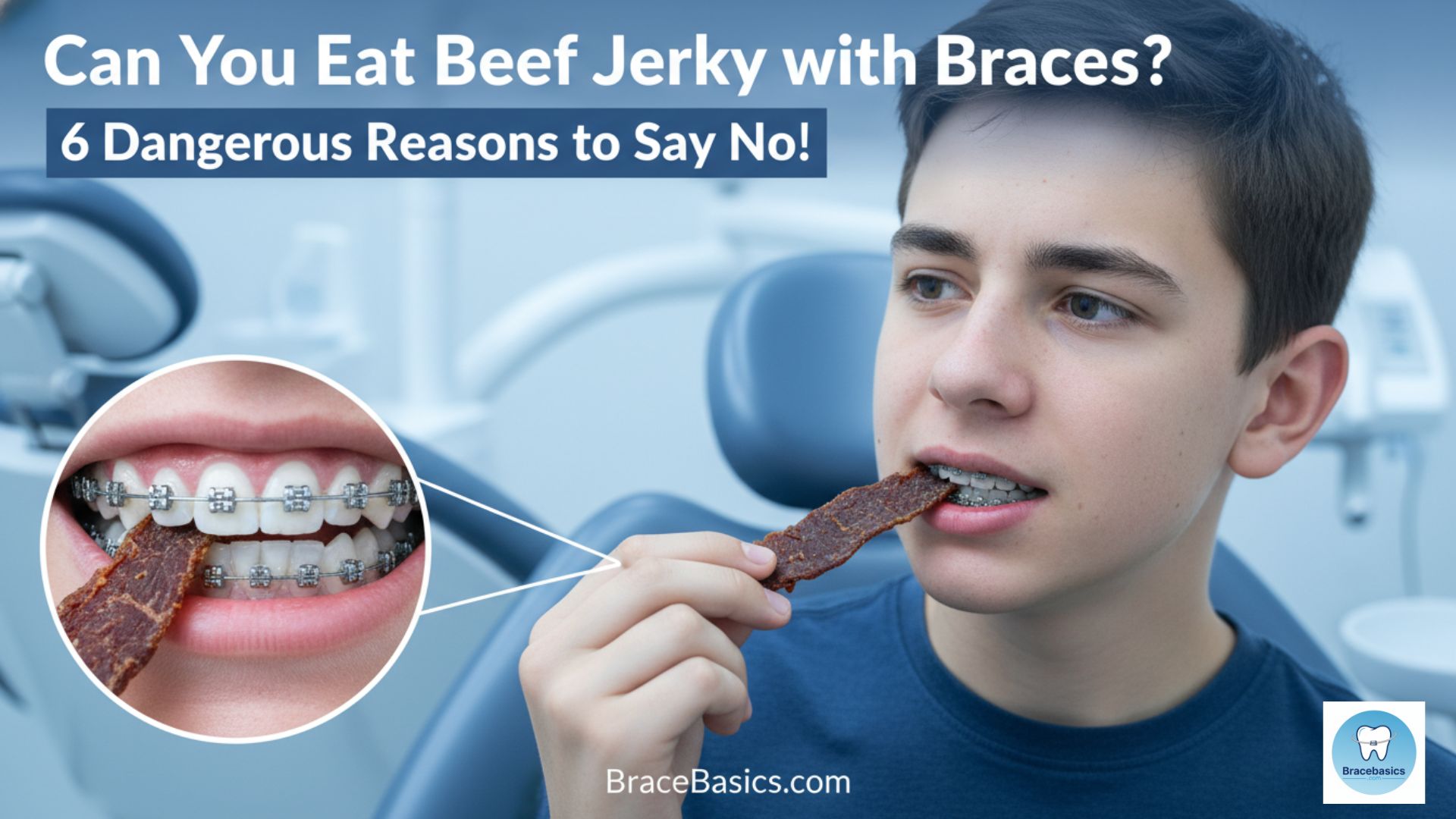
Craving a savory snack like beef jerky can be tempting, but if you have braces, it is important to think twice before chewing. The combination of tough and chewy textures and sticky fibers can easily damage your orthodontic appliances. Patients often underestimate how easily braces can be affected by chewy foods and braces. This article will guide you through 6 dangerous reasons to avoid beef jerky, explain how it can harm your braces, and offer braces-friendly foods that are safe to enjoy. Understanding these risks helps maintain your teeth and braces maintenance effectively and ensures smooth orthodontic treatment.
A quick glance at dental braces care shows that hard foods to avoid with braces and sticky snacks are among the most common culprits for braces damage prevention. By learning which foods are safe, you can avoid pain, unexpected costs, and delays in treatment. The next section provides a clear answer to the pressing question about eating beef jerky with braces.
Can You Eat Beef Jerky with Braces? Quick Answer
No, you cannot safely eat beef jerky with braces. The snack’s tough and chewy fibers and sticky nature can easily bend wires, loosen brackets, or even break off pieces of your appliance. Small particles may also get trapped, causing food buildup that promotes decay and gum irritation.
Even if chewed carefully, the mechanical stress from beef jerky increases the risk of damage. For patients following an orthodontic diet, it is better to choose soft protein alternatives like ground meat, tender chicken or fish, or soft lunch meats that do not compromise the braces. The following sections expand on six critical reasons why beef jerky is particularly harmful.
Why Beef Jerky is Bad for Braces
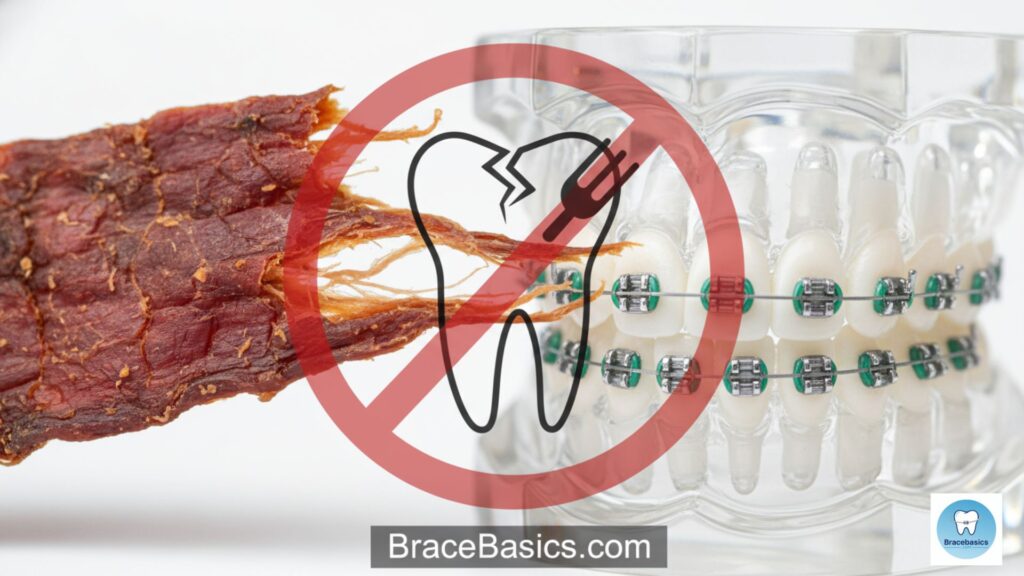
Beef jerky is tough and chewy, making it difficult to bite and break down safely with braces. The persistent tension needed to chew this snack can create strain on brackets and wires, potentially leading to long-term problems. The sticky fibers of jerky can also adhere to brackets, causing food stuck in braces that requires extra care during cleaning.
Many patients do not realize that chewy foods and braces pose a daily challenge. Repeated exposure to hard foods increases the risk of wires bending or brackets loosening. The next section outlines six detailed reasons why beef jerky should be avoided, backed by professional guidance.
6 Dangerous Reasons to Avoid Beef Jerky with Braces
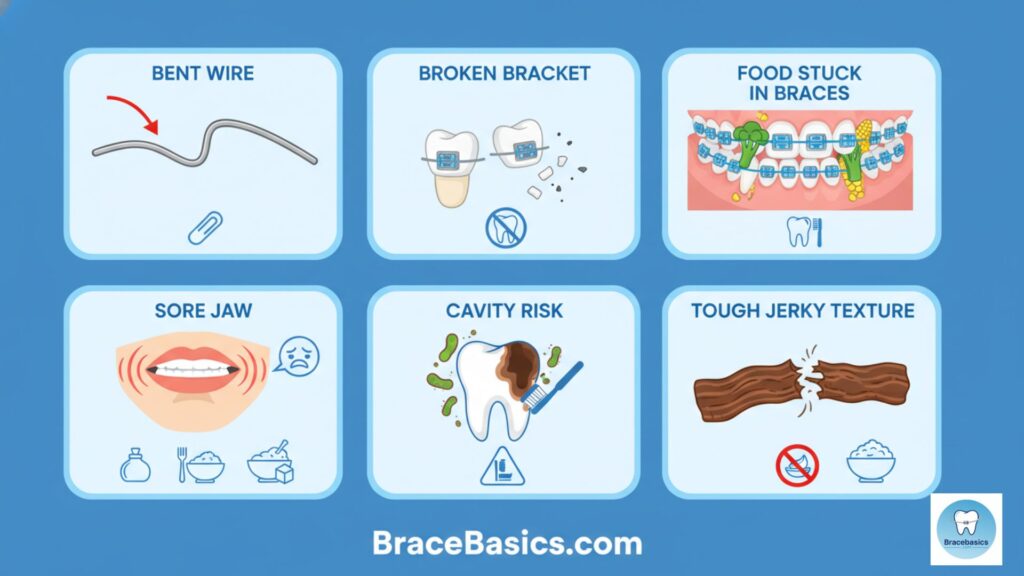
Tough and Chewy Texture
Chewing beef jerky places significant stress on braces. The strain from tough and chewy meat can compromise the structural integrity of brackets and wires. Think of it as stretching a rope that is already under tension. Repeated pressure can weaken dental braces care, making them more susceptible to damage. Avoiding chewy foods and braces during treatment protects your investment and reduces emergency visits.
Can Bend Wires
The force exerted when chewing beef jerky can easily bend wires, altering the orthodontic correction. Even a slight distortion may require a professional adjustment, delaying treatment and causing discomfort. Maintaining proper alignment depends on avoiding foods that impose excessive mechanical stress on braces.
Loose or Broken Brackets
Hard or sticky foods can loosen brackets or even break off pieces of the orthodontic appliance. Brackets are glued to teeth and cannot endure the repeated tugging from chewy snacks. Once damaged, they must be repaired by a dentist, which may interrupt your orthodontic progress.
Food Gets Stuck Easily
Fibers from beef jerky tend to lodge between brackets and teeth, causing food buildup. Even meticulous brushing may not remove all particles, increasing the risk of decay and gum inflammation. Regular cleaning and flossing are critical, but avoiding problematic foods reduces the burden on teeth and braces maintenance.
Risk of Cavities and Decay
When pieces of jerky remain trapped in braces, they become a feeding ground for bacteria. This leads to decay, bad breath, and potential gum problems. Understanding foods that damage braces helps in making daily choices that prevent oral health issues. Even short-term indulgence in jerky can increase the likelihood of cavities.
Pain and Discomfort
Chewing tough and chewy jerky can exacerbate soreness and jaw pain, particularly in patients who have recently tightened braces. Stress on the teeth and surrounding tissues often causes discomfort that persists for hours. Following a proper orthodontic diet reduces the risk of pain while supporting steady alignment.
Safer Alternatives to Beef Jerky
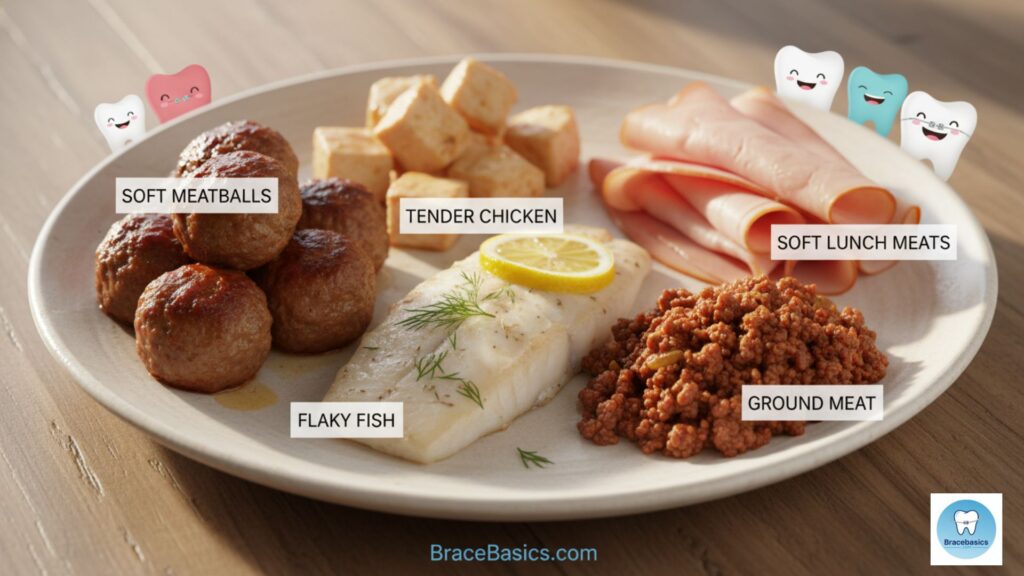
Soft proteins such as meatballs, tender chicken, fish, soft lunch meats, and ground meat provide excellent nutrition without risking braces damage prevention. These options are easy to chew and less likely to cause food stuck in braces, making them ideal for braces-safe snacks.
Many patients find that integrating these foods into an orthodontic diet allows them to maintain protein intake while protecting their appliances. Preparing meats in tender forms or slow-cooking tougher cuts ensures safety and compliance with dental braces care recommendations.
Foods to Avoid with Braces
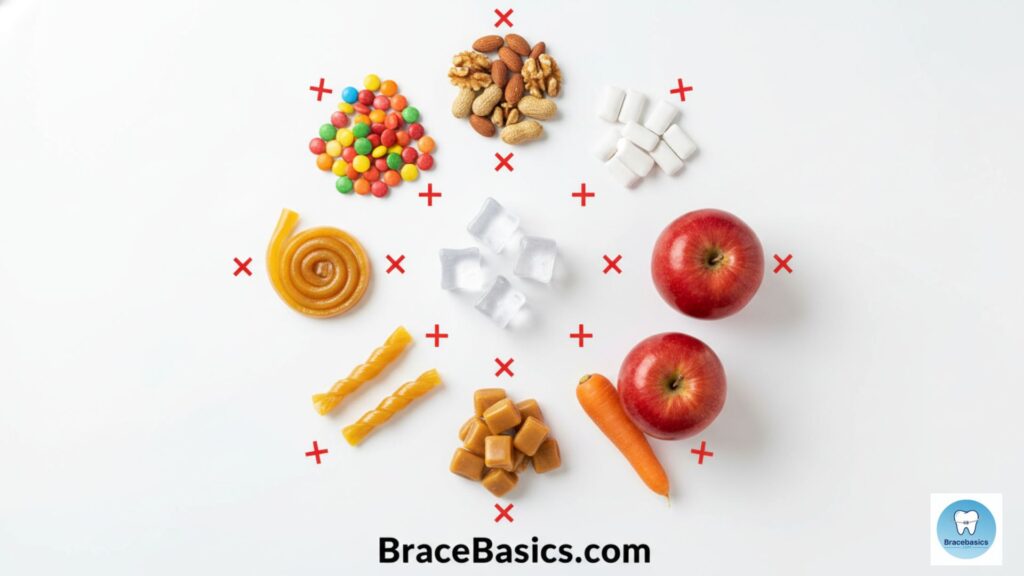
Patients should avoid hard foods like nuts, hard candy, and ice, as well as sticky foods and braces such as taffy, caramel, and gum. Crunchy items like raw carrots and whole apples must be cut into smaller pieces before eating. These foods increase the likelihood of braces damage prevention issues and food buildup between brackets.
Avoiding chewy foods and braces while focusing on braces-friendly foods simplifies daily care. Following this guidance ensures smoother orthodontic treatment and prevents unnecessary visits for repairs or adjustments.
Foods You Can Not Eat With Braces?
Tips for Eating Meat Safely with Braces
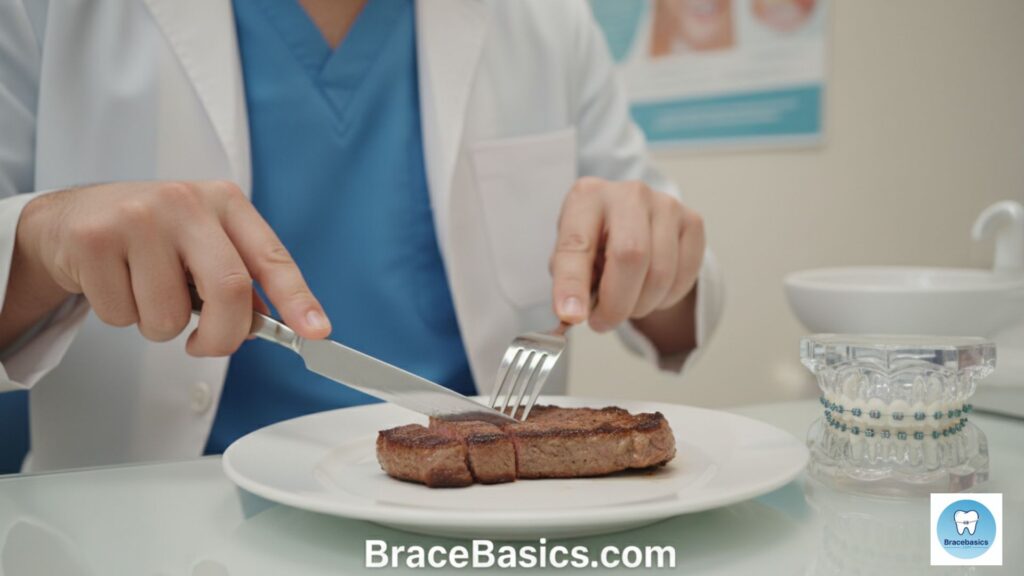
Meat should always be cut into smaller pieces and chewed with back teeth to minimize pressure on brackets and wires. Avoid biting directly into tough cuts. Think of your braces as delicate machinery: excessive force can bend wires, loosen brackets, or even break off parts.
Soft proteins such as ground meat, tender chicken or fish, and soft lunch meats are ideal choices. Eating slowly and carefully ensures teeth and braces maintenance remains intact and reduces risks of food stuck in braces or other complications.
Conclusion
Eating beef jerky with braces is risky because it is tough and chewy, can bend wires, loosen brackets, and create food buildup that leads to decay. Patients should focus on braces-safe snacks such as meatballs, tender chicken, fish, soft lunch meats, and ground meat. Maintaining an orthodontic diet with these alternatives ensures smooth treatment, prevents pain, and protects your investment.
FAQs
Are SLIM JIMS okay to eat with braces?
No, Slim Jims are not safe with braces. Slim Jims have a tough, chewy texture, similar to beef jerky, which can easily bend wires or loosen brackets when you try to bite or tear them apart. They also break into stringy pieces that can get trapped around brackets, causing food buildup and increasing the risk of tooth decay.
Even if you try to chew small pieces, the dense meat fibers still require strong pressure that puts stress on your orthodontic hardware. For safer options, choose soft proteins like tender chicken, meatballs, ground beef, or soft lunch meats.
Can you eat beef with braces?
Yes, you can eat beef with braces, but only if it is soft, tender, and easy to chew. Tough beef cuts such as steak, brisket, beef jerky, or dried meat snacks require heavy chewing that can break off brackets or distort wires.
Safe beef options include:
- Ground beef cooked soft
- Meatballs in sauce
- Shredded beef cooked until tender
- Slow-cooked or pressure-cooked beef dishes
Avoid biting directly into thick or tough beef. Always cut it into small pieces to protect your braces and prevent food from getting stuck.
What foods are off limit with braces?
Foods that are too hard, sticky, or chewy should always be avoided. They either pull on brackets or get stuck deeply around braces, causing hygiene issues. Here’s what to stay away from:
Hard foods: whole nuts, hard candy, ice cubes, popcorn kernels, pretzels, raw carrots, whole apples
Sticky foods: caramel, taffy, sticky granola bars, gummy candies, chewing gum
Chewy foods: beef jerky, Slim Jims, tough breads, bagels, licorice
Crunchy foods: tortilla chips, kettle chips, crusty pizza edges, crisp snacks that require forceful biting
These foods can cause braces damage, wire bending, loose brackets, and even mouth pain.
How crunchy is too crunchy for braces?
Anything that requires strong biting pressure or doesn’t break apart easily is considered too crunchy for braces. If a snack makes a loud crack when you bite it or feels firm under your teeth, it’s likely unsafe.
Examples of foods that are “too crunchy”:
- Raw carrots
- Whole apples (unless cut small)
- Kettle chips
- Hard taco shells
- Thick pretzels
- Popcorn kernels
- Hard crust bread
A simple rule:
If your teeth need force to break it, your braces can break instead.
Always choose soft, easy-to-chew textures, especially during the first week after tightening.
References
Table of Safe vs Unsafe Meats for Braces:
| Meat Type | Safe for Braces? | Notes |
| Beef Jerky | ❌ No | Tough, chewy, sticky, can bend wires |
| Meatballs | ✅ Yes | Soft, easy to chew, braces-friendly |
| Tender Chicken or Fish | ✅ Yes | Minimal risk of loosen brackets |
| Soft Lunch Meats | ✅ Yes | Soft protein, easy to manage |
| Ground Meat | ✅ Yes | Can be cooked soft, braces-safe |
Hi, I’m Dr. Martin, the founder of BraceBasics.com. With years of experience in orthodontics, I’ve made it my mission to simplify braces care for patients of all ages. Here, you’ll find easy-to-understand advice, practical tips, and reliable resources to make your braces journey smoother, healthier, and stress-free. My goal is to help you smile with confidence every step of the way.