

Candy cravings are common, and people with braces often wonder about eating M&Ms with braces safely. Braces make simple treats a potential risk because sugar, hard texture, sticky candy, and candy stuck in braces can damage orthodontic appliances. Orthodontic brackets and wires are delicate, and even small pressure on brackets can cause issues. Understanding how to enjoy chocolate candy for braces while preventing damage is essential.
Eating M&Ms with braces requires care. The right approach ensures you enjoy candy without harming your braces. Knowledge of candy precautions for braces and awareness of braces-safe chocolate options can prevent brackets from breaking and wires from bending. Small adjustments, such as letting candy melt and proper oral hygiene, can make candy safe for orthodontic patients.
Can You Eat M&Ms With Braces? Quick Answer
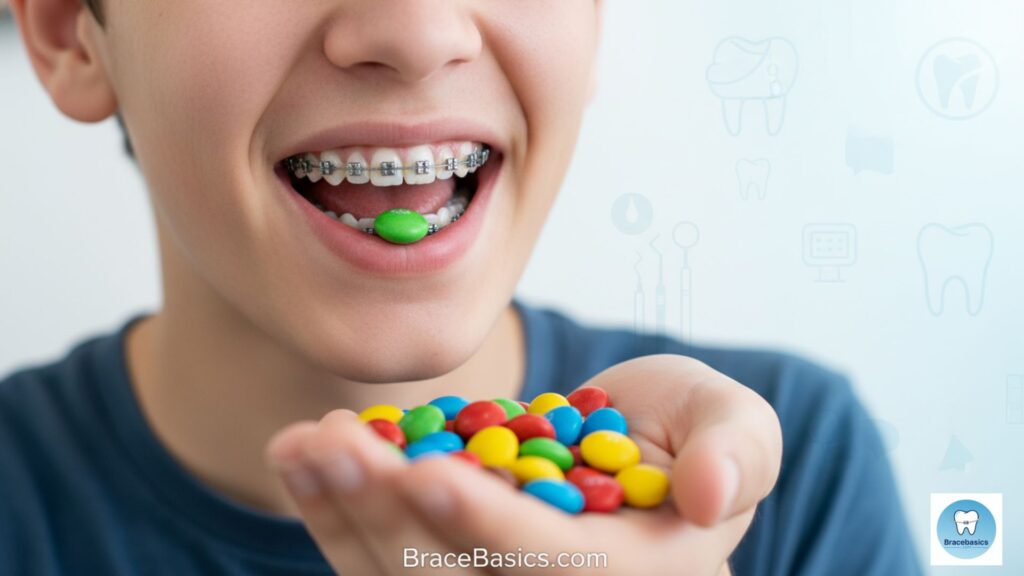
Yes, plain M&Ms safe for braces can be eaten in moderation. The thin candy shell and soft chocolate inside M&Ms reduce the risk of breaking brackets. Avoid peanut M&Ms damage braces because the peanut butter center risk or crunchy nuts can create excessive pressure on brackets.
Melt M&Ms in mouth slowly instead of biting to reduce stress on wires. This method minimizes biting M&Ms can damage braces. Eating candy after meals and brushing afterward ensures proper braces care with candy. Following M&Ms consumption tips for braces helps maintain both dental health and orthodontic safety.
What Are M&Ms and Why They Matter for Braces
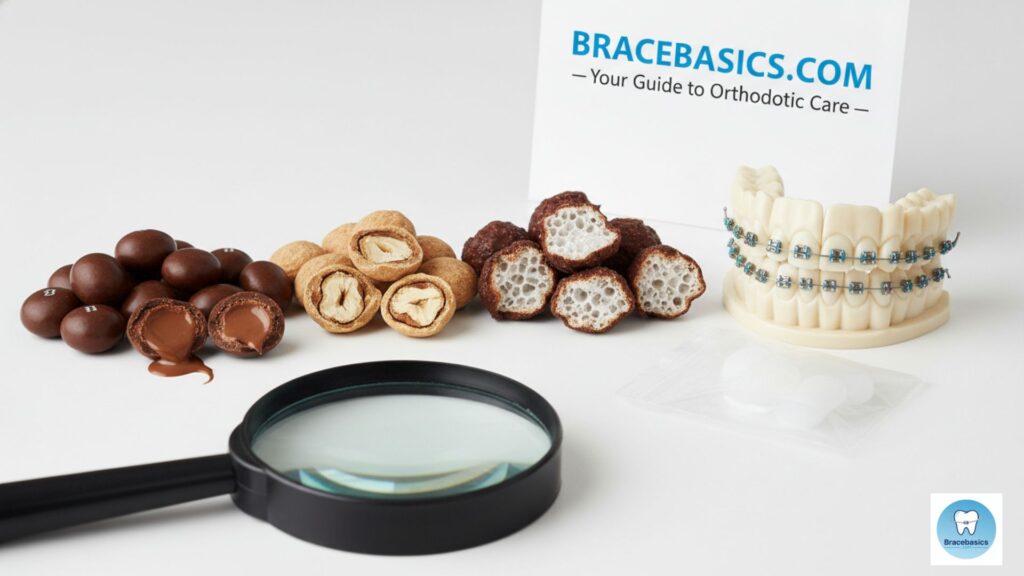
M&Ms are sugar-coated chocolates available in various types, including plain, peanut, and crispy. Each variety affects braces differently. Thin candy shell on plain M&Ms allows them to melt safely, while nuts or crispy centers can create pressure on brackets. Understanding the difference between soft and hard candy is crucial for candy safety with braces.
Candy can impact braces because sugar feeds bacteria around orthodontic brackets and wires, causing decay. Sticky and chewy candy increases chewy candy risk braces and makes cleaning difficult. Knowing which M&Ms are safe allows patients to enjoy braces-friendly chocolate without compromising orthodontic treatment. Choosing the right candy reduces braces damage and supports long-term oral health.
8 Shockingly Important Facts About Eating M&Ms With Braces
Fact 1: Plain M&Ms Are Generally Safe
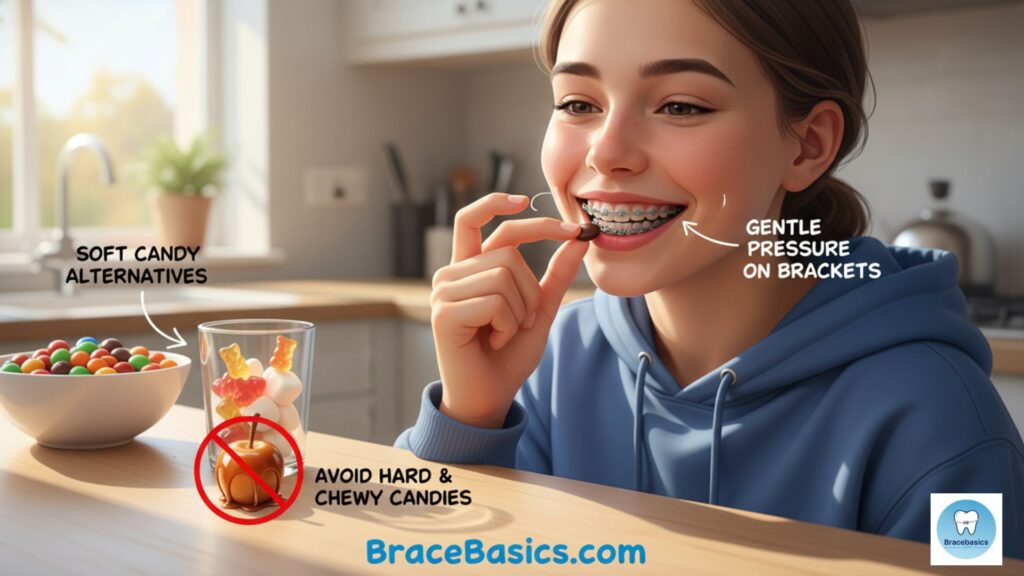
Plain M&Ms are soft, with a soft chocolate inside M&Ms and a thin candy shell that makes them braces-safe chocolate options. They can be enjoyed carefully without bending wires or breaking brackets. Eating small amounts and letting the candy dissolve reduces biting M&Ms can damage braces.
Even small habits, like not biting, ensure long-term prevent braces damage. Brushing after candy consumption keeps candy stuck in braces from causing cavities. Following orthodontic safety tips preserves orthodontic appliances while allowing occasional treats.
Fact 2: Avoid Peanut or Nutty M&Ms
Peanut M&Ms can damage braces because the peanut butter center risk applies extra force to brackets. Crunchy textures or large nuts are considered crunchy candy breaks brackets, making them high-risk.
Even small bites can create excessive pressure on brackets, leading to wire bending or bracket loosening. Patients should avoid peanut M&Ms damage braces and choose soft candy alternatives to protect orthodontic work.
Fact 3: Sugar Content Can Cause Decay
The sugar in M&Ms feeds bacteria around orthodontic brackets and wires, increasing the risk of cavities. Brushing and flossing immediately after candy prevents decay and ensures braces care with candy.
Using orthodontic-friendly snacks and braces-safe chocolate options limits sugar exposure while still allowing occasional treats. Rinsing with water or fluoride mouthwash enhances candy safety with braces.
Fact 4: Frequency Matters More Than Quantity
Eating candy often throughout the day is more dangerous than a single small serving. Continuous sugar exposure increases decay risk around brackets and wires. Following M&Ms consumption tips for braces reduces this risk significantly.
Spacing candy intake allows saliva to naturally clean teeth and maintain braces care with candy. Limiting candy sessions ensures prevent braces damage while satisfying cravings.
Fact 5: Chewing Technique Can Reduce Risk
Biting carefully and avoiding direct contact with front teeth reduces pressure on brackets. Letting chocolate melt M&Ms in mouth minimizes stress and prevents biting M&Ms can damage braces.
Slowly enjoying candy protects orthodontic appliances while maintaining candy safety with braces. Proper technique allows orthodontic patients to enjoy braces-friendly chocolate without complications.
Fact 6: Watch Out for Stuck Pieces
Candy can lodge candy stuck in braces, increasing risk of cavities. Small gaps between brackets and wires collect sugar residue and bacteria.
Rinsing thoroughly and using floss threaders removes hidden candy. Preventing stuck pieces is essential for orthodontic safety tips and long-term braces care with candy.
Fact 7: Timing Matters
Eating candy after meals is safer than on an empty stomach. Saliva production increases after eating, naturally reducing candy stuck in braces.
Timing treats strategically allows soft candy alternatives to be enjoyed with minimal risk. This helps minimize risk while eating candy and ensures orthodontic appliances stay intact.
Fact 8: Consult Your Orthodontist
Every patient’s braces are different. Professional advice ensures candy precautions for braces are personalized. Orthodontists recommend which soft candy alternatives are safest and how often treats can be eaten.
Following expert guidance ensures braces care with candy and reduces the likelihood of repair visits. Personalized advice strengthens candy safety with braces while letting patients enjoy occasional M&Ms.
Tips for Eating Candy Safely With Braces
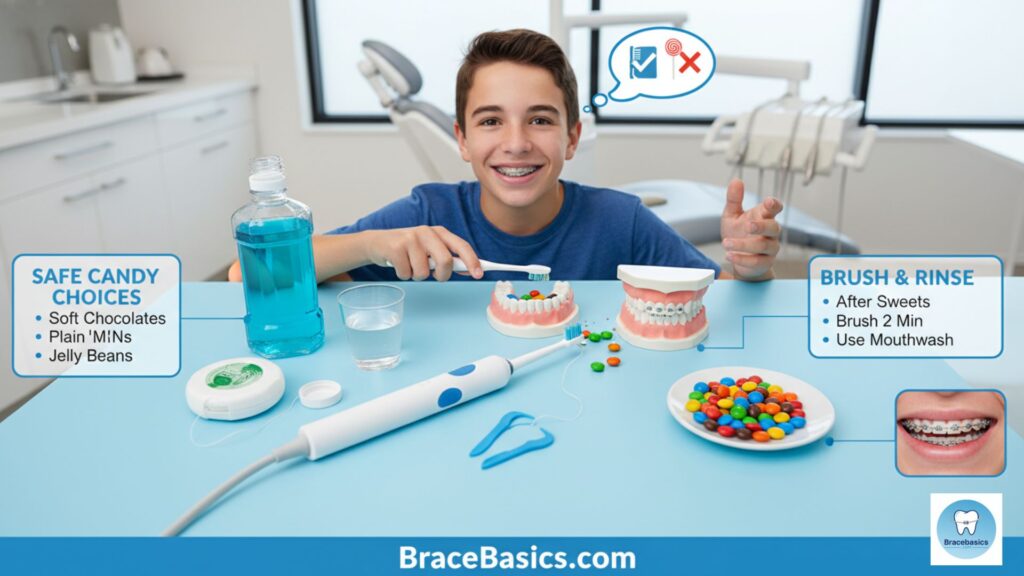
Brushing after candy, rinsing with mouthwash, and using floss threaders reduce chewy candy risk braces. Avoiding hard candies vs soft candies protects orthodontic brackets and wires. Choosing soft candy alternatives limits candy stuck in braces.
Eating slowly and letting chocolate melt M&Ms in mouth reduces pressure on brackets. Maintaining consistent oral hygiene ensures prevent braces damage and supports orthodontic-friendly snacks as part of a healthy diet.
Alternatives to M&Ms for Sweet Cravings

Softer chocolates, sugar-free chocolate, and yogurt-based treats are excellent braces-friendly chocolate choices. Fruit-based treats are natural, sweet options. Soft candy alternatives like melt-in-mouth candies and sugar-free chocolates reduce chewy candy risk braces.
These options allow patients to enjoy treats without biting M&Ms can damage braces or leaving sugar residue. Proper selection ensures minimize risk while eating candy while still satisfying sweet cravings.
Quick FAQ Section
Can you eat M&Ms with braces?
Yes — you can eat M&Ms with braces, but you have to be careful. If you stick with plain versions (no nuts, no crunchy centers) and make sure to let candy melt instead of biting, you reduce the risk of damage to your orthodontic brackets and wires. After you enjoy a small amount, do brush and floss properly so sugar doesn’t lodge around your braces.
What candy can you eat with braces?
You can eat candies that are soft, melt easily, and don’t require heavy biting or chewing. Think of things like plain chocolate, soft truffles, yogurt‑based sweets or sugar‑free treats. These kinds of orthodontic‑friendly snacks reduce the chance of bending wires or breaking brackets.
What candy is not safe for braces?
Avoid candies that are hard, crunchy, sticky or chewy — they can pull on your braces, bend wires or knock off brackets. Nut‑filled or hard‑centered sweets, caramel‑coated treats, and candies that cling in your wires all fall into this high‑risk zone. If you want a complete breakdown of hard candies vs soft candies and why some treats cause trouble, take a look at our article on BraceBasics.com.
What kind of chocolate can I eat with braces?
The best kinds of chocolate to eat with braces are smooth, plain versions without nuts, crunchy bits or chewy fillings. A thin shell and soft interior means minimal pressure on your braces. The key is to minimize risk while eating candy by choosing chocolates that dissolve easily rather than require heavy chewing. For more on selecting safe chocolates and how to eat them properly, explore at BraceBasics.com.
References
Orthodontics Limited – Candy & Braces
KidsMile Dental – Safe Candy for Braces
Gomae Meal Prep – M&Ms with Braces
Table: M&Ms Safety Guide for Braces
| Type of M&M | Safe for Braces? | Notes |
| Plain Chocolate | ✅ Yes | Melt M&Ms in mouth, small portions |
| Peanut | ❌ No | Peanut butter center risk, avoid |
| Crispy/Cookie | ❌ No | Crunchy candy breaks brackets |
| Mini M&Ms | ✅ Yes | Still let candy melt instead of biting |
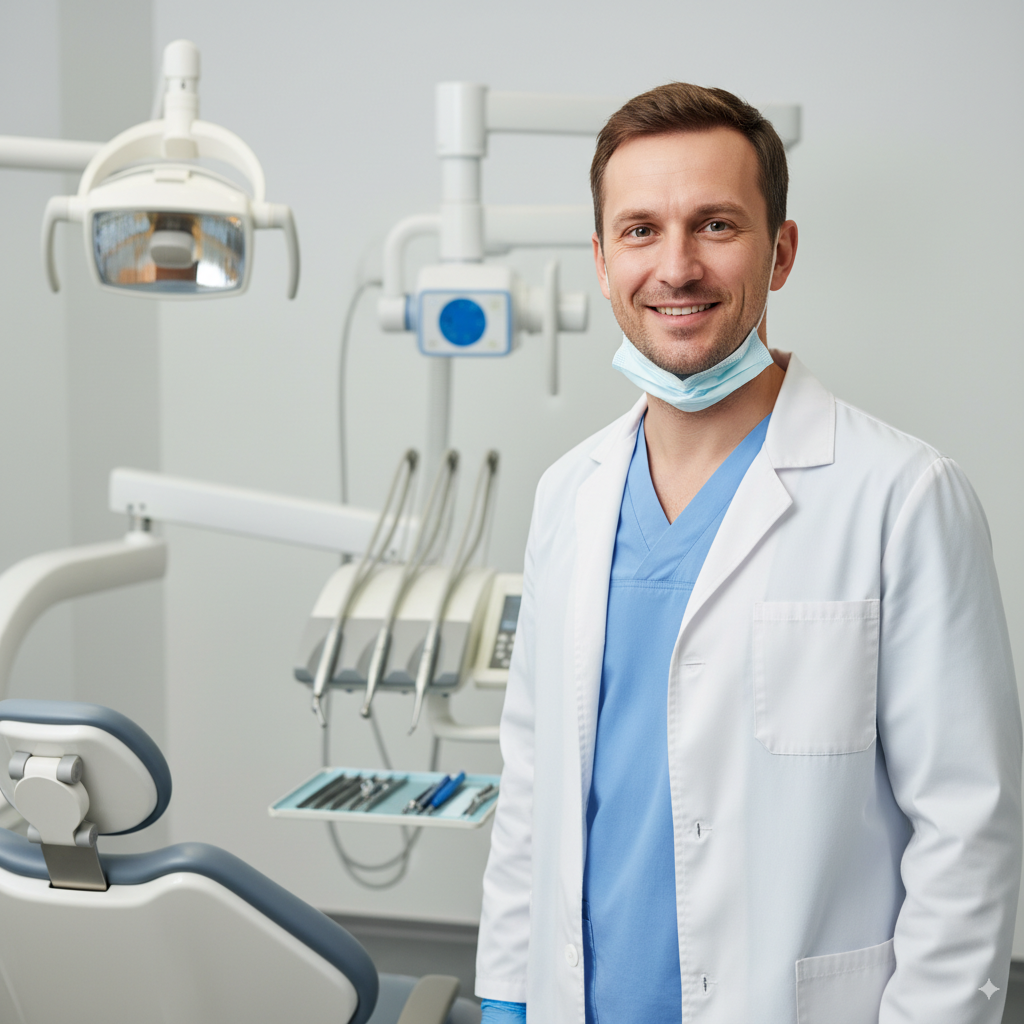
Hi, I’m Dr. Martin, the founder of BraceBasics.com. With years of experience in orthodontics, I’ve made it my mission to simplify braces care for patients of all ages. Here, you’ll find easy-to-understand advice, practical tips, and reliable resources to make your braces journey smoother, healthier, and stress-free. My goal is to help you smile with confidence every step of the way.