
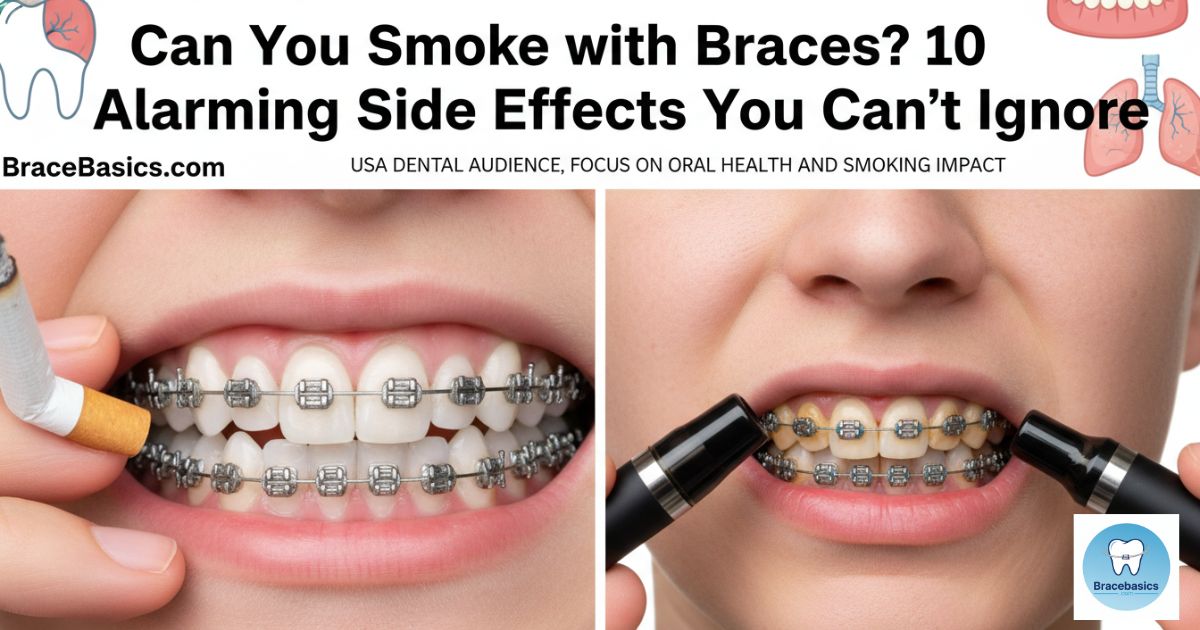
Can You Smoke with Braces? Many people wonder if lighting up a cigarette or vape while wearing braces can really cause harm. The truth is, it’s one of the biggest mistakes you can make for your smile. The combination of heat, tar, and nicotine effects on teeth and gums can seriously damage your braces, slow down healing, and stain your teeth. Smoking or vaping dries out your mouth, traps bacteria, and increases the risk of gum disease and braces complications. Over time, it leads to braces discoloration from smoking, unpleasant odor, and painful inflammation. Simply put, smoking during orthodontic treatment can ruin months of dental progress and leave lasting oral health damage.
Can You Smoke With Braces? Short Answer
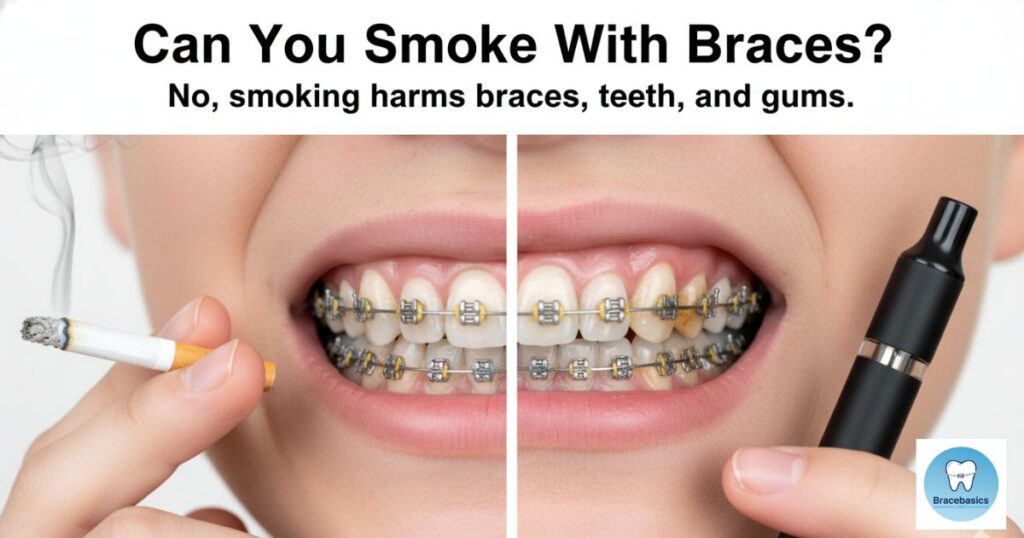
No, you should not smoke with braces. Smoking can stain teeth and braces, damage gums, slow orthodontic treatment, and increase the risk of tooth decay and bad breath. It seriously affects oral health and the effectiveness of your braces.
How Smoking Affects Your Braces and Oral Health
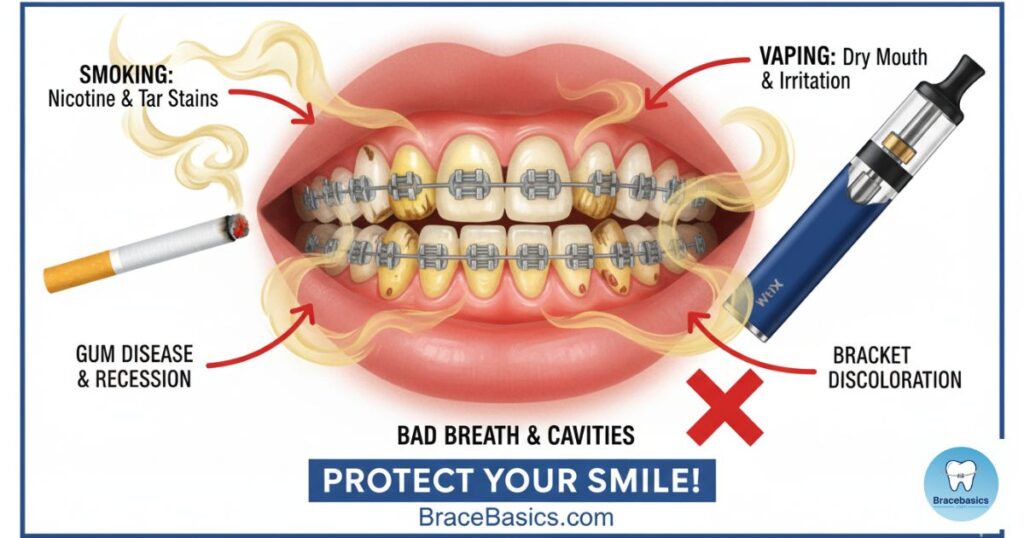
Smoking with braces creates a toxic environment inside your mouth. The heat, tar, and nicotine effects on teeth and gums weaken the enamel and irritate soft tissues. Cigarettes and vapes coat the brackets with sticky residue, making braces discoloration from smoking almost impossible to clean. Over time, this leads to dull, yellow smiles instead of bright, confident ones.
When you smoke, oxygen in the blood decreases, and gums lose their natural color and strength. This slows down healing after orthodontic adjustments. Smoking during orthodontic treatment also limits saliva production, allowing bacteria to grow faster. That’s why smokers experience more oral health issues caused by smoking than non-smokers. The combination of chemicals, dryness, and poor blood flow can make your braces treatment much harder to maintain.
Oral Health Problems Caused by Smoking and Vaping
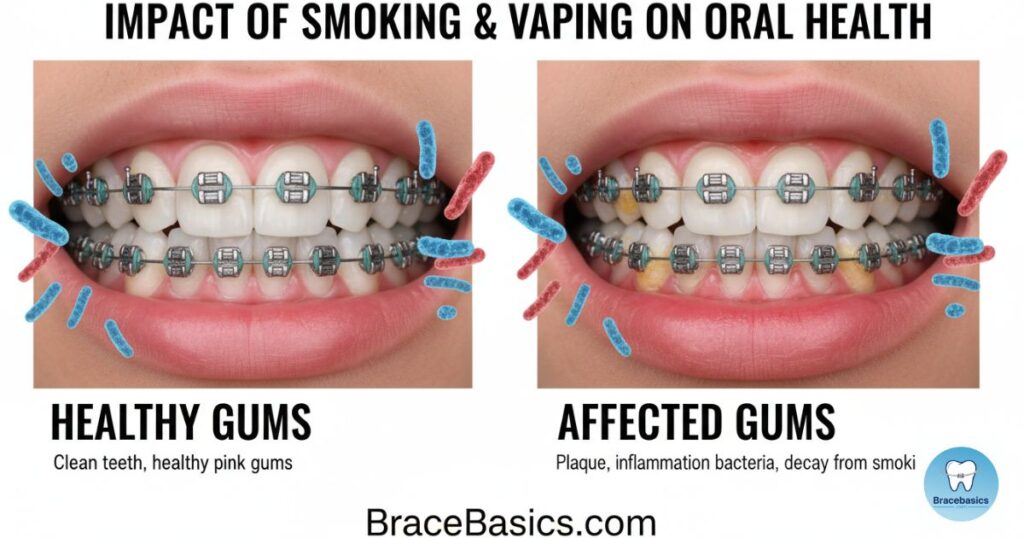
The mixture of smoking with braces side effects and vaping and braces problems is serious. Both release toxins that attack gum tissues, stain teeth, and promote decay. Vaping may seem cleaner, but it still carries chemicals that dry your mouth, leading to bad breath from smoking with braces. When saliva decreases, food particles and bacteria stay longer, causing gum inflammation and plaque buildup.
Continuous use of cigarettes or vapes can cause gum disease and braces complications. Your gums become red, swollen, and bleed easily. Tooth decay risk with braces also increases because tar and smoke hide in small gaps around brackets. Over time, you may even notice early signs of root resorption and smoking, where the roots of your teeth shorten due to poor healing conditions.
How Smoking Affects Orthodontic Treatment
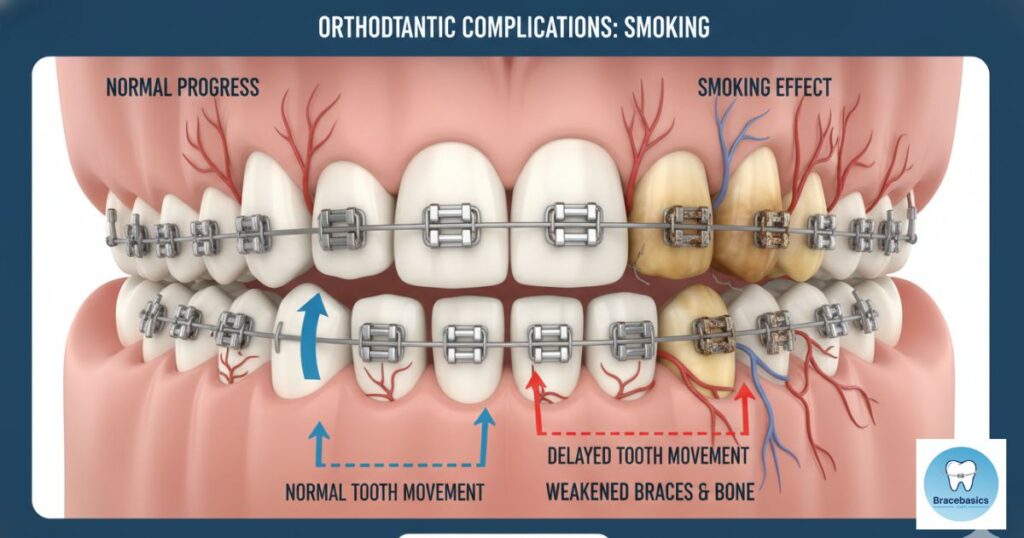
The effects of smoking on braces go beyond appearance. Smoking reduces bone density, which affects how teeth move through the bone during treatment. This slows tooth movement and can cause braces treatment delay due to smoking. The nicotine in smoke tightens blood vessels, cutting off the oxygen needed for tissue repair and growth.
Smoking weakens orthodontic materials, making brackets loosen and wires break more easily. That’s why orthodontist advice for smokers is always to quit before or during treatment. When blood flow slows, the body struggles to support bone remodeling, which is the foundation of orthodontic progress. The result is longer treatment time and unpredictable movement of teeth.
1) Treatment Becomes Less Effective
Smoking starves your gums of nutrients, reducing your braces’ effectiveness. The lack of oxygen delays healing, making your teeth resistant to movement. In many cases, how smoking affects braces treatment is visible—teeth remain crooked or move slower, despite constant orthodontic adjustments.
2) Treatment Duration Increases
When blood circulation drops, braces require more time to shift your teeth properly. Many smokers face braces treatment delay due to smoking, adding months or even years to their orthodontic journey. Your orthodontist may also need to tighten wires more often, which can cause discomfort and gum soreness.
3) Stains and Discoloration Appear on Teeth
Teeth stains from smoking with braces are one of the most common complaints among smokers. The tar and chemicals embed deep into enamel, creating brown or yellow patches. After braces removal, you may see uneven color bands across your teeth. The only solution is costly whitening or cleaning procedures to reverse how smoking causes tooth discoloration with braces.
| Type of Tobacco Product | Discoloration Level | Additional Damage |
| Cigarettes | High | Yellowing and plaque buildup |
| Vaping | Moderate | Odor and dryness |
| Smokeless Tobacco | Very High | Stains and gum recession |
4) Risk of Bad Breath and Gum Problems
Smokers with braces often struggle with bad breath from smoking with braces. Smoke residue and bacteria mix to produce a strong, unpleasant odor. The gums dry out, allowing bacteria to multiply. Eventually, you may experience gum bleeding and infection. In severe cases, gum disease and braces issues can cause teeth to loosen or even fall out.
Smoking with Invisalign and Retainers
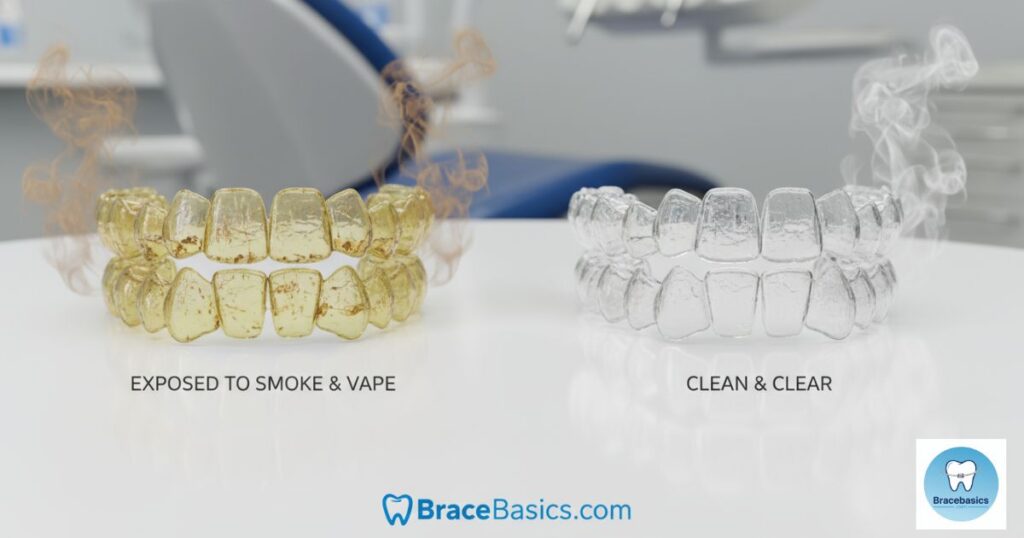
Vaping impact on dental braces and Invisalign trays is another hidden problem. The transparent plastic easily absorbs nicotine and tar, turning them yellow and giving off a smoky odor. This makes clear aligners look dirty and unhygienic. Yellow braces from smoking and stained retainers reduce your smile’s confidence, no matter how straight your teeth become.
For people using retainers, smoking while wearing braces or appliances can trap chemicals against the enamel. This increases bacterial growth and causes tooth decay. The best habit is to remove your aligners while smoking, clean them thoroughly, and avoid vaping altogether. Otherwise, the nicotine effects on teeth and gums will continue damaging your progress.
Can a Dentist Tell If You Smoke or Vape?
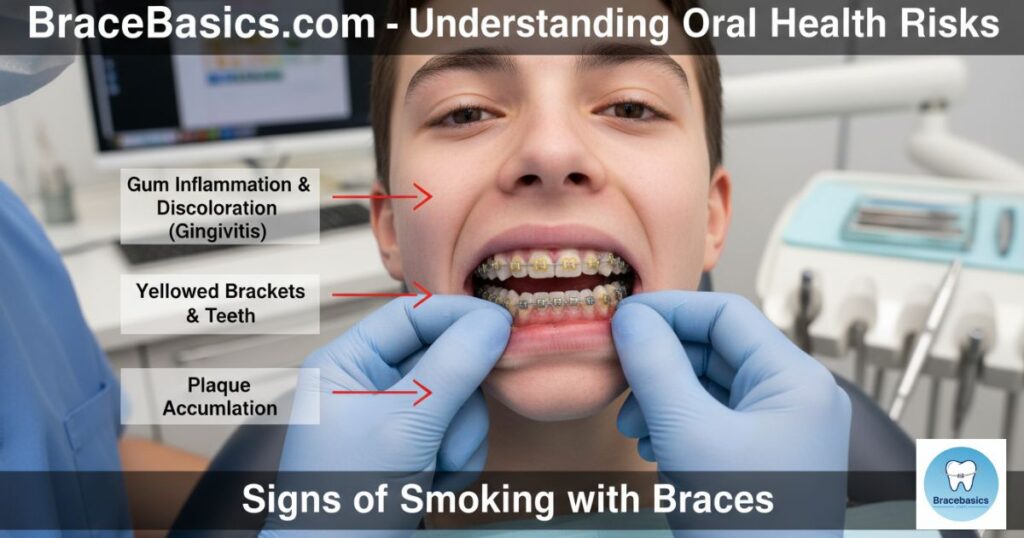
Yes, can dentists tell if you smoke with braces? Absolutely. A dentist can identify smokers through darkened gums, thick plaque, and yellow brackets. The smell of smoke also clings to dental materials. Do braces stain from cigarettes is not just a myth—it’s a visible reality seen in every dental chair. Vaping doesn’t hide it either. Does vaping slow down braces treatment is a proven fact since e-cigarette chemicals disrupt oral tissues and slow blood circulation.
What If You Can’t Quit Immediately? 10 Smart Steps to Reduce Damage
- Brush your teeth and rinse your mouth after smoking.
- Use fluoride toothpaste to protect enamel from acids.
- Drink water frequently to flush out harmful chemicals.
- Clean braces with interdental brushes to remove trapped tar.
- Visit your orthodontist monthly for checkups and guidance.
- Follow “how to clean braces if you smoke” instructions carefully.
- Limit the number of cigarettes smoked each day.
- Use nicotine-free alternatives to reduce harm.
- Avoid smoking before sleep to prevent overnight bacterial growth.
- Maintain these habits consistently, as they reduce but do not fully eliminate damage.
10 Alarming Side Effects You Can’t Ignore
- Altered teeth alignment, proving that smoking affects braces effectiveness.
- Teeth stains and discoloration caused by nicotine and tar.
- Gum bleeding and inflammation due to reduced blood flow.
- Mouth sores from irritation and chemical exposure.
- Bone loss around tooth roots, weakening support.
- Tooth decay risk with braces increases over time.
- Braces discoloration from smoking, making metal and clear brackets look yellow.
- Slower tooth movement, extending overall treatment duration.
- Bad breath from smoking with braces, caused by bacteria buildup.
- Weakened jawbone, making teeth less stable after treatment.
The Best Way to Quit Smoking with Braces: 10 Tips
- Quit early to maximize orthodontic treatment results and ensure long-term oral health.
- Set a clear quitting plan with achievable goals.
- Seek professional support from dentists or orthodontists.
- Stop smoking immediately to allow healing to begin.
- Improve blood flow for healthier gums and faster tooth movement.
- Reduce tooth decay risk with braces by avoiding nicotine.
- Prevent braces discoloration from smoking for a brighter smile.
- Eliminate smoke odor from teeth and oral tissues.
- Restore natural enamel brightness over time.
- Follow advice from dental experts, like the American Dental Association.
FAQs
Can a dentist tell if you smoke with braces?
Yes, a dentist can tell if you smoke with braces. Smoking leaves visible signs like yellow stains on teeth and brackets, darkened gums, and extra plaque buildup. Dentists also notice slower healing of gums and irritation around brackets. These signs make it easy for them to know whether someone smokes. For tips on cleaning your braces well, see our article How to Clean Braces Properly?.
Can you vape with braces on?
Vaping is not safe while wearing braces. The chemicals in vape liquids can dry out your mouth, damage gums, and cause yellowing of brackets. Even though it’s less harsh than cigarettes, vaping still slows healing, encourages bacteria growth, and can interfere with your orthodontic treatment results. If you often sip soft drinks or sugar‑filled beverages, check out Can You Drink Coke with Braces? for guidance.
Does smoking affect teeth alignment?
Yes, smoking can affect teeth alignment. Nicotine and other chemicals weaken the gums and jawbone, which slows down how teeth move during braces treatment. This may cause your teeth to take longer to straighten, and in some cases, results may not be as precise as expected. Keep your diet braces‑friendly by reading Can You Eat Chocolate with Braces? for smart snack ideas.
Can I drink alcohol with braces?
You can drink alcohol while wearing braces, but it should be done carefully. Alcohol itself does not damage braces, but sugary or acidic drinks can increase the risk of tooth decay with braces and staining. It’s important to rinse your mouth with water afterward and maintain proper oral hygiene.
Conclusion
Can you smoke with braces? No, and the reason is simple smoking ruins every benefit your braces provide. Whether you use cigarettes, vapes, or smokeless tobacco, the damage to your teeth, gums, and bones is inevitable. Is smoking bad for orthodontic treatment? Yes, it slows progress, increases cost, and risks your oral health. If you’ve smoked before, learn what to do if you smoked with braces and start cleaning your mouth properly. Quitting today will save your smile tomorrow. Remember, a healthy smile is more powerful than any puff of smoke.
References:
According to the American Dental Association, tobacco use leads to gingival recession, impaired healing and tooth staining. ADA – Tobacco Use & Cessation Ada
A recent systematic review shows that smoking significantly delays orthodontic progress, increases bone loss and weakens treatment outcomes. “Smoking and Its Impact on Orthodontic Treatment” PMC
Research reveals that tobacco users undergoing orthodontic treatment face slower healing, higher bracket failure and more gingival complications. Cureus Study – Evaluation of Impact of Smoking on Orthodontic Treatment Cureus
The American Association for Dental, Oral, and Craniofacial Research notes tobacco causes staining of teeth and restorations, periodontal disease, and compromised wound healing. AADOCR – Tobacco & Oral Health aadocr.org
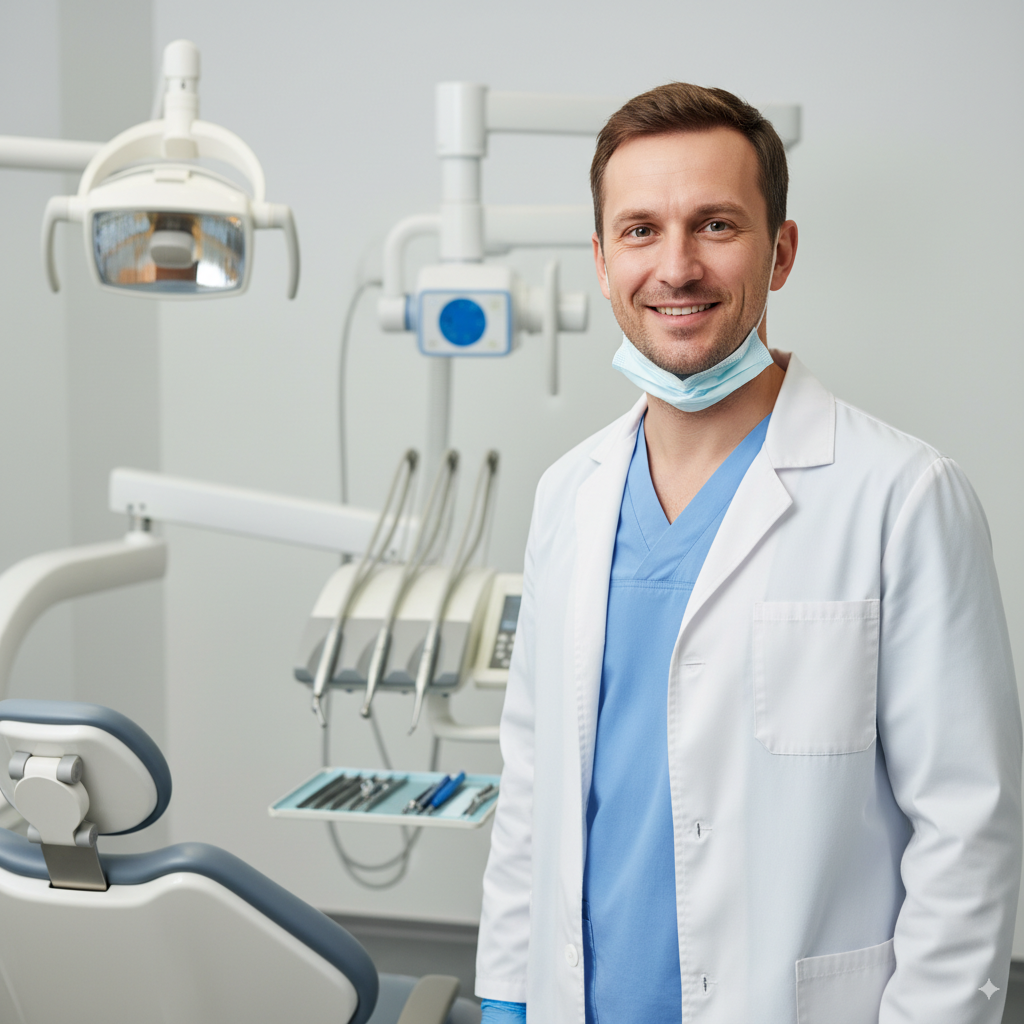
Hi, I’m Dr. Martin, the founder of BraceBasics.com. With years of experience in orthodontics, I’ve made it my mission to simplify braces care for patients of all ages. Here, you’ll find easy-to-understand advice, practical tips, and reliable resources to make your braces journey smoother, healthier, and stress-free. My goal is to help you smile with confidence every step of the way.