


Braces are made of many tiny yet powerful parts that work together to straighten teeth and create a confident smile. When you know what each part does, it’s easier to take care of your braces, avoid damage, and stay confident during treatment. Let’s dive into the full system behind that perfect grin.
How many parts do braces have?
Braces usually have around 10 main parts, each playing a special role in straightening teeth. These include brackets, archwires, ligatures, molar bands, hooks, elastics, coil springs, palatal expanders, auxiliaries, and retainers. Together, they gently move teeth into perfect alignment.
What Are the Main Parts of Braces?

Braces are a team of tools designed to move teeth with precision. Brackets hold, archwires move, bands secure, and elastics guide your bite into balance. Each part has its own purpose, but together they shape your smile like a well-coordinated orchestra.
Here’s how braces work as a system: brackets act as anchors, archwires apply gentle force, ligatures keep the wire in place, and elastics fine-tune jaw position. The result is a straight, healthy smile that lasts a lifetime.
Brackets: The Tiny Tooth Handles
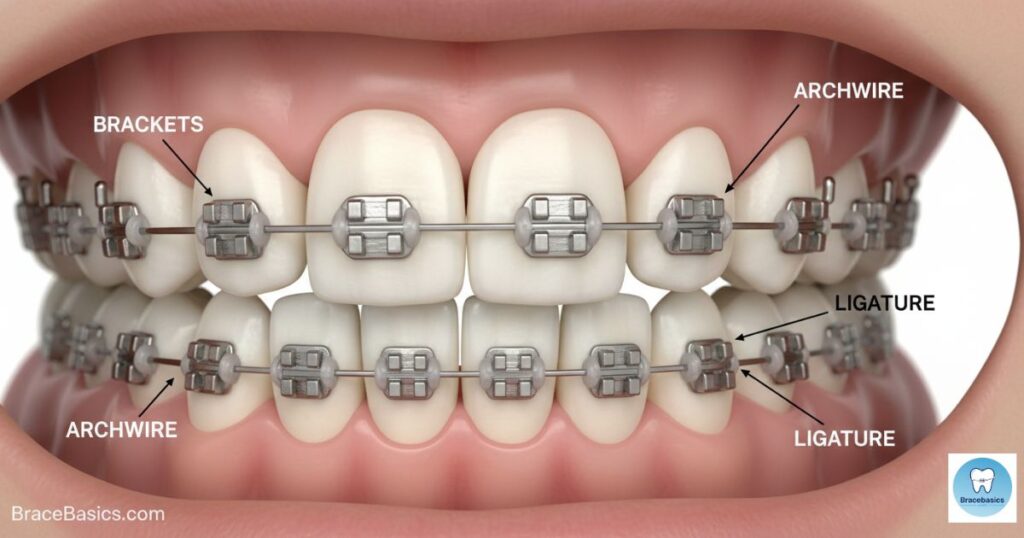
Brackets are the small squares attached to each tooth. They serve as handles that hold the archwire in place. Made of metal, ceramic, or self-ligating designs, these little attachments guide every movement of your teeth.
Metal brackets are durable and affordable. Ceramic brackets blend with your natural tooth color for a discreet look. Self-ligating brackets reduce friction and require fewer adjustments, making them a favorite among busy patients.
| Type of Bracket | Material | Main Benefit |
| Metal | Stainless steel | Strong and affordable |
| Ceramic | Tooth-colored | Aesthetic and smooth |
| Self-ligating | Metal or ceramic | Less friction and faster treatment |
Archwire: The Engine of Tooth Movement
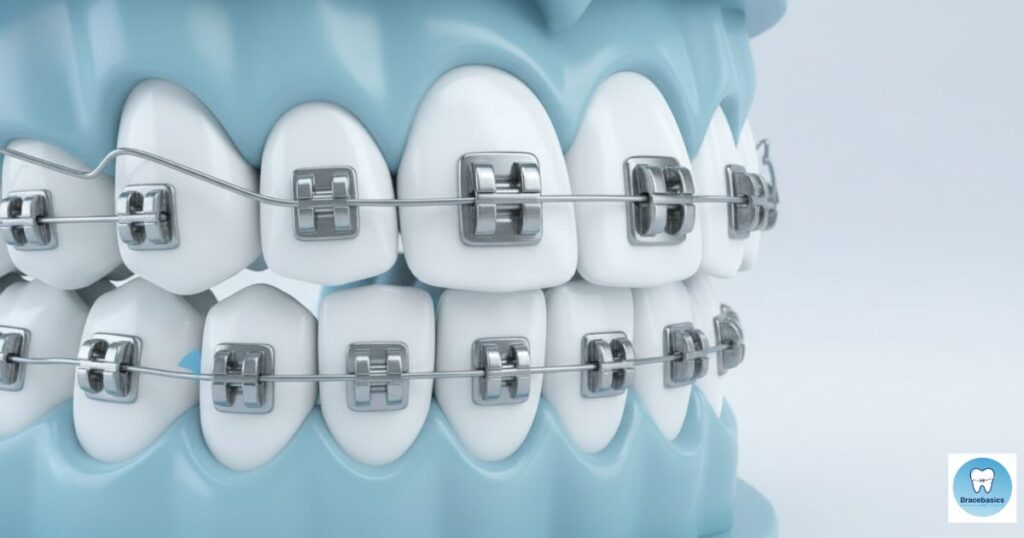
The archwire is the main driving force of braces. It connects every bracket and slowly moves teeth into alignment. Think of it as the engine that keeps everything running smoothly.
Orthodontists use nickel-titanium wires in early stages for gentle pressure and stainless steel wires later for control. Over time, wires are changed to adjust strength and precision. This gradual adjustment helps teeth shift safely without damaging roots or gums.
Ligatures: The Colorful Connectors
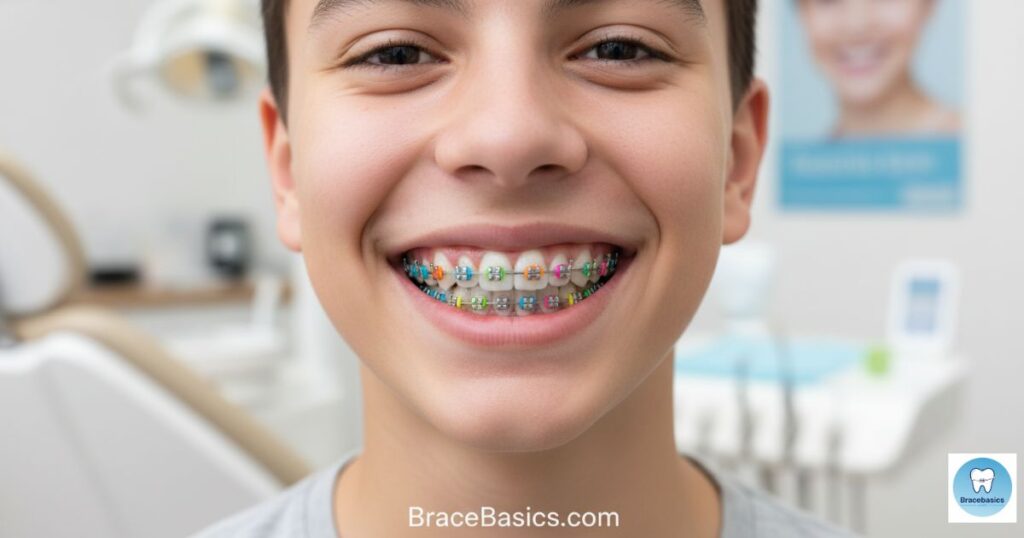
Ligatures are tiny elastic or metal ties that hold the archwire to each bracket. These are the fun part of braces because you can choose your favorite colors every visit.
They may look small, but they keep everything in place while allowing flexibility. Some modern braces, like self-ligating systems, don’t use ligatures at all, which means fewer appointments and easier cleaning.
Molar Bands: The Strong Back Anchors
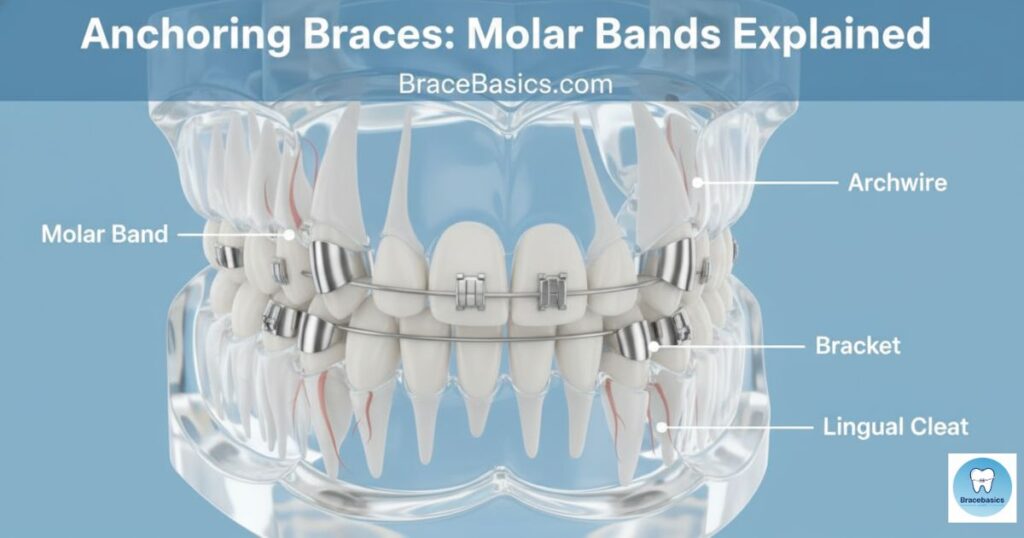
Molar bands are metal rings that wrap around your back teeth. They anchor the archwire and help provide stability for tough movements like rotating molars or adjusting bite alignment.
They’re most common in patients who need extra support for complex corrections. Orthodontists carefully fit and cement these rings to ensure they stay secure during the entire treatment.
Hooks: The Elastic Holders
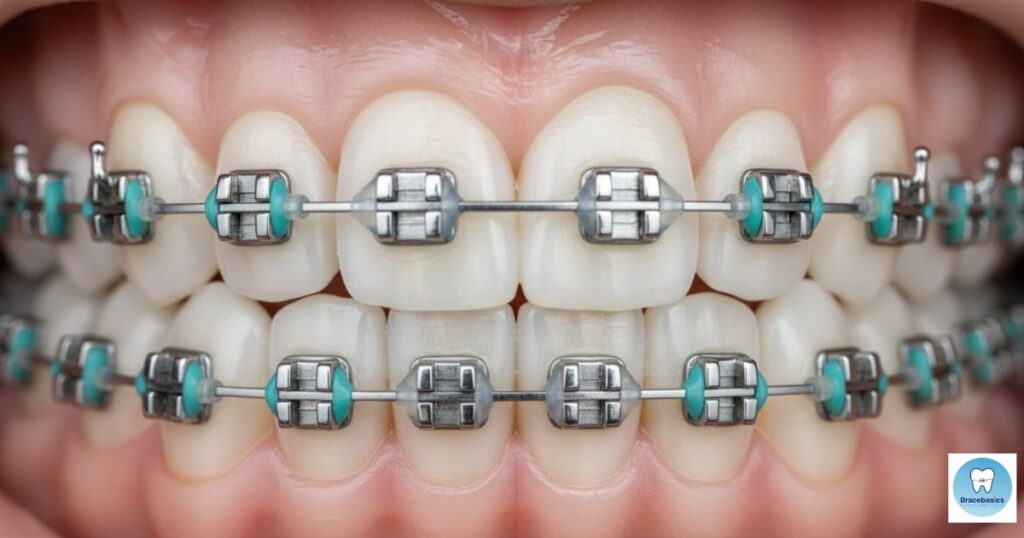
Hooks are small metal projections found on some brackets or molar bands. They’re used to attach elastics, which are essential for correcting bite problems.
By connecting elastics to hooks, orthodontists can control jaw movement and align upper and lower teeth. These simple attachments play a huge role in achieving perfect bite alignment.
Elastics (Rubber Bands): Bite Correctors
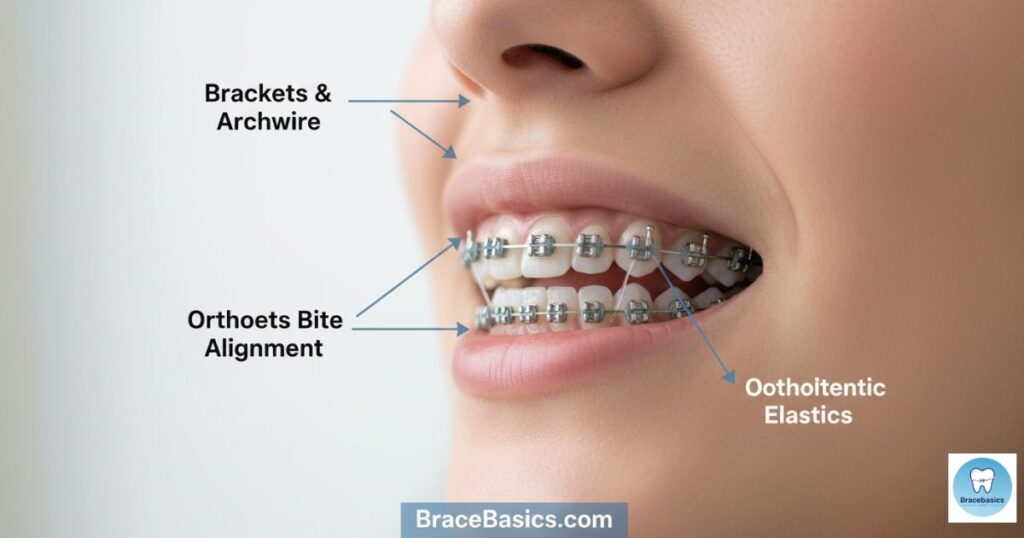
Elastics are the rubber bands that connect hooks from top to bottom teeth. They help fix overbites, underbites, and crossbites by applying consistent pressure between the jaws.
Wearing elastics as directed is crucial. Skipping them can slow progress or affect your final results. In other words, your commitment determines your success.
Coil Springs: The Space Makers
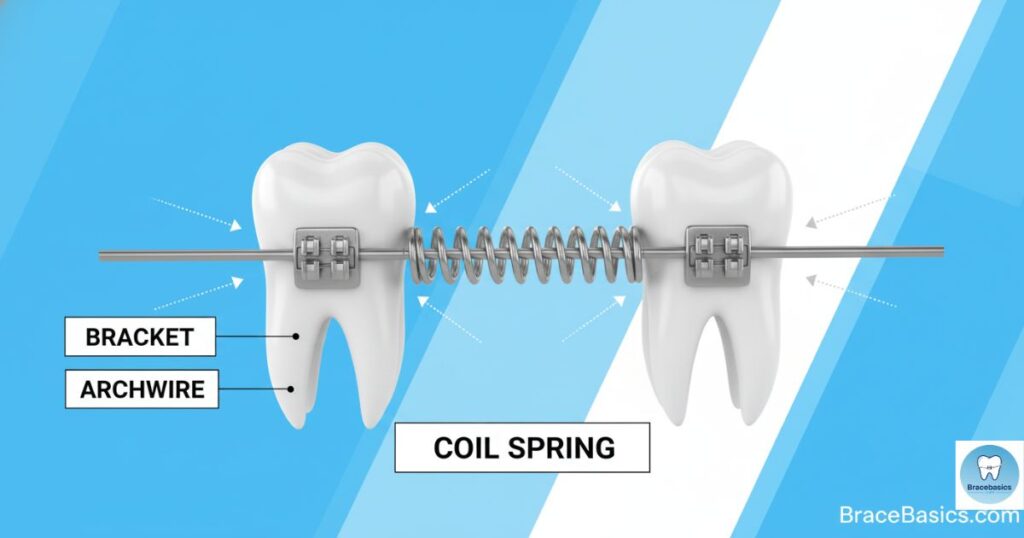
Coil springs are tiny metal spirals placed on the archwire. They create or maintain space between teeth during alignment.
There are two main types — open-coil springs push teeth apart, while closed-coil springs hold them together. Orthodontists use them when teeth are crowded or need extra room for movement.
| Type | Function | Common Use |
| Open-coil spring | Creates space | Crowded teeth |
| Closed-coil spring | Maintains space | Holding gaps |
Palatal Expander: The Jaw Widener
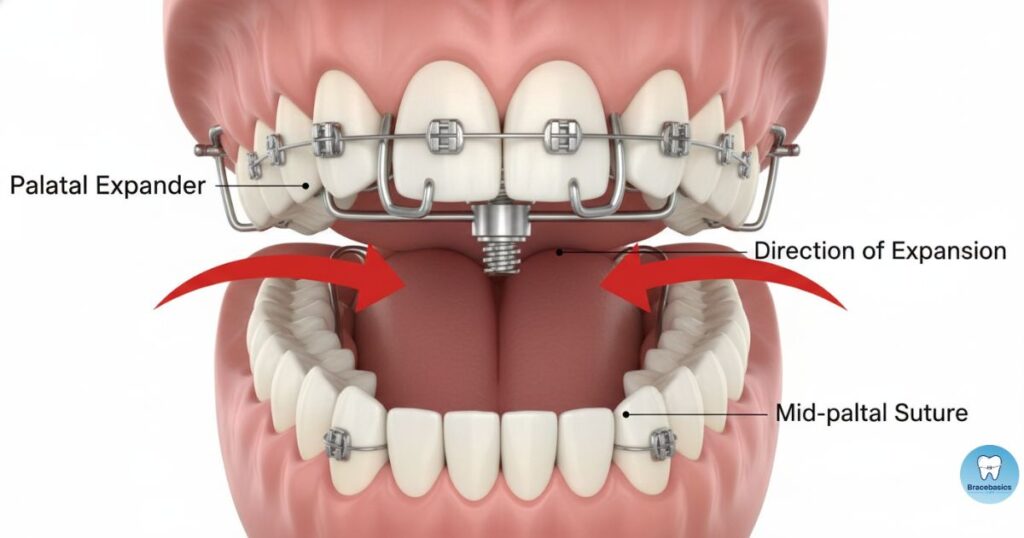
A palatal expander is a special device used mostly for children. It widens the upper jaw when there’s crowding or a crossbite.
By gently separating the upper jaw bones, it creates space for teeth to grow properly. This early treatment can prevent future orthodontic complications and may shorten braces time later.
Orthodontic Auxiliaries: The Extra Helpers
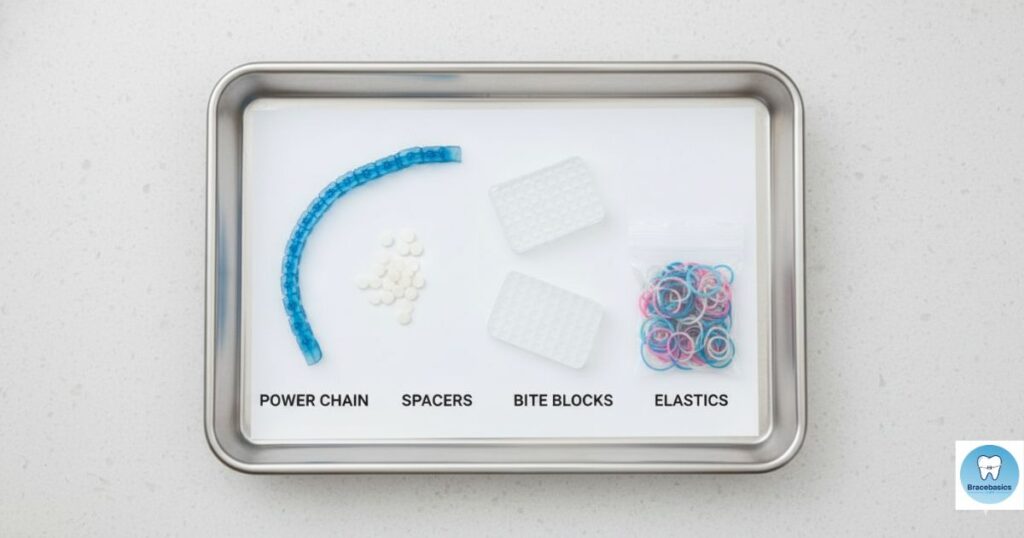
Sometimes, braces need backup. Orthodontic auxiliaries like power chains, spacers, and bite blocks help achieve specific corrections.
A power chain closes gaps faster, spacers create room before bands are placed, and bite blocks prevent top and bottom teeth from touching too early. These small additions make treatment more precise and efficient.
Retainers: The Final Step

Once your braces come off, the real test begins — keeping that smile in place. Retainers hold teeth in their new position while bones and gums settle.
You can get removable retainers, like Hawley or clear Essix types, or fixed retainers bonded behind teeth. Wearing them as instructed ensures your beautiful smile lasts for life.
Glossary of Braces Terms
| Term | Meaning |
| Band | Metal ring around a tooth anchoring braces |
| Bracket | Small attachment on each tooth holding wires |
| Archwire | Main wire guiding tooth movement |
| Elastics | Rubber bands for bite correction |
| Coil Spring | Spring creating or maintaining space |
| Headgear | External appliance for jaw alignment |
| Retainer | Appliance used after braces to hold teeth |
| Debanding | Removing brackets and wires |
| Orthodontist | Specialist who straightens teeth and jaws |
Final Thoughts: Braces Are a Team Effort
Every part of braces — from the tiny bracket to the powerful archwire — plays a vital role in shaping your smile. Together they move, guide, and balance your teeth with incredible precision.
Now that you know what’s inside your mouth, you can smile confidently knowing every part of your braces is working hard for that perfect grin.
FAQs
What are the parts of a brace?
Braces have several key parts that work together to move your teeth into alignment. These include brackets, archwires, ligatures (tiny rubber bands), bands, and buccal tubes. Other components like spacers, springs, and elastics also help control pressure and movement for a perfect smile.
Are all these parts used in every type of braces?
Not always. Some types like self-ligating braces don’t use ligatures, while clear aligners skip most of these parts completely. The exact components depend on your orthodontic treatment plan and your bite correction needs.
Which parts of braces do most of the work?
The brackets and archwire do the heavy lifting. Brackets hold the wire in place, while the archwire applies pressure to move the teeth gradually. Other parts like elastics and springs assist by guiding bite correction and spacing.
Why is it important to know about the parts of braces?
Understanding the parts of braces helps you care for them better, notice when something feels off, and follow your orthodontist’s advice confidently. When you know how each component works, keeping your smile healthy during treatment becomes much easier.
Is $7000 a lot for braces?
Paying $7000 for braces is common in the United States, especially for comprehensive orthodontic treatment. The cost usually depends on the type of braces, treatment duration, and dentist’s location. While it may sound expensive, many orthodontists offer payment plans to make it more affordable.
What’s the most painful type of braces?
Traditional metal braces are often considered the most painful type, especially after tightening sessions. This is because they apply more pressure on your teeth compared to options like ceramic braces or Invisalign. However, the pain usually fades within a few days as your mouth adjusts.
What is the end piece of braces called?
The end piece of braces is called a buccal tube. It’s a small metal part attached to the last molar bracket that holds the archwire securely in place. Buccal tubes guide the wire and keep your braces stable throughout your orthodontic treatment.
References
References
1. “The Ultimate Guide to the Parts of Braces” – Frey Orthodontics
2. “Get to Know the Parts of Braces” – Yang Orthodontics
3. “Orthodontic Parts & Pieces – Patient Education” – Greenway Orthodontics
4. “Parts Of Braces Explained” – Tisseront Orthodontics
5. “What Are the Main Elements of Braces?” – Shine Orthodontics

Hi, I’m Dr. Martin, the founder of BraceBasics.com. With years of experience in orthodontics, I’ve made it my mission to simplify braces care for patients of all ages. Here, you’ll find easy-to-understand advice, practical tips, and reliable resources to make your braces journey smoother, healthier, and stress-free. My goal is to help you smile with confidence every step of the way.